

More news on this day
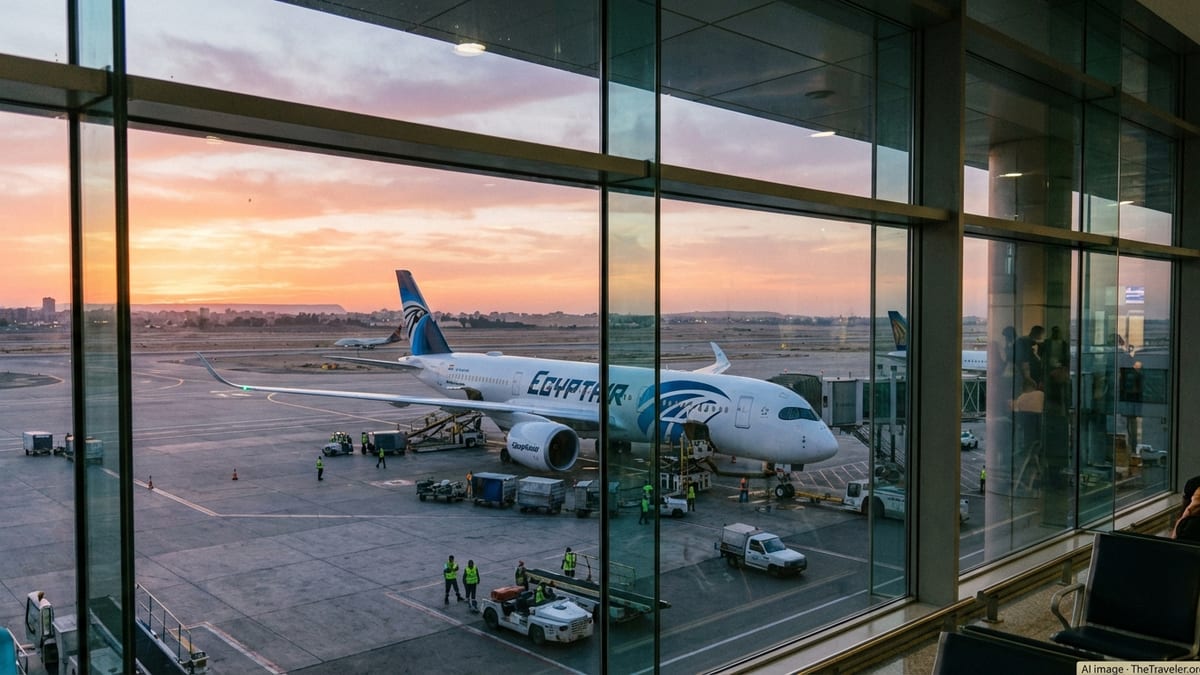
Egypt and the United States are set to deepen their aviation ties as EgyptAir confirms new long-haul Airbus A350-900 services from Cairo to Chicago and Los Angeles beginning in May 2026, a move that will significantly expand nonstop connectivity between North Africa and major American hubs.
New Nonstop Links Cement a Growing Transatlantic Corridor
EgyptAir’s latest expansion will see the national carrier launch three weekly nonstop flights from Cairo to Los Angeles on 23 May 2026, followed by a three-times-weekly Cairo to Chicago service from 21 June 2026. The routes, now loaded into reservation systems, turn earlier regulatory filings into firm plans and mark a new phase in the airline’s North American strategy.
The Los Angeles route will become EgyptAir’s longest, spanning roughly 7,600 miles between Cairo International Airport and Los Angeles International Airport. Chicago’s O’Hare International Airport will join New York, Newark, Washington and Toronto as part of EgyptAir’s North American network, giving the carrier a presence on both U.S. coasts and in the Midwest.
For travelers, the new services cut out traditional connections through European or Gulf hubs, reducing travel time and simplifying itineraries for tourism, visiting friends and relatives, education and business travel between Egypt and the United States.
The launches arrive amid rising interest in Egypt as a long-haul destination, fueled by pent-up post-pandemic demand, high-profile archaeological discoveries and the anticipated full opening of the Grand Egyptian Museum in Giza.
Airbus A350-900 Becomes the Flagship for U.S. Expansion
Central to the new services is EgyptAir’s deployment of its latest long-haul aircraft, the Airbus A350-900. The carrier has begun receiving the type and is progressively introducing it across its intercontinental network, replacing older Boeing 777-300ERs on key routes.
The A350-900s earmarked for Chicago and Los Angeles are configured with 340 seats, including 30 lie-flat business class seats and 310 economy seats. The aircraft features a next-generation cabin with higher ceilings, larger overhead bins, modern in-flight entertainment and improved cabin pressurization designed to reduce jet lag on ultra-long flights.
The jet’s range and fuel efficiency are particularly suited to the demands of the Los Angeles service, which will operate nearly 15 hours westbound and just under 14 hours eastbound. The aircraft’s composite structure and new-generation engines are expected to lower operating costs and shrink the route’s carbon footprint compared with previous-generation widebodies.
For EgyptAir, standardizing premium products around the A350 on its longest routes is also a branding exercise, positioning the flag carrier more competitively against Gulf and European rivals that already showcase advanced cabins on U.S.–Middle East and U.S.–Africa sectors.
Strengthening Aviation and Economic Ties Between Egypt and the U.S.
The inauguration of nonstop services to both Chicago and Los Angeles is being framed by Egyptian aviation officials as part of a broader effort to deepen bilateral ties with the United States. The new routes come on top of existing daily services to New York and other North American points, which have grown in step with tourism and commercial exchanges.
Civil aviation authorities in Cairo have pointed to the role of long-haul connectivity in supporting investment, trade and cultural links. Chicago’s status as a major financial, technology and academic hub, coupled with Los Angeles’s global entertainment industry and large Middle Eastern diaspora, is expected to generate a mix of business, leisure and VFR traffic.
The routes also arrive as Egypt pursues a wider aviation modernization program, including airport upgrades, fleet renewal across EgyptAir and its subsidiaries, and an emphasis on positioning Cairo as a competitive connecting hub between Africa, the Middle East, Europe and North America.
U.S. tourism officials, for their part, are watching the developments closely, as new direct connectivity from Cairo can stimulate inbound travel to Illinois and California, supporting hotels, attractions and convention business in both states.
Star Alliance Connectivity via Chicago and Los Angeles
Both Chicago O’Hare and Los Angeles International are key hubs for United Airlines, EgyptAir’s fellow Star Alliance member, providing an extensive network of onward connections across the United States, Canada and Latin America. The new Cairo flights are expected to plug directly into this domestic and regional web.
At Los Angeles, travelers will be able to connect to cities across the U.S. West Coast and interior West, while Chicago offers reach into the Midwest, Great Lakes region and beyond. Through-ticketing, coordinated schedules and shared frequent-flyer benefits under the alliance framework should make the new services particularly attractive to connecting passengers.
For EgyptAir, feeding traffic from secondary American cities into its Cairo hub is crucial to sustaining long-haul utilization on such lengthy sectors. The combination of Star Alliance connectivity and the A350’s operating economics is designed to support consistent year-round demand, even outside peak holiday seasons.
The carrier’s growing footprint in the United States is also aligned with ongoing investments at other gateways, including planned moves into upgraded terminals and cooperation with airport authorities on improving the passenger experience for connecting travelers.
Implications for Travelers and the Competitive Landscape
For passengers on both sides of the Atlantic, the new EgyptAir services translate into more choice and potentially sharper competition on fares and products. Travelers in California and the American Midwest who previously routed via Europe or the Gulf to reach Egypt will now have a nonstop option that can shave hours off total journey times.
Tour operators and travel agencies are already preparing new itineraries built around the Chicago and Los Angeles links, pairing Nile cruises and Red Sea resorts with stopovers in major U.S. cities. The additional capacity may also encourage dynamic pricing, especially during shoulder seasons, making Egypt more accessible to cost-conscious leisure travelers.
For rival carriers, EgyptAir’s expansion underscores the growing importance of North Africa in the transatlantic market. European and Gulf airlines that have historically funneled much of the U.S.–Egypt traffic via their own hubs will now face a strengthened nonstop competitor operating a brand-new flagship aircraft.
As the May and June 2026 launch dates draw closer, attention will turn to how quickly EgyptAir can ramp up load factors on the new routes, and whether strong performance might justify additional frequencies or even further U.S. destinations in the years ahead.