

More news on this day
Egypt’s decision to raise its visa-on-arrival fee for tourists to 30 US dollars from March 1, 2026 is rippling through the global travel ecosystem, prompting fresh guidance from governments including Canada, the United States, Brazil, the United Kingdom, Saudi Arabia, the United Arab Emirates and Switzerland as countries recalibrate advice amid higher costs and heightened regional risk.
Get the latest news straight to your inbox!
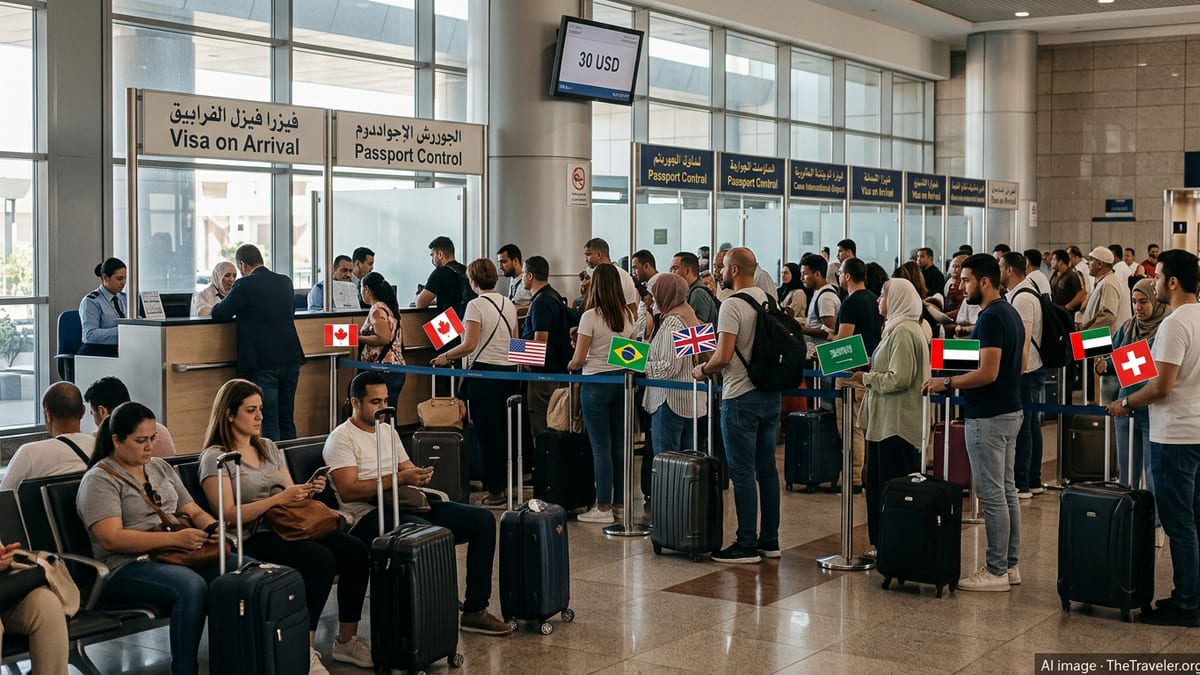
Egypt Confirms Higher Visa-on-Arrival Cost for Tourists
Egyptian authorities have confirmed that international tourists eligible for visas on arrival will now pay 30 US dollars for a single-entry permit, up from 25 dollars, effective March 1, 2026. The increase, described by local tourism officials as “modest but necessary,” applies at major airports and seaports and is part of a broader effort to generate revenue for infrastructure upgrades in key destinations such as Cairo, Luxor, Aswan and the Red Sea coast.
Travel and tourism industry outlets report that the revised fee is being applied uniformly at entry points, although some third-party travel advice and agency websites still list the former 25‑dollar rate, creating confusion for travelers relying on older guidance. Passengers who do not pre-arrange an e-visa are being advised to arrive with sufficient cash in widely accepted currencies, including US dollars and euros, to avoid delays at crowded immigration counters.
Officials and tour operators emphasize that the visa-on-arrival remains valid for short leisure stays, typically up to 30 days, and that there have been no changes to basic eligibility rules. However, travelers are being encouraged to double-check entry conditions with airlines and consular services shortly before departure, as authorities continue to fine-tune border procedures in response to shifting security and demand patterns across the region.
Egypt’s tourism sector, which has been recovering on the back of strong demand for archaeological and beach holidays, is banking on the assumption that a 5‑dollar increase will not deter visitors. Yet the move lands at a moment when many source countries are simultaneously tightening their own outbound travel advisories and entry systems, amplifying a general sense of complexity for international trips.
Canada and the US Update Guidance Amid Regional Tensions
North American governments are responding to the fee increase in the context of broader regional risk. In recent days, the United States Embassy in Cairo has issued updated guidance to American citizens highlighting security concerns, including terrorism, crime and health risks, and urging travelers to maintain a high level of situational awareness while in Egypt and neighboring states. The advisory notes that several countries in the wider region, such as Saudi Arabia and the United Arab Emirates, have seen their US travel advisory levels raised in recent months.
While the higher 30‑dollar visa fee is not itself framed as a security measure, US officials are bundling visa and border updates into a wider narrative of “heightened travel restrictions,” which also encompasses more frequent security alerts, localized curfews and recommendations to avoid certain border areas. Airlines serving Egypt from US gateways report that passengers are asking more questions about documentation, transit rules and possible schedule disruptions.
Canada has similarly updated its public advice for travel to Egypt, stressing the need for robust travel insurance, flexible bookings and close monitoring of conditions on the ground. Canadian-focused travel guidance is beginning to reference the 30‑dollar visa-on-arrival figure, although some informational sites still show legacy pricing, prompting calls from agents for a clearer, centralized communication push so that travelers are not caught out at immigration with insufficient funds.
Despite these cautions, neither the US nor Canada has advised against all travel to Egypt. Instead, both countries are trying to strike a balance between acknowledging sustained demand for Nile cruises and resort stays and underscoring that visitors should expect more checks, higher fees and a faster-changing advisory environment than before the pandemic.
Europe, the UK and Switzerland Tighten Entry Systems
Across the Atlantic, the visa adjustment comes just as European and British authorities roll out new layers of travel control affecting global tourists, including those heading onward to or returning from Egypt. The European Union is preparing to fully implement new biometric border checks and an electronic travel authorization scheme for short-stay, visa-exempt visitors, with phased deployment running into 2026. Officials say these systems, modeled on existing programs in the US, Canada and the UK, are designed to improve security while keeping border crossings efficient.
The United Kingdom is moving ahead with its own Electronic Travel Authorization requirement for a widening group of non-visa nationals, tightening screening long before departure flights. Swiss authorities, closely integrated with the Schengen border regime, are also reminding travelers that data collection and vetting at external EU and Schengen borders will become more comprehensive, potentially lengthening arrival and transit times during peak periods.
For European, British and Swiss travelers heading to Egypt, the higher 30‑dollar visa fee is now just one piece of a more intricate puzzle. Travel planners warn that itineraries involving multi-stop journeys through hubs such as London, Zurich or major EU capitals may now involve multiple layers of digital pre-clearance, additional service fees and stricter document checks on both outbound and return legs.
Tour operators say clients are increasingly surprised to discover that in addition to Egypt’s on-arrival costs, they must budget for new or upcoming authorization fees to enter or transit European territories. Industry groups argue that transparent, harmonized messaging from governments and airlines is essential to prevent confusion, missed connections and financial losses for travelers.
Gulf States and Brazil Navigate Parallel Travel Restrictions
The visa fee change also intersects with evolving travel rules in the Gulf and South America. Authorities in Saudi Arabia and the United Arab Emirates have, in recent years, overhauled their own visa-on-arrival and e-visa schemes, frequently adjusting eligibility and costs for holders of US, UK and Schengen visas while responding to security and crowd-management pressures linked to major events and pilgrimage seasons. Recent security alerts and temporary visa curbs for certain nationalities have underscored how quickly access conditions can shift.
For travelers using Gulf hubs as gateways to Egypt, the cumulative impact of tighter screening, occasional route suspensions and shifting visa reciprocity rules can be significant. Travel agents in Dubai and Riyadh report fielding more last-minute questions from passengers en route to Cairo, Sharm el-Sheikh or Hurghada about both the Egyptian visa charge and any additional documentation requirements if itineraries change mid-journey.
Brazil, another important outbound market for North Africa and the Middle East, is in the midst of its own visa recalibrations, having alternated between more liberal and more restrictive entry rules with key partners in recent years. Brazilian tour operators say the Egyptian hike, though small in absolute terms, comes as travelers are already absorbing higher airfares, insurance premiums and, in some cases, new or reinstated visa fees for destinations that were once visa-free.
Industry analysts note that as more countries lean on visa charges and processing fees as revenue tools, travelers from Brazil, the Gulf states and elsewhere are increasingly sensitive to the “all-in” cost of documentation, not just headline airfare and hotel rates. Egypt’s new 30‑dollar benchmark is likely to feed into wider comparisons as destinations compete for price-conscious tourists.
Travelers Urged to Budget Carefully and Monitor Rapid Changes
With Egypt joining a growing list of destinations revising entry costs and border procedures, travel professionals are urging would-be visitors from Canada, the US, Brazil, the UK, Saudi Arabia, the UAE, Switzerland and beyond to build greater flexibility and contingency into their plans. That includes budgeting a buffer for unexpected fees at airports, allowing more time for transits involving biometric checks, and purchasing changeable or refundable tickets where possible.
Agents recommend that travelers verify the current visa fee directly with consulates or official tourism channels shortly before departure, as third-party websites and older guidebooks may lag behind. Travelers are also advised to carry backup payment options, including small amounts of cash in major currencies, in case card facilities at border posts are limited or temporarily offline.
Security analysts stress that while the 30‑dollar visa-on-arrival fee itself is unlikely to dampen long-term demand for Egypt’s ancient sites and Red Sea resorts, it has become emblematic of a more controlled era of international mobility. From North America’s electronic authorizations to Europe’s biometric borders and the Gulf’s dynamic visa frameworks, a patchwork of heightened travel restrictions now shapes even routine holiday itineraries.
For now, Egypt’s message to the world remains that it is open for tourism, albeit at a slightly higher administrative price and under closer scrutiny. For travelers, the emerging reality is clear: keeping trips smooth increasingly depends on meticulous pre-departure research, agile budgeting and close attention to fast-moving regulatory change.