

More news on this day
As Egypt contends with a deepening energy crunch ahead of summer 2026, emerging conservation rules and power-management strategies are beginning to reshape how holidays unfold in one of the world’s most visited destinations.
Get the latest news straight to your inbox!
A Prolonged Energy Squeeze Reaches the Tourism Front Line
Egypt’s recent drive to cut electricity use is rooted in a multi‑year natural gas shortage that has already led to recurring power cuts across the country. Publicly available data show gas production has declined sharply since 2021, while demand for air conditioning and industrial power keeps rising, forcing the country back into large-scale liquefied natural gas imports and power-rationing plans during peak summer heat.
Government strategies have increasingly focused on curbing consumption rather than expanding subsidies. Policy documents and economic reporting describe measures such as higher electricity tariffs, a gradual reduction in energy subsidies and stricter public-sector rules intended to limit waste. These steps aim to stabilise the grid and free up scarce fuel, but they also signal that Egypt expects tight energy conditions to persist into 2026.
Until now, most formal rationing plans have targeted households, public buildings and street lighting rather than tourist infrastructure. However, as the government broadens efforts to cut costs and secure fuel supplies in 2026, tourism businesses are being pushed to adopt their own conservation practices, from investing in backup generation to rethinking how they cool rooms and schedule energy-intensive services.
What “Holiday Limits” Could Look Like for Visitors
The emerging “holiday limits” are less about banning travel and more about shaping when and how power is used in tourism settings. Energy-conservation rules already applied to government facilities, such as setting air conditioning at no cooler than 25 degrees Celsius and switching non-essential lighting off earlier in the evening, are increasingly being mirrored in private-sector guidance and hotel operating manuals.
Travel industry commentary indicates that many higher-end resorts on the Red Sea and in key cultural hubs are working to shield guests from any direct outages by relying on onsite generators, solar systems and load-management technologies. Where limits are felt, they tend to appear as slightly warmer indoor temperatures, shorter overnight lighting hours in outdoor spaces, or adjusted operating times for energy-hungry amenities like large pool pumps or spa facilities.
In city hotels and mid-range properties, managers are responding to rising tariffs and grid pressure with more visible measures. These can include key-card systems that cut power when guests leave rooms, reduced lift and escalator use during low-occupancy periods, and clearer encouragement to keep windows closed while air conditioning is running. While such practices are common globally, the current energy squeeze is accelerating their spread and making them more strictly enforced.
Impact on Key Destinations and Peak Travel Seasons
The effect of the energy crisis on holiday experiences is expected to vary by destination and by season. Beach resorts along the Red Sea coast and South Sinai, which are central to Egypt’s tourism economy, have historically been prioritised for grid stability because of their economic importance. Industry analysis and anecdotal accounts suggest that, during past rounds of power cuts, these hubs saw fewer and shorter outages than inland residential areas.
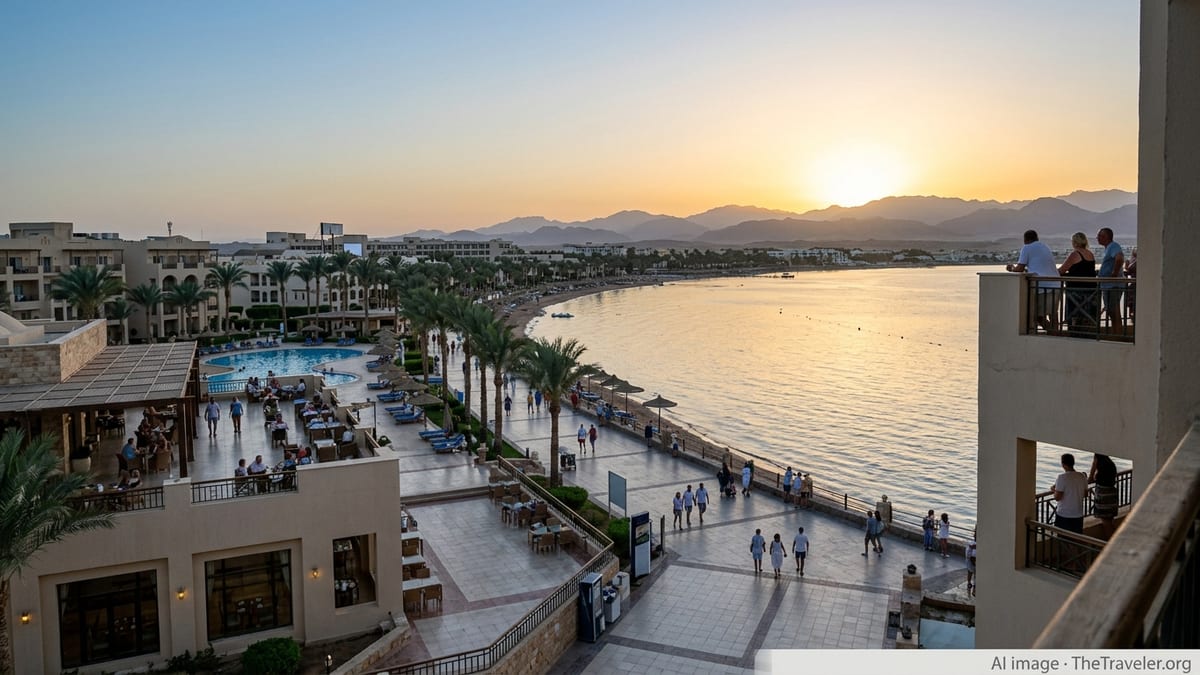
Nonetheless, resorts in Hurghada, Sharm el Sheikh and Marsa Alam face the same structural pressures as the rest of the grid. Operators are preparing for summer 2026 by fine-tuning backup systems, adding rooftop solar where feasible and coordinating more closely with local utilities about peak-demand hours. Visitors may notice a greater emphasis on daytime activities that take advantage of natural light, along with more subdued lighting schemes on promenades and beaches at night.
In Cairo, Giza, Luxor and Aswan, where sightseeing often takes place in intense heat and relies heavily on air-conditioned transport, energy-management policies may be more visible. Tour operators are expected to adjust departure times to earlier mornings or late afternoons to reduce cooling loads during midday peaks. Museum and site managers are also under broader public-sector instructions to use energy more efficiently, which could lead to tighter opening hours or reduced use of high-intensity lighting in non-essential areas if pressure on the grid intensifies.
How Hotels and Tour Operators Are Adapting
Parallel to national conservation policies, Egypt’s tourism sector has been moving towards more systematic energy-efficiency standards. Official environment and tourism reports highlight ongoing programmes that encourage hotels to retrofit lighting, upgrade air-conditioning units, install smart controls and pursue sustainability certifications tied to reduced electricity and fuel use.
In practice, this means more properties are replacing traditional bulbs with LEDs, zoning their cooling systems so that only occupied wings are fully conditioned, and investing in insulation and shading to keep indoor temperatures stable without excessive energy draw. Larger resorts and conference hotels have begun integrating hybrid power solutions, combining grid electricity with diesel generators and, in some cases, solar arrays designed to shave peak demand.
Tour operators, responding to both cost pressures and shifting customer expectations, are promoting itineraries that highlight low-energy experiences. Nile-side walking tours, early-morning temple visits, evening cultural performances in naturally ventilated courtyards and desert excursions scheduled to avoid the hottest hours are increasingly framed as both comfortable and climate-conscious choices.
These adjustments, while initially driven by necessity, are gradually reshaping the rhythm of an Egyptian holiday. Rather than a seamless wall of climate-controlled interiors, travellers are more often encouraged to adapt to local conditions, making use of cooler hours and shaded outdoor spaces.
What Travellers Should Expect for 2026 Trips
For international visitors planning Egypt holidays in 2026, the most tangible changes linked to the energy crisis are likely to be subtle shifts in comfort and scheduling rather than dramatic disruptions. Reports indicate that national authorities remain focused on preserving power for critical sectors and limiting the recurrence of widespread blackouts seen in earlier years, while the tourism industry is actively investing to insulate guests from instability.
Prospective travellers should, however, be prepared for warmer default air-conditioning settings, occasional adjustments to pool or spa hours, and earlier closing times for some shops and entertainment venues in line with broader national conservation goals. Carrying lightweight clothing suitable for heat, planning sightseeing for mornings and evenings, and choosing accommodation that clearly advertises robust backup power or sustainability measures can all help to ensure smoother stays.
Industry analysts expect Egypt’s long-term energy transition, which aims to expand renewable capacity and improve efficiency across sectors, to determine how enduring these holiday limits become. If new gas supplies, solar and wind projects and upgraded grid infrastructure come online at the pace envisioned in official strategies, the most restrictive conservation steps may ease over time. Until then, travellers in 2026 are likely to experience a destination that remains welcoming and vibrant, but more visibly shaped by the realities of an ongoing energy crunch.