

More news on this day
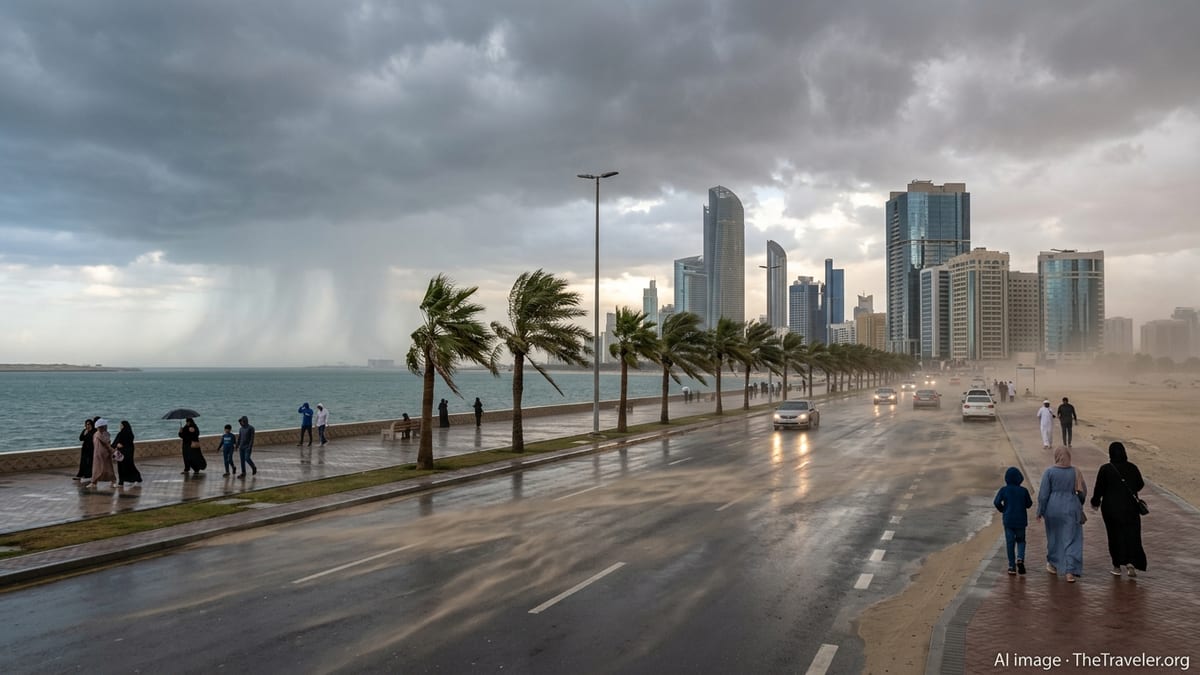
Eid holiday travel and outdoor plans across Abu Dhabi, Al Ain and Al Dhafra are facing disruption as forecasts point to a spell of unstable weather, with periods of rain, fresh winds and blowing dust expected over the coming days.
Get the latest news straight to your inbox!
Unsettled Conditions Forecast Over Eid Period
Publicly available weather bulletins for Abu Dhabi Emirate indicate a shift away from the clear, hot conditions typical of late March, as a series of unstable systems bring clouds, showers and gusty winds into the Eid holiday period. Forecasts for Abu Dhabi city show partly cloudy to cloudy skies with a recurring chance of rainfall, alongside light to moderate northwesterly winds that strengthen at times, reducing visibility with blowing dust.
Inland, Al Ain is expected to see a similar pattern, with partly cloudy to cloudy conditions at intervals and scattered showers developing around the city and surrounding desert. Weather summaries for the area highlight light to moderate winds that can freshen to higher speeds, which may kick up sand and dust, especially in exposed areas and along open highways.
Across the wider Al Dhafra region, which covers much of Abu Dhabi’s western desert and coastline, the same northwesterly flow can amplify the impact of the changing conditions. Gusty winds over open desert and coastal stretches can translate into brief but sharp reductions in horizontal visibility, particularly during the daytime when sand and dust are more easily lifted.
Although the systems are not currently projected to match the intensity of the severe storms and historic rainfall that affected parts of the UAE in previous years, the combination of showers, wind and dust during a busy holiday period is likely to affect how residents and visitors move around the emirate.
Impact on Travel Plans and Outdoor Celebrations
The Eid break traditionally sees heavy travel between Abu Dhabi city, Al Ain and the western region, with many residents driving to family gatherings, desert camps, coastal resorts and entertainment venues. Fresh winds and periods of blowing dust along key routes, including highways linking Abu Dhabi with Al Ain and Al Dhafra, may slow road traffic and require extra care from drivers.
Rainfall during the holiday window, even when described as light to moderate in official bulletins, can lead to localized water pooling on roads and in low-lying areas. In desert and rural districts, showers on dry ground can quickly create slippery surfaces, especially where sand blankets the tarmac. Short bursts of heavier rain around convective clouds could also briefly strain drainage in some urban locations.
Outdoor celebrations, including open-air family gatherings, park visits and coastal walks, may need to adjust timing around passing showers and gusty conditions. Visitors to desert camps and inland attractions near Al Ain and in Al Dhafra may experience shifting sand, hazy horizons and cooler-than-expected temperatures at times, particularly in the evenings when winds remain active.
For those flying in and out of Abu Dhabi during the Eid break, unsettled weather can contribute to occasional delays, especially if reduced visibility or gusty crosswinds coincide with peak travel periods. Airlines and airports typically continue operating through such conditions, but passengers are often advised through public channels to leave additional time for journeys to and from terminals when weather is unsettled.
Marine and Coastal Conditions Along Abu Dhabi Shores
Forecasts for Abu Dhabi’s coastal waters show a pattern of rough to moderate sea states at times, associated with the same northwesterly winds that are expected over land. Bulletins for Abu Dhabi city outline offshore wave heights that can rise to several feet during stronger wind intervals, before easing back to more moderate or slight conditions as systems weaken.
For holidaymakers heading to popular beaches and island resorts, the changing marine forecast means that conditions can vary notably over the course of a single day. Periods of choppy surf, stronger currents and blowing sand along open shorelines are possible when winds pick up. Beachgoers may also encounter intermittent light rain and cooler breezes, in contrast to the typically calm, clear-weather Eid experience.
Small craft, including leisure boats frequently used for coastal sightseeing and fishing trips during holidays, are particularly sensitive to these changes in wind and wave patterns. While large commercial vessels are engineered to handle moderate roughness, smaller boats can be affected by sudden gusts and short, steep waves. Publicly available advisories often recommend that operators of small craft pay close attention to updated forecasts when northwesterly surges are expected.
Visibility along the coast can also deteriorate at times due to sea spray and blowing sand, especially where coastal desert meets open water. This can affect both marine navigation and drivers on coastal highways, reinforcing guidance for slower speeds and increased following distances when visibility begins to drop.
Regional Context: From Light Showers to Localized Hazards
Across the wider UAE, recent discussions in public forums and regional outlooks point to an extended spell of unsettled weather around and immediately after Eid, with expectations of rain bands sweeping across multiple emirates and a risk of locally strong winds. Abu Dhabi, Al Ain and Al Dhafra sit within this broader pattern, where even relatively modest rainfall totals can have outsized effects on transport and outdoor activities.
The combination of fresh winds and dry, sandy terrain in inland districts means that dust and sand can be lofted into the air quickly, turning bright skies hazy in a short time. For people with respiratory sensitivities, such as asthma or allergies, these conditions can be uncomfortable, particularly when dust is accompanied by rapid swings in humidity before and after showers.
Although current bulletins for Abu Dhabi Emirate describe mainly light to moderate winds, they also reference periods when gusts strengthen enough to produce blowing dust and rougher seas. In previous springtime events, similar patterns have been associated with reduced visibility on some highways, minor coastal flooding in exposed spots and scattered reports of water accumulation in urban neighborhoods.
Within city environments, the mix of wet roads, dust and sand can leave a fine, slippery film on surfaces, especially in car parks, pedestrian walkways and bridge approaches. Transport and public-safety messaging in the UAE typically emphasizes cautious driving during such episodes, encouraging lower speeds, increased distances between vehicles and avoidance of standing water where depth is uncertain.
Practical Guidance for Residents and Visitors During Eid
For residents and travelers spending Eid in Abu Dhabi, Al Ain or Al Dhafra, the evolving forecast suggests a flexible approach to holiday plans. Those intending to drive long distances across the emirate may want to schedule trips during daylight, when visibility of approaching dust patches and localized showers is better, and to monitor publicly available weather updates before setting out.
Car owners preparing for desert or intercity drives can benefit from basic checks such as ensuring wipers are functioning properly, tire tread is adequate and washer fluid is topped up, as windswept dust and light rain can quickly cloud windscreens. Keeping extra drinking water, a phone charger and simple emergency supplies in the vehicle is also a common safety practice when traveling across sparsely populated stretches of highway.
Families planning outdoor gatherings, barbecues or park visits may choose locations with easy access to indoor areas or shelters, so that celebrations can continue if showers or gusty winds pass through. In areas prone to sand and dust, using protective covers for food and equipment and wearing eyewear can make outdoor time more comfortable when winds strengthen.
Holidaymakers heading to the coast or taking boat excursions should pay particular attention to locally posted sea and beach advisories, as well as any changes shared through public channels by relevant agencies. Choosing more sheltered beaches and scheduling boat trips during calmer forecast windows can help ensure that the Eid break remains enjoyable, even as rain, winds and dust bring a more dramatic backdrop to celebrations across Abu Dhabi Emirate.