

More news on this day
Cox’s Bazar is riding a powerful Eid travel wave, as rising numbers of visitors from India, China and the United Arab Emirates converge on the Bay of Bengal resort town, driving record hotel occupancy and prompting additional Biman Bangladesh Airlines services into the country’s flagship beach destination.
Get the latest news straight to your inbox!
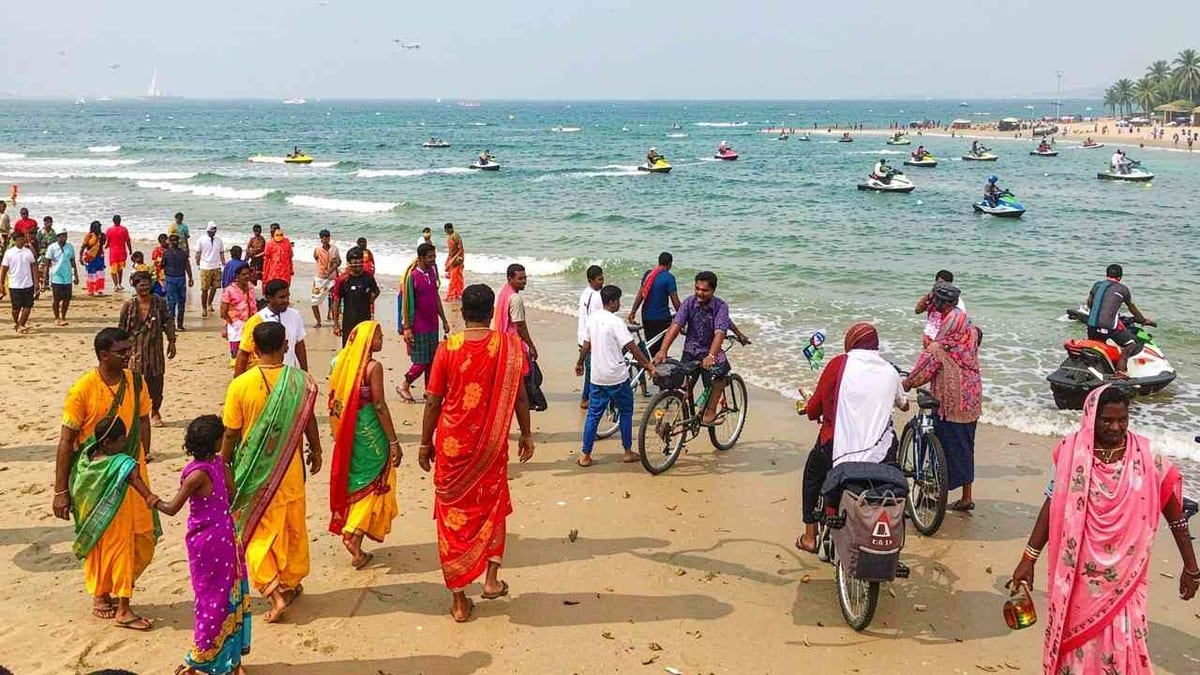
Image by Travel And Tour World
Eid Holiday Crowds Push Visitor Numbers to New Records
Recent Eid seasons have already transformed Cox’s Bazar into one of South Asia’s busiest coastal getaways, and early reports from the latest holidays indicate that momentum is accelerating. Local tourism coverage describes hotel bookings reaching or approaching full capacity during extended Eid breaks, with estimates running into the hundreds of thousands of arrivals over a period of just a few days. In past Eid-ul-Fitr and Eid-ul-Azha holidays, projections have run as high as 800,000 to 900,000 visitors in a single holiday stretch, and this year’s indicators suggest a similar, if not stronger, performance.
Business-focused reporting from Bangladesh highlights that coastal tourism in Cox’s Bazar can now generate hundreds of crores of taka in trade during a single Eid period, underpinned by accommodation, transport, food and entertainment spending. Industry associations note that multi-day public holidays aligned with weekends create rare extended windows for domestic and foreign travel, amplifying demand for flights and hotel rooms across the town.
While domestic travelers from Dhaka, Chattogram and other cities still account for the majority of arrivals, hoteliers and local business leaders are increasingly pointing to a distinct rise in foreign leisure visitors during major religious holidays. Against that backdrop, the role of India, China and the UAE as fast-growing source markets has become more visible in tourist counts and in the composition of guests staying in higher-end properties.
India, China and UAE Emerge as Key Foreign Source Markets
Publicly available tourism analysis positions India, China and the Gulf states among the fastest-growing outbound markets in Asia, with increasing middle-class spending on short-haul regional holidays. Bangladesh is beginning to tap into this trend, and Cox’s Bazar’s proximity to Kolkata, the wider eastern Indian region and major Gulf hubs is turning the town into a convenient alternative to longer-haul beach destinations.
Regional travel commentary indicates that Indian leisure travelers, in particular, are showing greater interest in nearby, cost-competitive destinations reachable in just a few hours’ flight time. Cox’s Bazar benefits from cultural familiarity, shared cuisine and relatively affordable packages, which allow Indian families and young groups to combine sea, shopping and sightseeing over a compact Eid break.
Chinese outbound tourism, while still below pre-pandemic levels in many markets, is gradually returning across South and Southeast Asia. Business and diplomatic links between Bangladesh and China, including growing investment and transport connectivity, are helping to raise the profile of Cox’s Bazar among Chinese travelers seeking quieter alternatives to heavily trafficked regional resorts.
From the UAE and the broader Gulf, Bangladesh’s sizeable diaspora and strong air links through Dhaka are channelling a steady stream of Eid visitors to the coast. Many travelers living in Dubai, Abu Dhabi and other Gulf cities combine family visits with leisure stops at Cox’s Bazar, a pattern that appears to be intensifying as post-pandemic travel confidence solidifies and disposable incomes recover.
Biman Bangladesh Airlines Adds Capacity Into Cox’s Bazar
The surge in demand around Eid has placed aviation capacity under pressure, with Dhaka to Cox’s Bazar emerging as one of the country’s most sought-after domestic routes during holiday peaks. Biman Bangladesh Airlines has responded in recent seasons by mounting additional flights and deploying larger aircraft on key days to accommodate the influx of passengers heading for the beach.
According to published airline schedules and local aviation coverage, Biman’s strategy has focused on flexible holiday capacity, supplementing regular services with extra frequencies when advance bookings surge. This pattern has become particularly evident around Eid, when travelers from India, China and the UAE connect through Dhaka on Biman’s international network before continuing on to Cox’s Bazar.
Industry observers note that the national carrier’s international reach is a critical enabler of the town’s foreign tourism growth. Combined itineraries that pair Biman’s Gulf and South Asian routes with domestic sectors allow visitors to purchase through-tickets to Cox’s Bazar, simplifying journeys and reducing total travel time. As demand from India, China and the UAE expands, aviation analysts expect Biman and competing carriers to explore further schedule adjustments and potential direct links once Cox’s Bazar’s infrastructure is ready.
Hotels Report Full Houses and Rising Revenues
On the ground, hotel and resort operators across Cox’s Bazar report that Eid holidays are now synonymous with peak-season trading. Trade press coverage and local business reporting describe occupancy in many hotels and guesthouses climbing close to 100 percent during extended Eid breaks, especially on prime beachfront strips and in the hotel-motel zone.
In previous Eid periods, room shortages have been common, with late-arriving tourists forced to seek accommodation in more distant neighborhoods or in surrounding upazilas. This year’s surge, bolstered by additional foreign guests from India, China and the UAE, is repeating that pattern, reinforcing the town’s status as Bangladesh’s most commercially important leisure destination.
Higher-spending international visitors are particularly significant for upscale hotels and branded resorts, which benefit from demand for larger room categories, suites and add-on services such as airport transfers, guided excursions and spa treatments. Industry data from recent Eid seasons point to pronounced spikes in average daily room rates and total revenue per available room, trends that operators expect to continue as international arrivals rise.
Retailers, beachside vendors and restaurant owners are also reporting strong takings during the holiday period, reflecting the purchasing power of both domestic and foreign tourists. The combined effect is a broad-based boost to the local economy, with transport providers, tour operators and informal workers all sharing in the windfall.
New Infrastructure Aims to Turn Eid Peaks Into Year-Round Growth
Looking ahead, Cox’s Bazar is in the midst of a broader infrastructure transformation aimed at converting Eid-driven peaks into more stable, year-round visitor flows. A new international-standard terminal at Cox’s Bazar airport, currently under development, is expected to allow direct flights from regional hubs once fully operational, significantly reducing travel times for visitors from India, China and the UAE.
Transport upgrades complement earlier moves such as the launch of direct rail links connecting Cox’s Bazar with the national network, which have already made it easier and more affordable for domestic tourists to reach the coast during holidays. Improved road connections and expanded hospitality capacity, including new midscale and upscale hotels, are also being positioned as foundations for sustained foreign tourist growth.
Tourism analysts argue that the current Eid surge offers a preview of what Cox’s Bazar could achieve with more diversified source markets and smoother year-round access. If Biman Bangladesh Airlines and other carriers are able to leverage the new airport facilities and international awareness generated by diaspora and holiday travel, the proportion of visitors from India, China and the UAE is likely to keep rising.
For now, the latest Eid season has underscored the town’s status as Bangladesh’s tourism capital, illustrating how regional travel trends, airline capacity decisions and local investment are converging on Cox’s Bazar. With foreign arrivals strengthening and domestic enthusiasm undimmed, the resort’s record-breaking holiday crowds may become an increasingly common feature of the Bay of Bengal shoreline.