

More news on this day
Indonesia’s 2025 Eid travel season recorded a sharp rebound in public transport use, with passenger numbers rising 8.6 percent year on year to around 10.9 million, as trains emerged as the backbone of the holiday homecoming rush.
Get the latest news straight to your inbox!
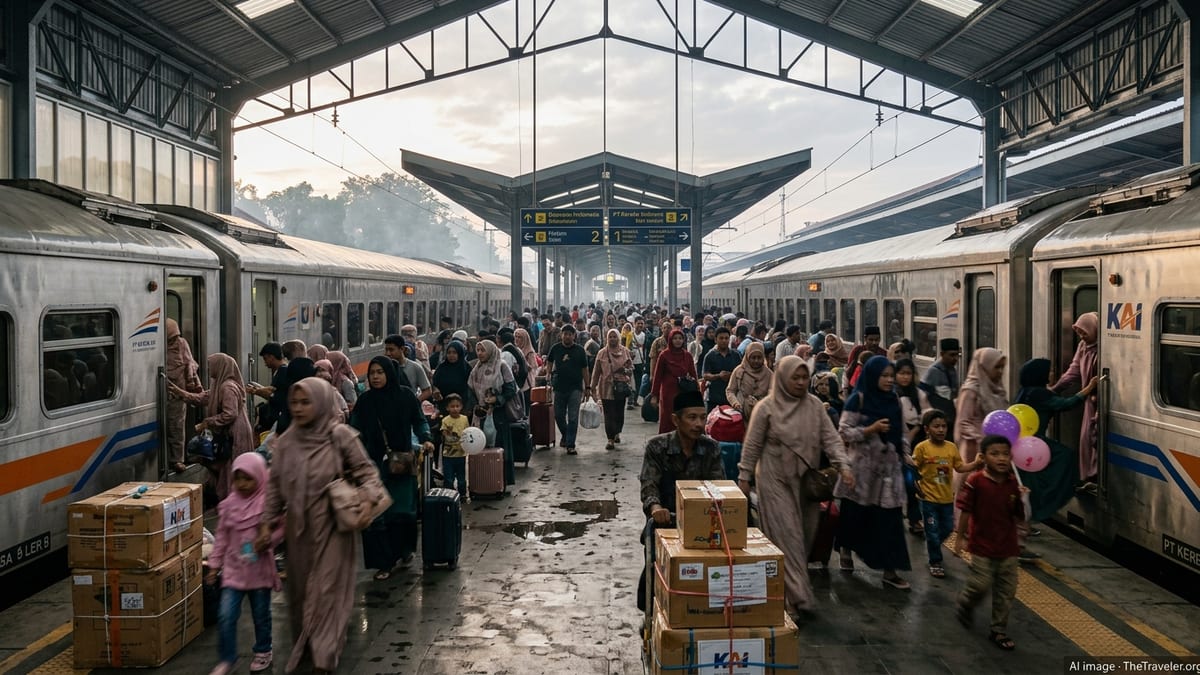
Public Transport Demand Jumps During Eid Homecoming
Publicly available information from Indonesia’s Ministry of Transportation shows that the total number of passengers using formal public transport during the 2025 Eid travel period climbed to roughly 10.9 million people, an increase of about 8.6 percent compared with the 2024 season. The figure covers users of road, rail, sea, air and ferry services during the designated Eid transport window, which typically spans the peak homecoming and return dates.
The increase continues a multi-year recovery in mobility as more Indonesians resume long-distance travel for the annual mudik exodus. Transport data indicate that the overall movement of people during the 2025 Eid period reached more than 150 million trips nationwide, underscoring how critical public transport has become in managing congestion on the country’s main road corridors.
While private cars and motorcycles still handle the majority of travel volumes, the latest data suggest that formal public transport modes are regaining ground, supported by additional services, discounted fares and tighter operational coordination across operators. The 8.6 percent jump in public-transport passengers outpaced overall population growth, signaling a shift by many travelers toward mass transit options.
For travelers, the stronger public transport offering translated into more departure options and higher seating capacity across popular routes linking major urban centers on Java, Sumatra and other islands to smaller hometowns.
Railways Emerge as the Top Choice
Within the 10.9 million passengers recorded during the 2025 Eid transport period, railways accounted for the single largest share. Ministry figures and operator reports indicate that long-distance and local intercity trains together carried more than 8.2 million passengers during the official Eid window, making rail the leading mode by volume among public transport options.
State-owned operator Kereta Api Indonesia and its commuter subsidiary reported robust demand across both long-distance services and suburban commuter lines. Published coverage during the peak period highlighted that KAI Group services alone handled well over 11 million passengers when including commuter operations and special Eid services, reflecting both the formal Eid window and surrounding travel days.
Rail’s performance is closely tied to its ability to offer predictable travel times and relatively affordable fares on heavily traveled corridors between Jakarta, West Java, Central Java, Yogyakarta and East Java. Additional holiday trains, especially in economy class, were deployed to respond to rising demand, with several routes reporting high seat occupancy throughout the peak homecoming and return days.
The strong rail showing also reflects ongoing investments in rolling stock, station upgrades and digital ticketing, which have improved the overall experience for passengers making overnight or full-day journeys across Java and beyond.
How Other Transport Modes Performed
Although railways led by passenger volume, other modes also recorded year-on-year growth during the 2025 Eid season. Road-based intercity buses and related services carried more than 5.5 million people, an increase of nearly 20 percent compared with 2024, supported by additional fleets and coordinated rest-area management along main toll roads.
Domestic air travel maintained a substantial role on longer routes linking Java to Sumatra, Kalimantan, Sulawesi and eastern Indonesia. Airport operators projected that air passenger numbers during the Eid period would surpass pre-pandemic levels, with estimates around 10.8 million air travelers across the broader holiday window, and official data show a modest increase in passengers compared with the previous year’s Eid season.
Sea transport and inter-island ferries also saw double-digit growth in passenger numbers. Published government figures report around 2.25 million sea passengers during the 2025 Eid period, reflecting the importance of shipping services for island communities where road and rail links are limited. Ferry crossings on strategic straits, including the busy Merak–Bakauheni route connecting Java and Sumatra, reported higher flows as operators added sailings to reduce queues.
Taken together, the performance across all modes points to a broad-based recovery in Indonesia’s transport system during peak religious holidays, with railways, buses, ships and planes all handling heavier traffic while working within tighter safety and scheduling protocols.
Capacity, Scheduling and Peak-Period Pressures
The 8.6 percent rise in public-transport passengers during the 2025 Eid season created visible strains on capacity, particularly during the narrow windows around the main homecoming and return days. Ministry data and operator statistics show that the highest rail passenger concentrations were recorded between four days before Eid and two days after, when trains and stations on Java’s main corridors operated close to or at full capacity.
To accommodate this pressure, rail operators introduced facultative and additional services on several long-distance routes, including special Ramadan and Eid trains that only run during the holiday period. Schedules were adjusted to maximize track usage, with overnight departures and early-morning arrivals designed to give travelers more options while easing crowding at stations.
Bus companies and ferry operators followed similar strategies, deploying extra vehicles and additional sailings during the busiest days. Local media coverage highlighted efforts to extend operating hours and open temporary service posts at key terminals, ports and rest areas to manage passenger flows, provide basic services and monitor safety protocols.
Despite the higher volumes, publicly available reports describe operations as generally smooth, with isolated delays and local congestion but no prolonged system-wide breakdowns. The combination of pre-booked digital tickets, staggered departures and targeted capacity increases appeared to help distribute passenger loads more evenly across the season.
What This Means for Future Eid Travel
The 2025 Eid travel season’s 8.6 percent jump in public transport passengers to 10.9 million users offers important signals for travelers planning future homecoming trips in Indonesia. The numbers suggest that seats on popular services, especially long-distance rail, are likely to sell out earlier as more people choose trains over private vehicles or last-minute options.
For rail passengers, the data underscore the value of booking well ahead of the peak period, particularly on high-demand routes between Jakarta and key cities such as Yogyakarta, Surabaya and Malang. The strong performance of commuter and local trains also indicates that urban travelers will continue relying on rail for both mudik journeys and daily mobility during the holiday period.
From a broader travel perspective, the rising use of public transport may bring more predictable journey times on main corridors and ease some of the chronic congestion on toll roads, while placing greater expectations on operators to keep expanding capacity and maintaining service quality. Bus, ferry and air travelers can expect continuing adjustments to schedules and fleets around peak dates as operators respond to evolving demand patterns.
For international visitors and domestic tourists who choose to travel within Indonesia during Eid, the latest figures serve as a reminder that the holiday period is among the busiest times of the year. Planning around the main homecoming and return windows, and factoring in heavier station, airport and port crowds, will be increasingly important as the country’s public-transport network continues to grow.