

More news on this day
As Eid al-Fitr approaches amid an unsettled security landscape, Saudi Arabia, Qatar and neighboring Middle Eastern states are struggling to keep holiday travel and family reunions on track while managing fast-changing airspace risks and aviation disruptions.
Get the latest news straight to your inbox!
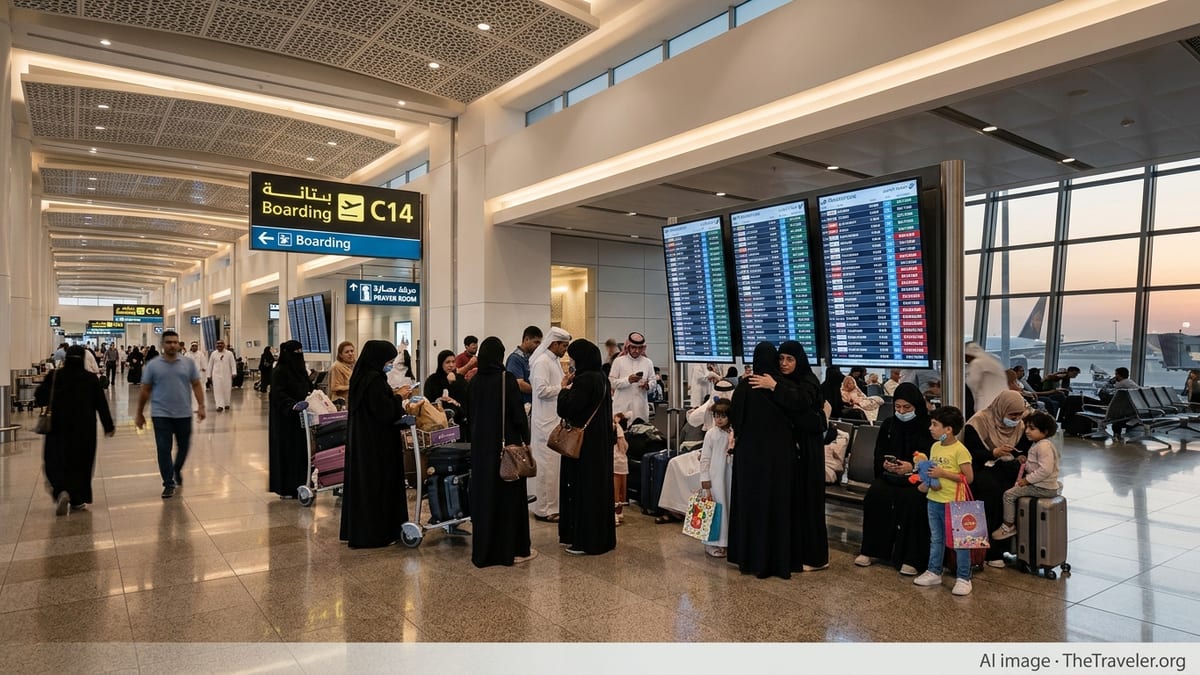
Airspace Closures Collide With Eid Peak Season
The latest phase of regional conflict, including the 2026 Iran war and missile activity around key hubs, has led to periodic airspace closures and restrictions across Bahrain, Iraq, Kuwait, Qatar and the United Arab Emirates, according to publicly available aviation notices and government statements. These measures, introduced primarily on safety grounds, have collided with the run up to Eid, when flight loads across the Gulf normally surge as expatriate workers and local families travel for reunions.
Reports from regional media and travel industry trackers indicate that large parts of Middle Eastern skies have at times been treated as conflict zones, forcing airlines to cancel, reroute or significantly delay services. Notices and advisories referencing high risk over Iran, Iraq, Israel, Jordan and Lebanon have added further complexity, as carriers seek safer routings to maintain essential connections between the Gulf, the Levant, Europe and South Asia.
For Saudi Arabia and Qatar, which host major religious sites and global transit hubs respectively, the timing is particularly sensitive. The Eid period traditionally brings a spike in both domestic and international journeys, from Umrah trips into Saudi cities to long haul connections through Doha, Dubai and other Gulf gateways. This year, however, seat availability, onward connectivity and journey times have become far harder to predict.
Saudi Arabia Balances Pilgrim Flows and Network Disruptions
Saudi airports, already under pressure from growing religious tourism and the wider expansion of the kingdom’s aviation sector, are now contending with external shocks layered on top of normal Eid demand. Publicly available flight tracking data and disruption tallies compiled by consumer platforms show cancellations and delays affecting departures to and from Saudi Arabia as airlines react to shifting airspace conditions across the wider region.
National carrier networks built around Jeddah, Riyadh and Dammam depend heavily on stable corridors over neighboring states. When Iraq or parts of the Levant restrict airspace, services linking Saudi Arabia with Europe and parts of Asia must be rerouted, adding fuel burn, crew duty complications and potential missed connections. During peak Eid travel, even modest schedule changes can cascade into full flights, limited rebooking options and longer waits for stranded passengers hoping to reach family gatherings on time.
Saudi authorities have also been advancing broader plans to grow capacity through new airports and additional aircraft orders, and pre conflict forecasts pointed to strong growth in regional passenger numbers over the second half of the decade. However, the current security climate has underscored how vulnerable these ambitions, and the personal plans of millions of travelers, remain to sudden geopolitical shocks.
Qatar and Gulf Hubs Under Strain as Routes Shift
Qatar, home to Doha’s Hamad International Airport, has emerged as one of the most exposed states in the latest round of tensions. Published coverage on the 2026 Iran war notes that Qatar’s airspace has at times been restricted and that flights through Doha have operated at reduced capacity. For a hub model built on high frequency connections between Europe, Asia, Africa and the Americas, any limitation in throughput quickly translates into pressure on seats, transit times and fares.
Gulf competitors such as the UAE, Bahrain, Oman and Kuwait are experiencing parallel challenges. Reports from aviation analytics outlets and regional newspapers describe waves of abrupt schedule changes, including temporary suspensions to certain destinations and relief flights added at short notice once protected corridors are defined. Carriers based in these states have tried to maintain essential flows for residents and expatriates, but have often had to prioritize repatriation and critical journeys over discretionary trips.
The result for many Eid travelers is a patchwork of options. Some passengers are being advised to route via alternative hubs in Southeast Europe or Asia, rather than rely on traditional Gulf connections, while others face longer layovers in Doha, Dubai, Abu Dhabi or Manama as airlines space out departures to cope with airspace bottlenecks. In practice, that can mean family gatherings starting late or with key members missing, particularly for those traveling on tight annual leave windows or limited budgets.
Levant and Iraq Face Added Constraints on Family Travel
In Lebanon and Iraq, where commercial aviation was already sensitive to regional instability, the latest conflict dynamics have intensified constraints on Eid travel. European conflict zone bulletins and national aviation advisories continue to flag elevated risks in the airspace over both countries, which has reduced the willingness of some foreign carriers to operate direct services. Those that do fly often rely on carefully defined corridors and restricted hours, leaving residents with fewer daily options.
For diasporas spread between the Gulf, Europe and North America, this has practical consequences. Instead of relatively straightforward itineraries linking Gulf hubs with Beirut, Najaf, Erbil or Baghdad, many travelers now face multi leg journeys via third countries, higher all in costs and a greater risk of missed family gatherings if one segment is disrupted. With Eid dates fixed by the lunar calendar, rebooking at short notice often means competing for a shrinking pool of remaining seats during the busiest days.
Publicly available information from airport operators and travel agents in the region points to surging demand for any remaining capacity into the Levant, particularly in the days immediately before Eid. At the same time, concerns about the broader economic impact of the conflicts, including currency pressures and inflation, are limiting how much many families can spend on last minute tickets, even as reunions become more difficult to arrange.
Rising Fares, Longer Journeys and Growing Traveler Fatigue
Beyond headline cancellations, one of the most visible effects of the ongoing instability has been a rise in effective travel costs. Trade association data and regional business coverage show that Middle Eastern fares climbed sharply during earlier phases of the crisis, reflecting higher insurance premiums, longer routings around conflict zones and tighter capacity as some airlines pulled back. While there have been periods of partial normalization, each new flare up has tended to push prices higher again, especially around peak seasons such as Eid.
For families in Saudi Arabia, Qatar, the wider Gulf and neighboring countries, this has turned routine holiday journeys into carefully weighed financial decisions. Larger households, including multi generational groups that would normally travel together, are sometimes splitting trips or sending only a few members to keep costs manageable. Others are delaying reunions to future school breaks or relying more heavily on digital communication when travel becomes unaffordable or logistically uncertain.
There is also a growing sense of fatigue among frequent travelers and aviation workers, reflected in social media posts and industry commentary about the difficulty of planning around rolling disruptions. Advisories urging passengers to check flight status constantly, arrive at airports much earlier than usual and remain flexible with dates and routings have become common. For many, the emotional weight of potentially missing Eid prayers or family celebrations due to a last minute airspace change is now an accepted, if unwelcome, part of regional travel.
At the same time, forecasts from airline groups and tourism bodies still point to strong medium term growth in Middle East passenger numbers, driven by new mega hubs, fleet orders and visa reforms. The challenge for Saudi Arabia, Qatar and their neighbors will be translating that structural opportunity into a network that can withstand recurring geopolitical shocks, so that future Eid seasons are remembered more for smooth reunions than for the scramble to stay ahead of the next round of closures in the skies above.