

More news on this day
A historic spiral staircase section from the Eiffel Tower is heading to auction, offering wealthy collectors a rare opportunity to buy an authentic piece of one of the world’s most recognizable landmarks.
Get the latest news straight to your inbox!
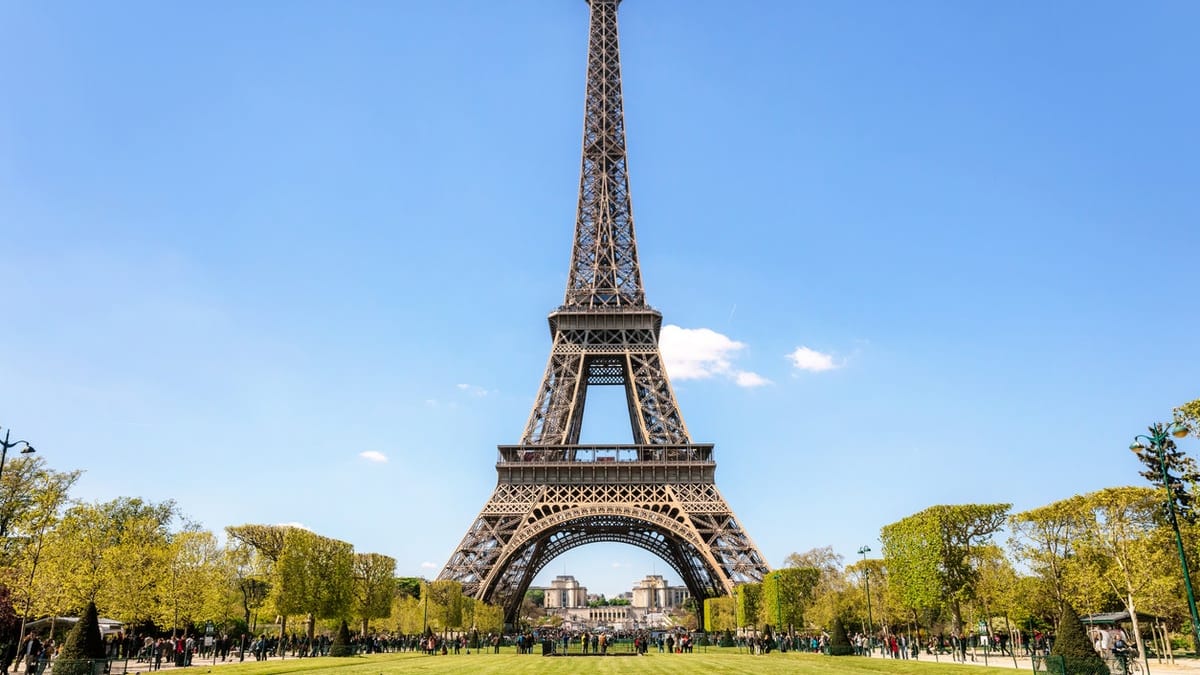
Image by Travel News – Tourism Tips, Guides & Deals | New York Post
A rare piece of Parisian history returns to the market
The staircase segment comes from the original helical stairway that once connected the lower platforms of the Eiffel Tower to its summit. The structure, installed for the 1889 Exposition Universelle, was dismantled in the early 1980s during modernization work to improve safety and visitor flow. Several large sections were cut apart and distributed between French museums and private buyers, with a handful reappearing at auction over the past three decades.
According to published coverage, the sections that have surfaced at major auction houses in recent years have consistently attracted international interest. Previous sales have described segments measuring more than a dozen steps high, composed of riveted iron that still bears the industrial character of the late nineteenth century. Each piece is both an engineering relic and a sculptural object, making it appealing to collectors of design, architecture and historical memorabilia.
Art market observers note that these staircase elements rarely come up for sale, since many were acquired by institutions or long-term private holders after the original dismantling. As a result, any newly listed section is typically promoted as a once-in-a-generation chance to obtain a substantial, authenticated fragment of the tower itself.
High estimates reflect soaring demand for architectural icons
Expectations for the upcoming sale are steep. Recent auction histories show that comparable Eiffel Tower staircase segments have fetched prices that climbed into the high six figures and, in some cases, have approached or exceeded the one million dollar mark once buyers’ fees are included. Those results place the fragments among the most valuable pieces of architectural heritage to trade on the open market.
Specialists point out that several factors underpin these valuations. The Eiffel Tower is a globally recognized symbol of France, and any original structural component carries instant name recognition. Unlike smaller souvenirs made from repurposed iron, the staircase sections are monumental in scale and visually striking, creating powerful display pieces for private residences, corporate headquarters or museums.
In addition, the number of sizable, traceable sections is limited. Publicly available records indicate that only a few dozen substantial pieces were separated when the stairway was removed, with some permanently installed in museum collections. The resulting scarcity, combined with the continuing international fascination with Paris, has helped push estimates higher with each high-profile sale.
From summit access to collectible artifact
The original spiral staircase was an integral part of Gustave Eiffel’s design, giving early visitors direct access between the tower’s platforms and its summit cabin. Period photographs show crowds ascending the narrow iron steps, framed by the lattice of the tower’s structure. Over time, however, growing visitor numbers and evolving safety standards made the steep, confined stairway less practical.
During major renovation work in the late twentieth century, engineers opted to remove the stairway while preserving representative sections for posterity. One segment remained at the tower as a permanent exhibit, while several others were allocated to museums in France. The remaining pieces were divided into transportable units and offered to buyers, initially attracting a small circle of enthusiasts before interest broadened alongside the growth of the global art and collectibles market.
Since then, staircase sections have taken on new lives far from the Champ de Mars. Some have been installed in sculpture gardens or public plazas, while others have been integrated into private architectural projects as focal points. The transformation from functional infrastructure to collectible object highlights a wider trend in which industrial heritage is reframed as art and design.
How buyers might display a tower in miniature
For prospective bidders, acquiring part of the Eiffel Tower raises practical questions that go beyond price. Staircase segments are heavy and tall, often weighing several hundred kilograms and standing multiple meters high. Auction catalogues typically emphasize the need for professional logistics, including cranes or special handling equipment, to transport and install the ironwork safely.
Once in place, however, the section can function as both sculpture and conversation piece. Some buyers prefer to mount the stairway outdoors, allowing the weathered iron to echo its former life under Parisian skies. Others choose interior settings, where controlled lighting can accentuate the intricate pattern of treads, risers and railings that define the tower’s industrial aesthetic.
Design consultants suggest that even when not used as a functional staircase, the segment can anchor a broader interior scheme. Its riveted surfaces and gentle spiral can be complemented by contemporary glass, concrete or wood, creating a dialogue between nineteenth-century engineering and modern minimalism. For many collectors, the appeal lies as much in that visual impact as in the object’s historical narrative.
Tourism, symbolism and the global fascination with the tower
The renewed attention to an Eiffel Tower staircase sale comes as the monument itself continues to adapt and reinvent its visitor experience. Public information from the tower’s operator highlights ongoing investment in maintenance, crowd management and new attractions, underscoring the continued importance of the site to Paris’s tourism economy.
The tower’s symbolic power has also been underscored in recent years through high-profile projects that reuse or reference its materials. For the Paris 2024 Olympic and Paralympic Games, organizers incorporated small pieces of Eiffel Tower iron into the design of the official medals, reinforcing the structure’s status as a national emblem presented on the world stage. That initiative showcased how fragments of the tower can carry meaning far beyond their physical size.
Against that backdrop, the forthcoming sale adds another chapter to the story of how a single monument can be experienced in multiple ways. Millions of visitors continue to queue for panoramic views above the Seine, while a handful of collectors compete for ownership of actual structural elements. The auction of a staircase segment illustrates how demand for connections to iconic places now ranges from mass tourism to highly exclusive pieces of architectural history.