

More news on this day
Hundreds of passengers were left stranded at Tel Aviv’s Ben Gurion Airport on March 26 as El Al grounded more than twenty flights, disrupting services to Thailand, the United Kingdom, Italy, the United States and other key destinations amid ongoing regional instability and tight capacity constraints.
Get the latest news straight to your inbox!
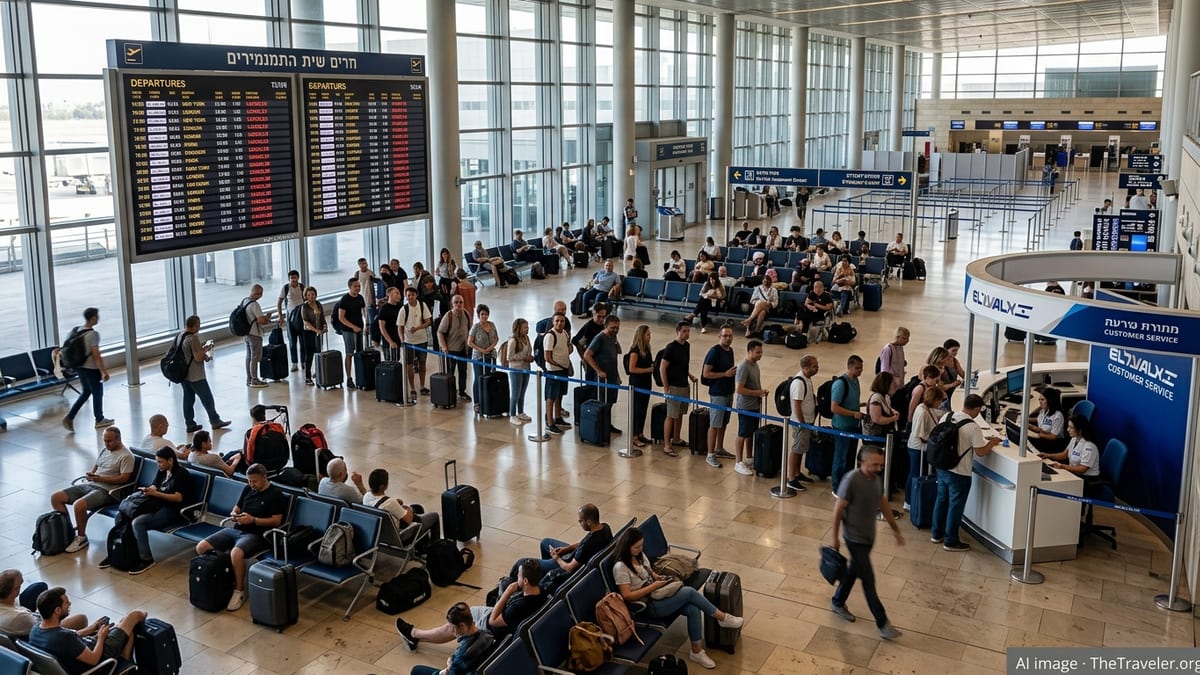
Major Wave of Cancellations Hits Ben Gurion Departures
Flight schedules at Ben Gurion Airport were thrown into fresh turmoil on March 26 as El Al withdrew a substantial block of departures, with publicly available flight-board data and local media reports indicating that more than twenty services did not operate as planned. The cancellations affected a mix of long haul and medium haul routes that typically serve leisure travelers, business passengers and those attempting to return home following weeks of disruption linked to the wider regional conflict.
Routes connecting Tel Aviv to Bangkok, London, Rome, Milan, New York and other major hubs were among those impacted, according to published coverage and airline timetables monitored throughout Thursday. Several affected flights had already been operating on irregular patterns or reduced frequencies since late February, when the 2026 Iran war triggered repeated airspace closures and strict limits on outbound passenger numbers from Israel.
The latest cancellations left large numbers of passengers waiting in Ben Gurion’s terminals for rebooking options, with social media posts and traveler forums describing crowded check in areas, long queues at customer service desks and uncertainty about onward connections. For many, the grounded flights represented a new setback after previous schedule changes, rolling delays and complex rerouting via third country hubs.
While El Al has been central to Israel’s limited international connectivity since the onset of the conflict, the grounding of such a significant cluster of flights in a single day underlined how fragile that lifeline remains. The airline has repeatedly adjusted its network in response to capacity caps at Ben Gurion, security assessments and operational challenges across multiple international gateways.
Regional Conflict and Capacity Limits Keep Pressure on Airlines
The new disruption cannot be separated from the broader backdrop of the 2026 Iran war, which has repeatedly affected operations at Ben Gurion since late February. Following missile and drone attacks on Israeli targets and on infrastructure around the country, Israel temporarily closed its airspace and later reopened it under tight restrictions, sharply reducing the number of passengers allowed to depart on each international flight.
According to reporting in Israeli media, authorities have in recent days maintained caps on passenger loads for departures to North America and Europe, citing both security considerations and the need to manage traffic through a network still recovering from earlier shutdowns. These caps mean aircraft often cannot be filled to normal commercial levels, adding complexity to airlines’ efforts to balance demand, safety and profitability on key routes.
Publicly available information indicates that El Al has tried to respond by mounting so called recovery flights to bring Israelis home and to clear backlogs on core routes, while also honoring previous bookings where possible. However, these efforts have unfolded against a backdrop of damaged aircraft, rerouted airspace corridors, and limited slots at foreign airports coping with their own operational constraints linked to the conflict.
Industry observers note that such conditions can make day to day scheduling extremely volatile. A single operational issue, such as a delayed inbound aircraft, crew availability problem or security related adjustment, can cascade across an already compressed timetable and force the cancellation of multiple rotations in quick succession, particularly when there is little spare capacity in the system.
Stranded Passengers Face Difficult Choices on Thailand, UK, Italy and US Routes
The grounding of flights on March 26 hit some of El Al’s busiest and most strategically important markets. Services to Thailand, especially Bangkok, have long been popular with Israeli leisure travelers and backpackers, many of whom now find themselves unable to depart as planned or facing multiday delays while waiting for alternative seats to open up.
Connections to the United Kingdom and Italy, including London, Rome and Milan, are also heavily used by a mix of tourists, students and dual nationals. Published coverage and online travel discussions describe travelers attempting to secure itineraries that route through nearby hubs such as Larnaca, Athens or Istanbul in an effort to bypass direct cancellations, only to encounter limited availability and elevated fares as demand spills over onto remaining services.
On long haul routes to the United States, particularly New York area airports, the impact has been just as acute. In recent weeks, publicly available information shows that El Al has been one of the few carriers operating regular non stop links between Israel and North America, following extensive cancellations by foreign airlines. The decision to ground multiple departures in a single day therefore removed a critical outlet for passengers trying to leave Israel or return home from the US.
With regional airspace disruptions extending to Gulf and European carriers and with capacity still constrained at Ben Gurion, many stranded travelers now face stark choices: wait in Israel in the hope of a rebooked seat on a future El Al flight, attempt complex indirect routings via neighboring countries with open land borders, or postpone trips altogether until conditions improve.
Airline Response and Rebooking Efforts Under Scrutiny
In recent weeks, El Al has publicized measures intended to address the disruption, including special recovery fares on select routes and dedicated flights for certain passenger groups whose original bookings were canceled earlier in the month. Reports on airline statements indicate that tens of thousands of travelers have already been rebooked under these programs, with priority given to those who were stranded abroad when hostilities intensified.
However, the sudden grounding of over twenty flights on March 26 has renewed scrutiny of how effectively these measures are reaching passengers now stuck in Israel rather than overseas. Travelers posting on social media and in public forums have described challenges contacting customer service, language barriers when receiving automated messages, and confusion over whether they remain eligible for recovery flights or must purchase entirely new tickets.
Consumer advocates argue that the combination of government imposed capacity limits, shifting security assessments and commercial pressures has created a grey area in which passengers struggle to understand their rights to refunds, vouchers or alternative transportation. In this environment, clear and timely communication from airlines becomes critical to maintaining trust, particularly for those who have already endured multiple cancellations or who are traveling for urgent family or medical reasons.
Despite the difficulties, El Al remains one of the only carriers consistently operating in and out of Israel under the current conditions, and analysts suggest that its ability to stabilize its schedule will be central to any wider normalization of travel to and from the country. For now, the events at Ben Gurion on March 26 highlight the ongoing vulnerability of Israel’s air links and the precarious position of travelers dependent on a network still operating in crisis mode.