

More news on this day
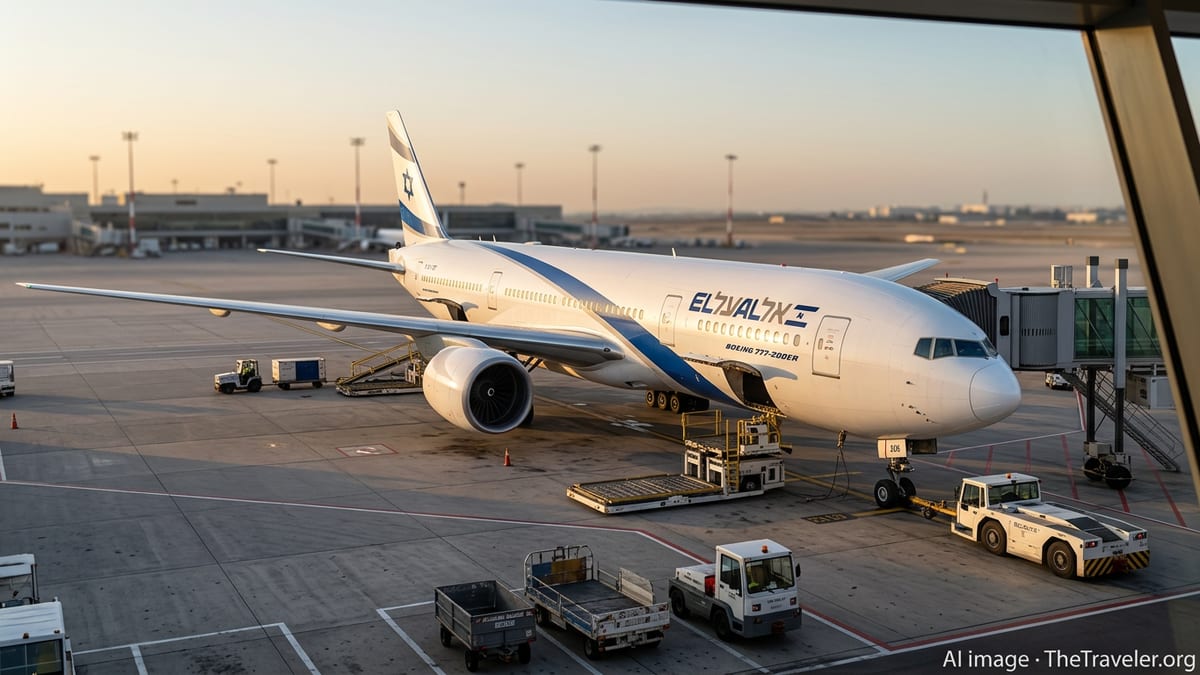
El Al Israel Airlines has confirmed plans to fully retrofit its Boeing 777 fleet by the first quarter of 2027, stepping up a multi-year fleet modernization strategy that aims to boost capacity, align cabins with its newer Dreamliners and sharpen the carrier’s competitiveness on long-haul routes.
Cabin Overhaul for Six Boeing 777-200ER Aircraft
According to recent industry briefings, El Al will reconfigure all six of its Boeing 777-200ERs into a uniform, higher-density layout of around 313 seats, replacing older cabins that have long lagged behind the airline’s newer Boeing 787 Dreamliners in comfort and technology. The program will cover both aircraft already in service and two 777s that had been parked, which are now being brought back into the active fleet following refurbishment.
Work on the type has been under way for some time, with El Al previously retrofitting two 777s to a cabin standard modeled on its Dreamliner product. The new plan formalizes a full-fleet commitment and sets a clear completion target by early 2027, effectively extending the service life of the widebodies at a time when replacement long-haul aircraft are scarce and delivery slots from manufacturers remain constrained.
The reconfigured 777s will focus on upgraded premium cabins and refreshed economy seating, with in-seat entertainment, power at every seat and an updated design intended to offer a more consistent experience across El Al’s long-haul network. While detailed seat maps have not been formally published, industry reports suggest the refreshed interiors will closely mirror the style and layout already familiar to passengers on the airline’s 787 fleet.
El Al’s move echoes a broader trend among global carriers that are investing in mid-life cabin upgrades for proven widebody types, rather than accelerating retirements in a tight supply environment. For passengers, the result is likely to be a noticeable uplift in onboard comfort on some of the airline’s most important intercontinental routes.
Investment Tied to Wider Fleet Modernization Plan
The 777 retrofit is one strand of a wider modernization blueprint in which El Al is adding new Boeing 787 Dreamliners and has outlined plans to renew its narrowbody fleet with next-generation 737 Max aircraft. Company filings and investor presentations have highlighted the importance of improving fuel efficiency and product quality while managing capital expenditure in a volatile global market.
By choosing to invest in existing 777-200ERs, El Al is effectively using cabin upgrades to bridge the gap until additional new-build aircraft arrive, maintaining widebody capacity without committing to near-term deliveries that may be difficult to secure. The airline has framed the 777 program as a relatively cost-effective way to unlock more seats, increase revenue potential and deliver a product more closely aligned with its flagship jets.
The retrofit also dovetails with El Al’s sustainability and efficiency goals. While the 777-200ER cannot match the fuel burn of a new-generation twin, optimizing interiors, standardizing configurations and tightening maintenance planning can reduce per-seat emissions and support more disciplined network deployment. The airline has signaled that its long-term fleet mix will tilt further toward newer, more efficient widebodies, but that the 777 will remain important well into the second half of the decade.
Financial disclosures in recent quarters have underscored the tension between renewing aircraft and preserving balance sheet flexibility. Against that backdrop, the modernization of existing assets, including the 777 fleet, has been presented to investors as a pragmatic compromise that supports growth without overextending the airline in a still-uncertain demand environment.
Restored Aircraft to Strengthen Long-Haul Network
Once retrofitted, El Al’s six 777-200ERs are expected to be deployed primarily on high-demand long-haul sectors, where the combination of added capacity and upgraded product can generate the highest returns. The aircraft have historically served trunk routes to North America and key European gateways, and industry analysts expect the refreshed jets to rotate across those markets alongside the airline’s Dreamliners.
The shift to a 313-seat layout, up from earlier lower-density configurations, will allow El Al to sell more seats on peak flights without adding extra frequencies that might stretch crew and fleet resources. For an airline operating out of a single, congested home hub, maximizing each widebody departure is a central part of its commercial strategy.
Enhanced premium cabins on the 777s should also support El Al’s efforts to compete more aggressively for corporate and high-yield leisure travelers who now have a wide choice of one-stop alternatives via major Gulf and European hubs. Aligning the 777 experience with that of the 787 means fewer surprises for frequent flyers and a smoother transition between aircraft types across the schedule.
Network planners will gain more flexibility from a fully standardized widebody subfleet, making it easier to upgauge routes at short notice or to swap aircraft in response to operational disruptions. That operational resilience has become increasingly valuable as airlines grapple with tight maintenance windows, airspace restrictions and episodic demand swings.
El Al Joins Global Wave of Widebody Retrofits
El Al’s decision comes amid a worldwide wave of retrofit programs as airlines seek to refresh aging cabins and harmonize products across mixed fleets. Major carriers in Europe, Asia and the Middle East have announced or begun similar projects for Boeing 777, 787 and Airbus A350 and A380 aircraft, citing both passenger expectations and competitive pressure as key drivers.
For many operators, retrofitting has emerged as a strategic middle path between flying older interiors far past their prime and committing to large, near-term orders of new jets in an uncertain supply and pricing environment. New engines and airframes remain central to long-term decarbonization strategies, but in the near term, airlines are betting that a thoroughly modern onboard experience can significantly influence customer choice and loyalty.
In this context, El Al’s 777 plan signals that the airline intends to compete head-on in the premium long-haul segment, not simply on the strength of its Dreamliner fleet but across its entire widebody lineup. For travelers, the practical impact will be more consistent cabins, contemporary entertainment and connectivity options, and a product that feels significantly closer to what is on offer from larger global rivals.
With a clear timeline to complete the reconfiguration of all six Boeing 777s by the first quarter of 2027, El Al is setting expectations for both investors and passengers that the coming two years will bring visible changes onboard. As work progresses aircraft by aircraft, the carrier’s long-haul network will gradually transition away from legacy interiors to a more cohesive, modern standard.