

More news on this day
El Al’s decision to launch nonstop flights from Tel Aviv to Hanoi, Seoul and Manila from late 2026 into 2027 is set to reshape how Israelis and North American travelers reach three of Asia’s fastest-rising capitals, opening a rare window to lock in lower fares, better award seats and more convenient itineraries before demand catches up.
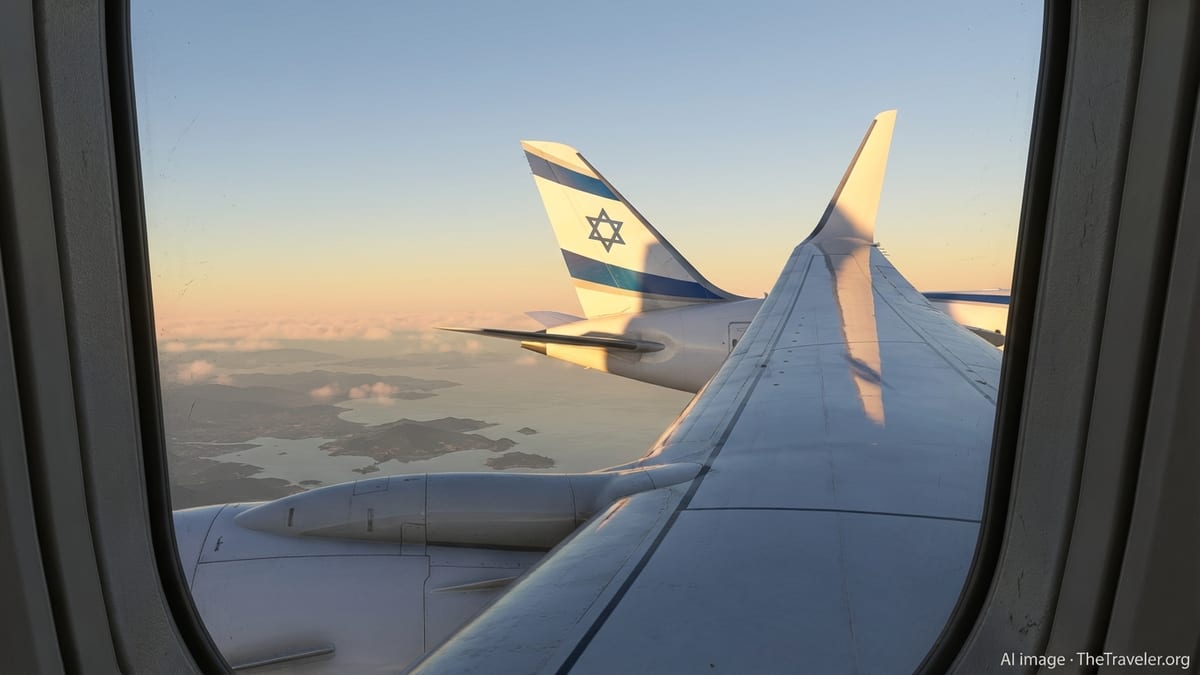
Major Post-Conflict Expansion for Israel’s Flag Carrier
El Al’s new routes to Vietnam, South Korea and the Philippines form the backbone of a nine-destination expansion unveiled in early February 2026, the airline’s first major network growth since the Gaza war halted much of Israel’s international aviation activity in late 2023. The move signals renewed confidence in demand for long-haul travel to and from Tel Aviv, particularly on routes connecting Israel with Asian trade partners and tourism powerhouses.
According to the airline’s announcements and schedule data, El Al will introduce three weekly nonstop flights from Tel Aviv to each of Hanoi, Seoul and Manila using its Boeing 787 Dreamliner fleet. These services will join a series of new and seasonal European routes operated both by El Al and its Sun D’Or subsidiary, taking the carrier’s network to around 60 destinations worldwide once fully rolled out.
For travelers, the timing matters. After several years of disrupted schedules, volatile pricing and patchy connectivity, the new routes represent a rare phase where capacity is rising sharply ahead of demand. That imbalance typically translates into introductory fares, generous award inventory and attractive corporate deals before routes mature and prices tighten.
Industry analysts note that this expansion also reflects a strategic shift for El Al, which is leaning more heavily on long-haul, high-yield markets while leveraging partnerships across Asia to feed onward traffic. For leisure and business travelers alike, the result is a set of new options that can dramatically simplify journeys to three of the region’s most dynamic capitals.
Key Dates and Flight Details You Need to Know
While the announcement covers all three Asian capitals, the routes will not launch simultaneously. The first to take off will be Hanoi. El Al plans to begin nonstop Tel Aviv–Hanoi service in late October 2026, with current schedules indicating three weekly flights operated by Boeing 787-9 aircraft on an overnight outbound from Tel Aviv and afternoon return from Vietnam.
Industry schedule specialist AeroRoutes reports that one of the planned rotations, numbered LY097/098, is timed to depart Tel Aviv at 23:00 and arrive in Hanoi at around 13:35 the following day, with the return leaving Hanoi at 16:00 and reaching Tel Aviv at approximately 22:10. Those times are designed to maximize same-day connections in and out of Israel while also aligning with hotel check-in patterns in Hanoi.
The Seoul route is set to follow in March 2027, with ticket sales expected to open in May 2026. El Al has confirmed a three-times-weekly pattern for the South Korean capital, again using Dreamliner aircraft in a three-cabin configuration. The flights will restore a direct air bridge that was previously provided by Korean Air before services were suspended during the 2023 conflict, giving both leisure and corporate travelers a nonstop option once more.
Manila is the most flexible piece of the puzzle. El Al has committed to three weekly flights between Tel Aviv and the Philippine capital, operated by long-haul aircraft and expected to run year-round, but has not yet published a start date or schedule. Company officials have indicated that the launch will follow Hanoi and Seoul, likely in late 2027, leaving a window for travelers to monitor pricing and award availability as the details are finalized.
Introductory Fares and Award Space Are Unusually Attractive
The clearest reason to book early is financial. Initial fare filings for the Tel Aviv–Hanoi route show round-trip economy tickets starting from about 899 dollars, a level broadly in line with or slightly below many one-stop itineraries via Bangkok, Istanbul or Gulf hubs that were previously the default for Israelis bound for northern Vietnam. As the route matures and load factors climb, pricing is widely expected to drift higher.
On top of published fares, frequent-flyer enthusiasts are finding that early flights on a new route often carry disproportionately high award-seat allocations in both premium economy and business class. El Al’s Boeing 787s offer a three-cabin layout, and early schedule data suggest that the airline intends to use the full range of cabins on these Asian routes. That means travelers who move quickly are more likely to secure long-haul flat-bed seats at standard mileage levels rather than inflated “anytime” rates.
There is another dynamic at play: competition. Vietnamese media and Israeli travel outlets have highlighted that Arkia, Israel’s second-largest airline, launched its own Hanoi service from Tel Aviv in January 2026, with plans to ramp up frequencies through the year. Once El Al enters the same market in October, two Israeli carriers will be vying for passengers on the Hanoi corridor, a scenario that typically pressures both to keep fares sharp at least in the first seasons of operation.
For Manila and Seoul, the absence of firm pricing has not stopped early-bird travelers from planning. Corporate travel managers and tour operators often lock in group allocations months ahead of launch, absorbing the most attractive fare buckets. Independent travelers eyeing peak holiday periods in 2027 will be competing with that institutional demand, which makes early reservations a pragmatic hedge against later price spikes.
New Nonstops That Slash Travel Time and Complexity
Beyond price, the new routes deliver a step change in convenience. Until now, Israelis heading to Hanoi, Seoul or Manila have had to rely mostly on one-stop itineraries through major hubs such as Bangkok, Hong Kong, Singapore, Dubai or Istanbul. That added several hours to journey times and introduced the risk of misaligned connections, missed luggage and overnight layovers.
The Tel Aviv–Hanoi service is blocked at roughly nine and a half hours eastbound and a little over eleven hours on the return, according to schedule data cited by Israeli aviation sites. That cuts total travel time by several hours compared with typical one-stop routings, particularly for travelers originating in Israel’s central region. For those continuing on to other Vietnamese cities or nearby destinations in Laos or northern Thailand, a midday arrival into Hanoi also improves onward domestic connections.
When Seoul flights begin in 2027, the benefit will be even more pronounced for business travelers used to circuitous routings to Incheon via Europe or the Gulf. A three-times-weekly nonstop will allow executives and engineers to schedule week-long visits to Korean partners with just one overnight flight in each direction, reducing fatigue and lost productivity. Leisure travelers drawn by Korean pop culture and cuisine will likewise gain a simpler, more predictable journey.
Manila’s future flights promise to reshape mobility for the large Filipino community working in Israel. Without a nonstop link, many travelers currently piece together complex itineraries via Bangkok, Hong Kong or Gulf hubs, often with long overnight layovers. A direct, three-times-weekly service would streamline family visits and reduce costs related to accommodation and transit visas, while also making it easier for tour operators to build dedicated Israel–Philippines packages.
Strategic Corridors for Tourism, Trade and Tech
El Al is not simply adding three popular holiday spots. Each of the new Asian capitals sits on a corridor that carries growing strategic importance for Israel’s economy and, by extension, for travelers whose trips blend business and leisure. Vietnam has emerged as a key partner since the Vietnam–Israel Free Trade Agreement came into force in late 2024, driving interest in trade missions and investment tours that will now benefit from direct air links to Hanoi.
South Korea, home to global technology, automotive and defense giants, already maintains deep commercial ties with Israel’s innovation sector. The resumption of direct flights between Tel Aviv and Seoul is expected to support two-way traffic in semiconductors, cybersecurity, autonomous vehicles and defense technology, alongside student exchanges and cultural tourism driven by the global appeal of Korean media and music.
The Philippines route, once operational, will underpin a multifaceted relationship built on labor mobility, religious tourism and emerging tech partnerships. Manila serves as both the administrative and commercial hub of the archipelago, and a nonstop link from Israel should make it easier for Philippine-based companies to tap Israeli expertise in areas such as agri-tech, water management and medical devices.
For travelers, this means that the new flights are likely to remain a long-term fixture rather than a short-lived experiment. Routes linked to structural trade, diaspora and government ties tend to be more resilient in the face of economic downturns, making early adoption less risky and helping ensure that loyalty points and status earned on these corridors will retain their value.
Competition Heats Up Across the Asia Network
El Al’s push into Hanoi, Seoul and Manila arrives amid a broader reshaping of Asia–Israel connectivity. Arkia’s entry on the Hanoi route earlier in 2026 has already injected fresh competition on fares, cabin products and schedules, particularly for leisure travelers targeting Vietnam’s northern highlands and coastal resorts. With El Al joining the market in October, travelers can expect a more diverse mix of departure times, fare bundles and partnership options.
Elsewhere in Asia, El Al is reinforcing its already strong position in Thailand and Japan, where it operates multiple weekly flights from Tel Aviv to Bangkok and Tokyo. The addition of three new capitals will allow the airline to market multi-country itineraries, encouraging travelers to combine, for example, a week in Vietnam with a stopover in Israel or a side trip to South Korea.
The competitive landscape also extends to alliance and codeshare strategies. While El Al is not a member of a global alliance, it has cultivated partnerships with several Asian carriers, enabling passengers to connect beyond Hanoi, Seoul and Manila to secondary cities across the region on a single ticket. Early bookers are more likely to secure through-fares and protected connections on these tie-up routes, which can be especially valuable for complex business or family itineraries.
For North American travelers connecting through Tel Aviv, the new services create an additional eastbound bridge into Asia that can sometimes undercut traditional transpacific journeys in both price and mileage cost. Early adopters may find that flying from the United States to Tel Aviv and then on to Hanoi, Seoul or Manila yields competitive itineraries, especially when leveraging promotional fares or mileage redemptions tied to the route launch.
Why Acting Early Matters for 2026–2027 Travel Plans
With the first flights still months or even years away, it might be tempting to defer decisions. Yet history suggests that the initial booking window for new long-haul routes is when the most favorable conditions align. Airlines commonly pair new-route announcements with limited-time fare promotions, while revenue management teams allocate generous award and upgrade inventory to stimulate early demand.
As word spreads and tour operators, cruise lines and corporate travel departments lock in their own blocks of seats, the pool of discounted fares and saver-level awards shrinks. This pattern is especially marked on routes with only three weekly frequencies, where capacity is inherently limited and peak-season flights can sell out quickly. Hanoi’s October 2026 launch, coinciding with prime autumn travel weather in northern Vietnam, is a prime example.
There is also a practical planning benefit. Travelers who secure seats now on the Tel Aviv–Hanoi route can build onward itineraries into Vietnam or neighboring countries with greater confidence, reserving popular boutique hotels, domestic flights and guided experiences before they fill. The same logic will apply to Seoul and Manila as their launch dates firm up and connecting services are loaded into booking systems.
For frequent flyers, early booking on new routes can accelerate progress toward elite status in El Al’s loyalty program, with some carriers historically offering bonus miles or tier points on inaugural-season flights. Even in the absence of formal promotions, being among the first to fly these corridors can yield softer benefits, from quieter cabins to more attentive service as crews and ground teams settle into new routines.
How to Position Yourself for the Best Deals
Travel specialists recommend a few concrete steps for those eager to capitalize on El Al’s expansion into Hanoi, Seoul and Manila. First, monitor the opening of sales for Seoul and Manila, which are expected to lag behind Hanoi. Setting alerts with travel agents or fare-tracking tools can provide early notice when booking classes and award space appear, especially for business and premium economy cabins that are likely to be in high demand.
Second, consider flexibility in your travel dates within the three-times-weekly schedules. On routes with sparse frequencies, shifting plans by a day or two can unlock significantly lower fares, particularly in shoulder seasons. For Hanoi, this might mean traveling just before or after major holiday peaks, while for Seoul the early spring and late autumn windows may offer the best balance of price and weather.
Third, if you are connecting from North America or Europe into Tel Aviv for onward travel to Asia, evaluate whether a stopover in Israel adds value to your trip. While El Al has not formally announced stopover programs tied to the new routes, many travelers find that a brief stay in Tel Aviv or Jerusalem breaks up the journey and enhances the overall experience without adding substantial cost when booked early.
Above all, the combination of new nonstop links, competitive early pricing and rising strategic importance of the Hanoi, Seoul and Manila corridors means that waiting could prove expensive. For travelers willing to plan ahead, El Al’s latest expansion offers a rare opportunity to lock in long-haul comfort and convenience to three of Asia’s most compelling capitals before these routes become some of the hottest tickets out of Tel Aviv.