

More news on this day
El Salvador’s main gateway to the world has kicked off 2026 with record traffic, welcoming about 735,000 travelers in the first weeks of the year and underscoring the country’s fast-rising profile as a Central American air hub and tourism destination.
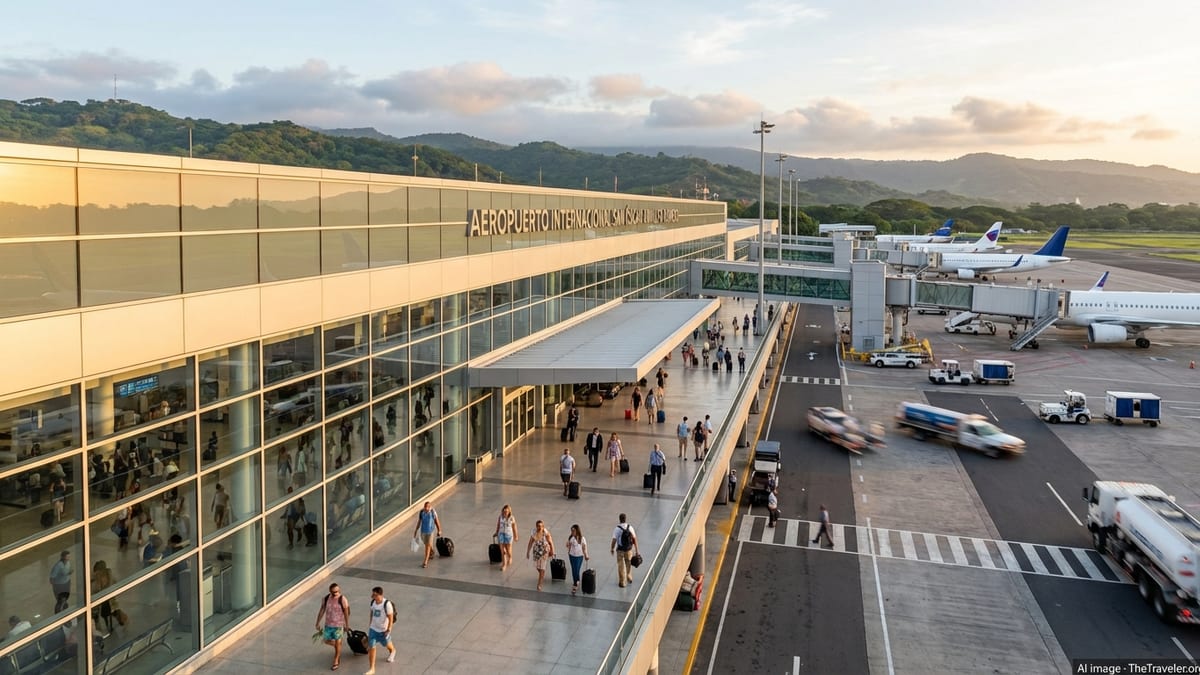
A Record-Breaking Start to the Year
The San Óscar Arnulfo Romero y Galdámez International Airport, better known as El Salvador International Airport, has begun 2026 with a surge in passenger movements that airport authorities describe as historic. Building on a strong Christmas and New Year travel season, the terminal has accumulated around 735,000 passengers between the end-of-year peak and the first full month of 2026, setting a new benchmark for the facility.
According to recently released figures from the airport operator, the Comisión Ejecutiva Portuaria Autónoma, traffic in January alone reached just over 521,000 passengers, a 5.5 percent increase compared with January 2025. When combined with the heavy flows recorded in the final stretch of the December high season, overall traveler numbers crossing the terminal’s gates in the opening weeks of 2026 point to a sharply busier airport than in previous years.
The record performance comes despite a modest decline in total passenger movement during 2025 compared with 2024. That contrast suggests a pivot underway: after a year of adjustment in long-haul and regional travel patterns, demand is rebounding, and the airport is capturing more of the region’s connecting traffic while El Salvador’s own tourism push gains momentum.
For government officials and industry observers, the strong start to 2026 is more than a statistical milestone. It is being read as a sign that significant public investment in airport infrastructure, combined with security gains and an aggressive tourism promotion strategy, is beginning to translate into sustained passenger growth and higher international visibility for the country.
Holiday Surge Fuels Momentum
The foundations for the record-breaking start were laid during the 2025 holiday period, traditionally the busiest time of the year for El Salvador’s air sector. Between 1 and 31 December 2025, the airport handled approximately 524,000 passengers, an increase of around 4 percent over the same period a year earlier. That figure included more than 242,000 arriving passengers, over 180,000 departures and roughly 101,000 passengers traveling in connection.
Airport authorities had projected that more than 770,000 travelers would pass through the terminal between 1 December 2025 and 15 January 2026, driven by returning Salvadorans, regional holidaymakers and long-haul visitors attracted by the country’s beaches, surf breaks and cultural attractions. Daily peaks of more than 16,000 passengers became common as families reunited for Christmas, students took advantage of year-end breaks and business travelers squeezed in final trips before the new year.
To cope with the surge, more than 1,800 staff from the airport operator and state institutions including customs, immigration, police and health authorities were mobilized on rotating shifts. Reinforced staffing at check-in counters, security filters and immigration booths helped maintain throughput, while additional wayfinding support inside the terminal sought to reduce congestion in departure halls and baggage claim areas during peak hours.
The operational stress test of the holiday season appears to have paid off. Having successfully managed the year-end spike without major disruption, the airport entered January with systems and staff fully calibrated to high volumes. That operational readiness contributed to the strong numbers recorded at the start of 2026 and strengthened the airport’s reputation among airlines and passengers as a reliable regional hub.
January 2026: Growth Across Key Segments
Passenger data for January 2026 confirms that growth has been broad-based across the airport’s main segments. Total traffic of about 521,000 passengers represented a year-on-year increase of 5.5 percent compared with January 2025, when just under 494,000 passengers were recorded. The rise was driven by both outbound and inbound travelers, underscoring a dynamic mix of tourism, business and diaspora travel.
Departures registered one of the strongest gains. Roughly 219,000 passengers left El Salvador via the airport in January, around 13,000 more than in the same month a year earlier. Arrivals also rose, reaching close to 196,500 travelers, an increase of more than 12,000 passengers. The numbers indicate that more Salvadorans are flying abroad, whether for work, study or leisure, while at the same time more foreign visitors and returning nationals are entering the country.
The airport’s function as a connecting hub also continues to expand. Passengers in transbordo, those who change planes in El Salvador to continue to another destination, climbed to more than 101,000 in January, roughly 2,400 more than in January 2025. That growth suggests airlines are relying increasingly on the airport as a node for stitching together routes across the Americas, particularly between North and South America and across Central America and the Caribbean.
By contrast, the number of passengers categorized as en tránsito, who remain on board the same aircraft during a stopover, slipped slightly to just under 3,800 in January, reflecting changes in airline scheduling rather than a downturn in demand. The tilt toward more connecting traffic and fewer technical stops highlights the airport’s evolving role: rather than serving mainly as a refueling or intermediate stop, it is consolidating its status as a planned connection point within airline networks.
An Emerging Regional Hub
The latest data cements El Salvador International Airport’s position as one of Central America’s key aviation nodes. Over the past decade, the terminal has been steadily building its credentials as a hub, helped by its geographic location roughly midway between North and South America, its relatively compact layout, and strong local airline partnerships that facilitate quick connections.
In 2024 the airport handled around 5.3 million passengers, followed by more than 5.2 million in 2025 as global travel demand adjusted and some routes were reshuffled. Even with that slight annual decline, El Salvador maintained a high level of connectivity, with roughly 51,000 aircraft operations recorded last year and a growing share of traffic made up of connecting passengers who never leave the secure side of the terminal.
The rebound at the start of 2026 suggests that the airport is now on a new growth trajectory. The combination of higher frequencies on existing routes, the introduction of new destinations in North and South America, and increased competition among airlines operating in and out of San Salvador is boosting capacity. Local tourism campaigns, particularly around surfing, cultural festivals and conferences, are contributing additional demand, while Salvadorans living abroad continue to represent a vital and loyal customer base for the country’s flag carriers and regional airlines.
Regional analysts note that El Salvador is vying with other Central American capitals to attract passengers and airlines looking for efficient transit points. Competitive airport fees, improved on-time performance and simplified transfer procedures are seen as key factors that could tilt more itineraries toward the San Óscar Arnulfo Romero terminal. The record 735,000 travelers seen at the start of 2026 will likely reinforce the airport’s case in discussions with carriers about future route expansion.
Infrastructure Expansion Underpins Growth
The surge in passengers is unfolding against the backdrop of a multi-year expansion and modernization plan at El Salvador International Airport. Authorities have signaled that more than 245 million dollars will be invested over a four-year period to extend terminal space, upgrade boarding facilities and improve airside infrastructure such as taxiways and aprons.
Recent works have already delivered new boarding gates, improved passenger circulation areas and upgraded security and screening technology. These enhancements are designed to reduce bottlenecks at security and immigration and to give airlines additional flexibility when assigning aircraft to gates, thereby shortening turnaround times and increasing the overall capacity of the airport.
On the cargo side, the airport’s freight terminal has been handling rising volumes, with total cargo movement in 2025 surpassing 39.7 million kilograms, up about 11 percent from the previous year. In response, an expansion of the cargo facilities is underway, aimed at reinforcing El Salvador’s role in regional logistics and supporting the country’s export sectors, from textiles and manufactured goods to perishables.
Officials argue that these investments are not only about keeping pace with current demand but also about preparing the airport for sustained growth over the coming decade. With record numbers already recorded at the start of 2026, pressure will increase to ensure that the next phases of construction proceed on schedule and with minimal disruption to day-to-day operations.
Tourism Strategy and Security Gains
The strong passenger performance at El Salvador International Airport cannot be separated from broader policy shifts in the country. The government has placed tourism at the center of its economic development strategy, pitching El Salvador as a safe and accessible destination for surfers, adventure travelers, conference organizers and Salvadorans abroad seeking to reconnect with their roots.
Security improvements have been a central part of that narrative. Authorities say that reductions in crime and a focus on public order have improved the country’s image among international travelers and airlines, which factor security considerations into decisions on route planning and frequency. Travel industry stakeholders report that questions about safety, once omnipresent among prospective visitors, are gradually giving way to curiosity about beaches, volcanic landscapes and cultural sites.
El Salvador’s tourism ministry has also been active in international promotion, appearing at trade fairs, partnering with tour operators and airlines, and supporting events such as international surfing competitions and sports tournaments. These initiatives create spikes in arrivals around specific dates but also help build a more stable base of repeat visitors, who in turn contribute to word-of-mouth promotion abroad.
The result is a feedback loop that benefits the airport. As more travelers choose El Salvador for leisure or business, passenger figures climb, which makes it more attractive for airlines to deploy additional capacity. Increased connectivity then makes it easier for new travelers to consider the destination, reinforcing the growth trend visible in the opening months of 2026.
Challenges Behind the Record Numbers
Despite the celebratory tone surrounding the airport’s early 2026 figures, challenges remain. The modest decline in total passengers during 2025, when the airport handled about 92,000 fewer travelers than in 2024, points to the volatility of global air travel demand and the sensitivity of smaller markets to airline route decisions and external shocks.
Operational resilience is another concern. Sustaining higher passenger volumes will require ongoing investment in technology, training and maintenance. During peak days of the holiday season, passengers reported longer queues at security and immigration, as well as crowded boarding areas at certain times of the day. While these issues are not unique to El Salvador, they highlight the need for careful capacity planning as traffic grows.
Environmental and community considerations are also increasingly part of the discussion. As movements of aircraft and passengers expand, questions arise about noise, emissions and the broader ecological footprint of the airport. Some local groups have called for stronger monitoring and mitigation measures, while the aviation industry globally faces pressure to accelerate decarbonization efforts through more efficient operations and alternative fuels.
Balancing growth targets with quality of service and sustainability goals will be critical if El Salvador International Airport is to preserve traveler satisfaction and its competitive edge. With 735,000 travelers already recorded in the opening stretch of 2026, the choices made now on infrastructure and policy will shape the airport’s trajectory for years to come.
Sky-High Ambitions for the Rest of 2026
Looking ahead, airport authorities and tourism officials are signaling ambitious targets for the rest of 2026. Building on the early-year momentum, they hope to push annual passenger volumes back above pre-adjustment levels and set new records in both direct travel to El Salvador and hub-related connections.
Negotiations with airlines over new destinations and additional frequencies are expected to intensify, particularly in North America and South America, where demand for leisure and visiting-friends-and-relatives travel remains robust. Carriers have already increased the number of weekly flights on several routes, and industry observers anticipate more announcements in the coming months as airlines finalize their schedules for the Northern Hemisphere summer and end-of-year high seasons.
For travelers, the airport’s sky-high ambitions could translate into more direct flights, shorter layovers and a wider range of fare options. For El Salvador’s economy, the stakes are higher: stronger air connectivity underpins tourism revenues, trade flows and foreign investment, all of which are central to the government’s development plans.
As aircraft continue to lift off over the Pacific coast and the volcano-dotted interior, the 735,000 travelers who have already passed through El Salvador International Airport in the opening weeks of 2026 represent both an achievement and a starting point. The challenge now is to turn this record-breaking opening chapter into a full year of sustainable, broadly shared growth.