

More news on this day
Elon Musk is again revising expectations for SpaceX’s Starship, signaling that the next-generation rocket’s long-promised 2026 breakthrough will slip further into the future as technical and strategic priorities shift.
Get the latest news straight to your inbox!
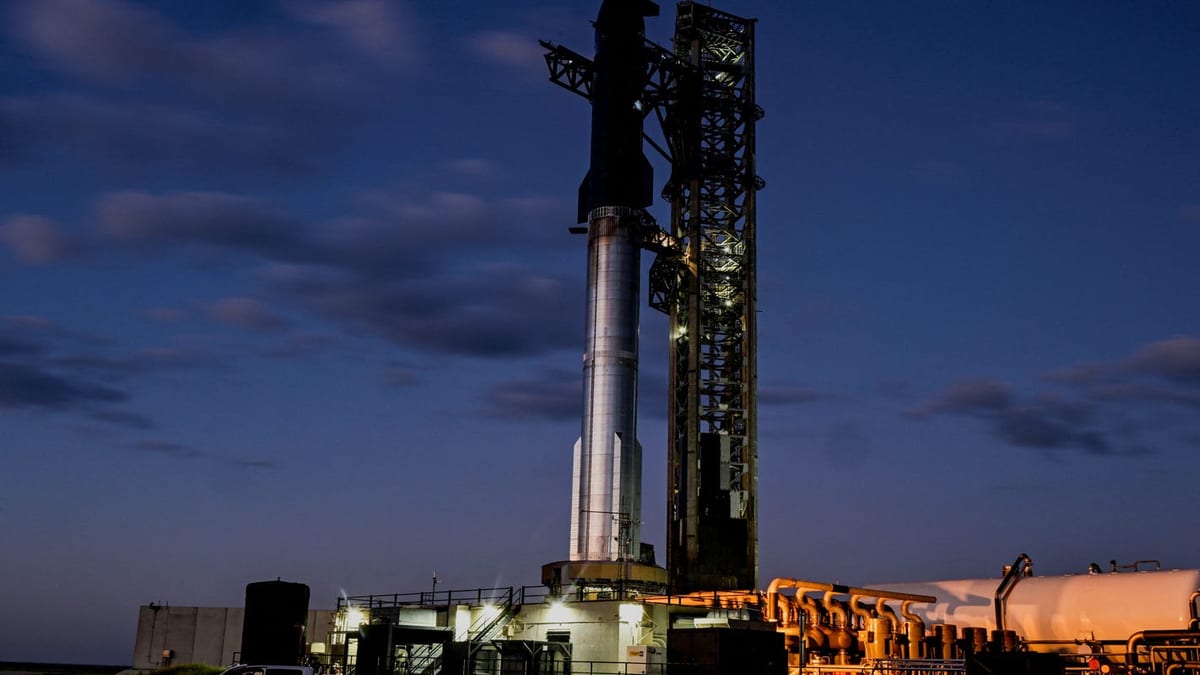
Musk’s New Timeline Breaks With Earlier 2026 Promises
For several years, Elon Musk has repeatedly highlighted 2026 as a pivotal target for Starship, at various points describing it as the year the vehicle could begin flights to Mars or support major deep-space missions. Publicly available interviews and coverage in outlets such as Teslarati and The Information have chronicled an evolving series of goals tied to that date, from uncrewed Mars cargo attempts to more advanced Starship variants taking on high-profile demonstration flights.
In early 2026, however, Musk began to soften and reframe those expectations. Reporting on his recent comments indicates that the Starship v3 configuration, initially teased for an earlier 2026 debut, is now framed as launching in a “four to six week” window that already represents a pushback from previous schedule hints. The window now centers on early to mid May 2026, later than earlier projections suggested, and underscores the pattern of Starship milestones arriving more slowly than first advertised.
While that near-term v3 flight remains on the calendar, Musk has also signaled that the broader 2026 ambitions for Starship, including aggressive Mars timelines, are being pushed out by “about five to seven years.” Public remarks described in recent coverage of SpaceX’s Mars program suggest that the company is recalibrating the role 2026 will actually play in its long-term roadmap. Instead of serving as the dawn of regular interplanetary operations, it is increasingly treated as another stepping stone in an extended development campaign.
This latest shift adds to a history of optimistic target dates that have slipped as Starship testing unfolded. Observers note that the rocket’s scale, engineering complexity, and regulatory constraints have combined to make rapid progress difficult, even as Musk continues to promote highly ambitious long-range goals.
From Mars Dreams to a Lunar-First Strategy
The revised view of 2026 is closely tied to SpaceX’s broader strategic pivot. According to recent analyses of Musk’s public comments, the company is shifting near-term emphasis from a rapid push toward Mars to a more incremental focus on building capabilities around the Moon. New reporting on SpaceX’s Mars colonization plans indicates that Musk has publicly acknowledged a delay of at least five to seven years for some of the most ambitious Martian timelines he once associated with the mid 2020s.
That repositioning dovetails with SpaceX’s central role in NASA’s Artemis program. Starship has been selected as a key lunar lander for upcoming crewed missions, and the company holds multi-billion-dollar contracts to deliver astronauts to the Moon’s surface. With those obligations on the horizon, observers note that Musk’s latest statements are consistent with a strategy that prioritizes reliable lunar operations and high-cadence Earth orbit missions over near-term crewed Mars attempts.
For travel and space tourism watchers, this means that the idea of Starship enabling quick journeys to Mars in or around 2026 is receding. Instead, that year now looks more likely to be dominated by proving flights, cargo missions, and infrastructure work that may eventually support both lunar bases and future interplanetary journeys. Any early interplanetary demonstrations SpaceX still considers for the latter half of the decade appear likely to be uncrewed and highly experimental.
The change in messaging also underscores how intertwined SpaceX’s commercial, scientific, and government commitments have become. As the company allocates launch capacity to Starlink satellite deployments, military contracts, and NASA missions, grand Mars schedules tied to a single year like 2026 become harder to maintain, even for a vehicle as large and theoretically reusable as Starship.
Test Campaign Setbacks and the Reality of Starship Development
Behind Musk’s updated language lies a test campaign that has seen dramatic advances alongside highly visible setbacks. Over the past two years, multiple Starship flight tests and ground trials have ended in explosions, vehicle breakups, and so-called rapid unscheduled disassemblies. Coverage from regional outlets and specialist space publications has documented booster failures, upper stage losses over the Gulf of Mexico and Florida, and more recent incidents at SpaceX’s Starbase facility in Texas.
A major anomaly reported from Starbase in early April 2026, involving a Starship component failure captured on video, served as a reminder of the hazards inherent in pushing the limits of heavy-lift rocketry. Analysts noted that this event came just days after Musk had publicly promoted a four to six week timeline for the next major test, highlighting the narrow margin between optimistic targets and the practical reality of debugging a highly complex launch system.
The record also shows long pauses between some integrated flight tests, with several months sometimes separating launches as teams investigate failures, implement design changes, and secure regulatory approvals. This cadence contrasts with Musk’s frequent social media hints at rapid-fire launch schedules, such as aspirations for Starship eventually flying dozens of times in a single day once the system matures.
These developmental hurdles help explain why the once-bold idea of Starship realizing transformative 2026 mission profiles is being tempered. Even if the next v3 launch window holds, Starship remains, in practical terms, a test program in transition rather than a fully mature workhorse for regular deep-space travel.
IPO Ambitions, Investor Scrutiny, and Schedule Risk
The shifting Starship timeline is emerging just as SpaceX edges closer to a potential public offering. Financial coverage from major business outlets recently reported that the company has confidentially filed for an initial public offering, with speculative valuations that would place SpaceX among the most highly valued aerospace firms in history. In that context, Starship’s perceived trajectory becomes even more significant for investors and regulators alike.
Starship is central to SpaceX’s branding as a company positioned not only to dominate satellite launches but also to reshape human access to the Moon and Mars. Each adjustment to the 2026 narrative, whether pushing out Mars plans or rescheduling key test flights, invites new questions about technical risk, regulatory headwinds, and the capital required to see the program through to operational maturity.
Market commentary suggests that potential shareholders may tolerate near-term delays if Starship continues demonstrating incremental progress and captures lucrative government and commercial contracts. However, repeated slippage of well-publicized milestones can also sharpen scrutiny of Musk’s timelines and SpaceX’s internal forecasting, particularly as the company’s valuation becomes tied to expectations of high-cadence Starship operations later in the decade.
For now, publicly available information indicates that 2026 is evolving from a headline year of breakthrough achievements into a more nuanced chapter in Starship’s development. The focus appears to be shifting toward methodically validating the v3 vehicle, securing its role in Artemis lunar missions, and positioning the program for a longer, more measured path toward Mars.
What the Delay Means for Future Space Travel
For travelers and space enthusiasts who have followed Musk’s bold predictions, the latest delay in Starship’s 2026 debut reinforces a familiar theme: transformative aerospace projects often take far longer than early projections suggest. While the dream of relatively routine journeys beyond low Earth orbit remains alive, the timeline for when Starship will support anything like mass-market travel remains uncertain.
In the nearer term, Starship’s progress still carries important implications for space tourism. Successful v3 flights in 2026 could pave the way for more ambitious circumlunar missions later in the decade, including private astronaut and high-end tourist flights that orbit the Moon or fly by deep space landmarks. These missions would build on the reusable rocket revolution SpaceX began with Falcon 9 and could gradually expand the envelope for what non-professional travelers can experience in space.
Longer term, Musk’s vision of Starship enabling settlements on Mars, large-scale orbital hotels, or rapid intercontinental point-to-point flights on Earth continues to depend on the vehicle evolving from a test article into a robust, frequently reused system. The latest postponement of 2026 goals does not eliminate those possibilities, but it emphasizes that the road to them will likely be measured in many more years of incremental improvements, regulatory negotiations, and capital-intensive infrastructure buildout.
For now, the message emerging from Musk’s recent comments and the surrounding coverage is clear. Starship is still central to SpaceX’s future, but 2026 will no longer be the decisive turning point once imagined. Instead, it is shaping up as another critical, if delayed, waypoint on a longer journey toward redefining how and where humans travel beyond Earth.