

Emergency care quality is a critical factor for anyone evaluating a relocation to Italy. This briefing analyzes how Italy’s emergency medical system functions in practice, including pre-hospital response, hospital emergency departments, triage and waiting times, regional disparities, and what different categories of residents and visitors can typically expect in terms of access and coverage.
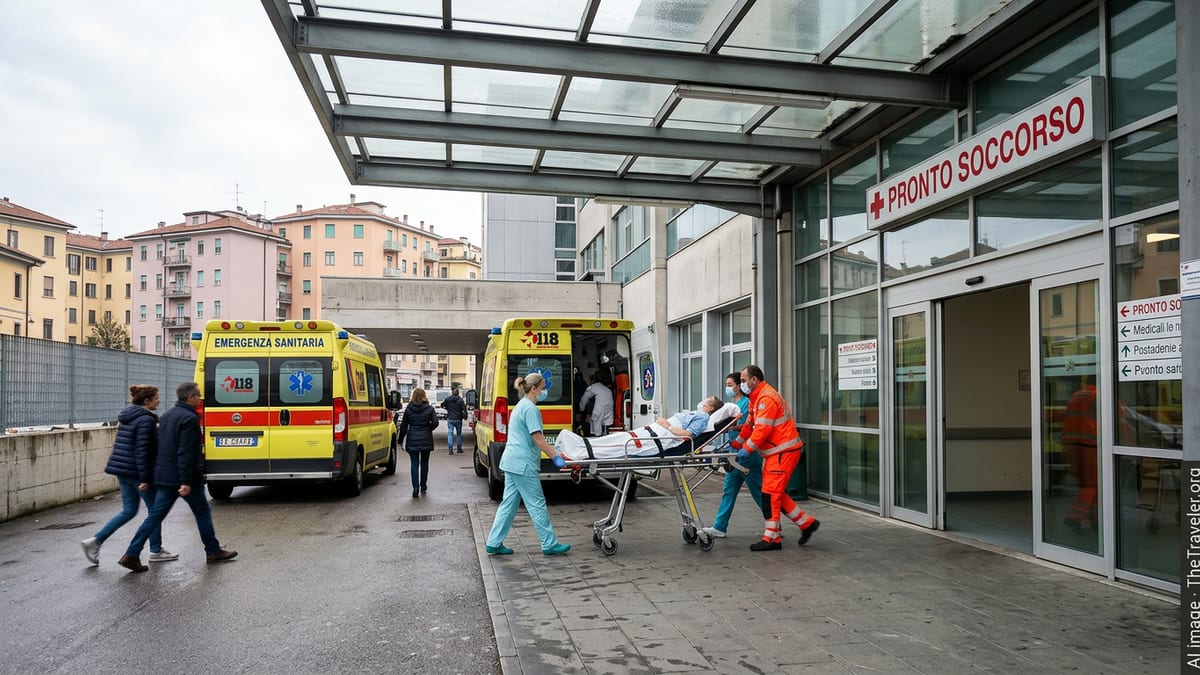
Structure of Emergency Medical Services and Hospitals in Italy
Italy’s emergency care is delivered through a national framework with strong regional control. Pre-hospital emergency medical services (EMS) are organized around the 118 system and, increasingly, the single European emergency number 112, which routes calls to regional centers that then dispatch medical, police, or fire resources as needed. EMS is integrated into the public health service (Servizio Sanitario Nazionale, SSN), so ambulance services and emergency departments are part of the same publicly funded network, supplemented in some areas by contracted private or non-profit operators.
Hospital-based emergency care is provided primarily through hospital emergency departments, known as Pronto Soccorso, present in most medium and large public hospitals. Major cities and regional capitals host higher-level trauma and specialist centers, while smaller hospitals may provide basic emergency stabilization and then transfer patients to reference centers for complex trauma, stroke, or cardiac events. Triage, diagnostics, and short-stay observation units are typically co-located within the emergency department footprint.
While the system is universal in design, delivery is highly regionalized. Northern and central regions typically report better staffing, shorter waits, and more advanced infrastructure. Southern regions and some islands often experience chronic understaffing, infrastructure deficits, and longer delays, especially during peak seasonal or epidemic pressures. For relocating professionals, this means emergency care quality can differ significantly depending on where in Italy they intend to live.
Private hospitals and clinics also operate emergency departments in some urban areas. These can provide faster access for less complex cases, but availability, pricing, and insurance acceptance vary by facility and region. For time-critical events such as major trauma or stroke, however, public hospitals within the regional emergency networks remain the primary reference points.
Emergency Call System and Pre-Hospital Response Performance
Italy’s emergency call infrastructure is based on 118 for medical emergencies and the EU-wide 112 number, which is gradually becoming the single entry point in many regions. When dialed, calls are routed to an operations center staffed by trained dispatchers, often with medical personnel available to provide remote clinical assessment and guidance. Mobile calls can typically be made without phone credit, which is relevant for newly arrived relocators or dependents who may not yet have established mobile contracts.
Regulatory standards generally target ambulance response times of around 8 minutes for life-threatening emergencies in urban areas and up to about 20 minutes in extra-urban or rural locations. Actual performance varies: dense cities with high call volumes and traffic congestion may struggle to meet urban benchmarks during peak times, while remote rural or mountainous areas face geographical barriers that can extend response times beyond stated goals. Nonetheless, the presence of regionally distributed ambulance bases and, in some areas, helicopter emergency medical services helps mitigate delays for severe cases.
The EMS workforce is a mix of professional staff and trained volunteers, particularly in smaller communities. Many ambulances are staffed at an advanced life support level with nurses or physicians capable of delivering complex interventions in the field. Others operate at a basic life support level, with rapid transfer to hospital as the main objective. The dispatch system uses triage protocols to align resource intensity with call severity, prioritizing life-threatening situations over minor injuries or non-urgent complaints.
For relocators, it is relevant that emergency call handling and on-scene care for critical conditions like cardiac arrest, severe trauma, or stroke generally align with European norms in terms of protocols and equipment. However, language barriers can affect call handling and on-scene communication, especially in less international regions, so understanding key Italian emergency phrases and carrying basic medical information in Italian can be a practical risk-mitigation measure.
Triage, Waiting Times, and Overcrowding in Emergency Departments
On arrival at Pronto Soccorso, patients undergo a structured triage process that categorizes urgency, often using a color-code system. The most severe cases (such as cardiac arrest, respiratory failure, severe trauma, or suspected stroke) are seen immediately or within minutes, bypassing queues. Intermediate categories cover urgent but non-life-threatening conditions that still require relatively rapid attention, while non-urgent or minor complaints are assigned to lower codes, which can involve substantial waiting periods.
National and regional monitoring data indicate that Italy’s emergency departments are under sustained pressure, with high attendance volumes and frequent overcrowding. A significant proportion of visits are for low-acuity conditions that could be managed in primary care or out-of-hours clinics, contributing to congestion. For these low-acuity categories, average waiting times can extend to several hours before initial clinical assessment, particularly in large urban hospitals and during seasonal peaks such as winter respiratory illness surges.
Intermediate urgency categories also experience extended waits in many facilities, and boarding of admitted patients in the emergency department while awaiting inpatient beds is a recurrent issue. During peaks, media reports and professional associations have drawn attention to situations where patients remain on trolleys or in temporary observation areas for prolonged periods. These conditions are more pronounced in regions facing structural staff shortages or where hospital capacity has been reduced without parallel investment in community-based alternatives.
For those considering relocation, the implication is that Italy performs comparatively well in prioritizing and treating immediately life-threatening emergencies, but access times for non-critical conditions can be long. Anyone with chronic but stable conditions requiring periodic urgent review may want to factor in the likelihood of multi-hour waits for low or medium triage codes in many public emergency departments, especially without private alternatives.
Regional Disparities and System Stressors
Emergency care quality in Italy is characterized by marked regional variation. Northern regions typically show shorter waiting times, better staffing ratios, and more developed networks for time-sensitive conditions such as stroke, myocardial infarction, and major trauma. Central regions are mixed but often reasonably well served in metropolitan areas. Southern regions and some islands face more persistent challenges, including fewer specialist centers, longer transfer distances, and delayed investment in infrastructure and digital systems.
These regional differences are magnified during periods of system stress. Seasonal influenza waves, heatwaves, and respiratory virus surges have periodically driven occupancy in emergency departments and inpatient wards to critical levels, especially in major cities. Media and professional reports during recent winters describe overcrowded corridors, extended boarding times, and delays in admission for patients requiring hospitalization, particularly among older adults with respiratory or cardiac conditions.
Another structural stressor is the high rate of emergency department use for non-urgent problems. Cultural preferences, perceived limitations in primary care access, and after-hours gaps lead many residents to use emergency departments as a default entry point. This pattern burdens triage and waiting areas and can indirectly affect the environment of care for genuine emergencies, even if high-urgency cases are still clinically prioritized.
For international assignees, the practical consequence is that emergency care experience can differ substantially between, for example, a well-resourced northern city and a smaller southern town. Employers and relocation planners sometimes encourage assignees with complex health risks to prioritize locations with tertiary care centers and better-performing regional networks, or to couple public system use with carefully selected private options for non-critical emergencies.
Coverage, Copayments, and Access Rules for Emergency Care
Italy’s public health system is designed to guarantee access to emergency treatment irrespective of citizenship or financial status. In practice, urgent and life-saving care in public emergency departments is provided even if a patient’s insurance status or documentation is unclear at the point of entry. For those who are registered with the SSN, emergency services are typically covered, with co-payments applying primarily to diagnostic tests, specialist follow-ups, or instances where the episode is later classified as non-urgent.
For residents, including many categories of foreign nationals who register with the SSN, copayments for emergency services that are ultimately classified as non-urgent are relatively modest by international standards, often in the tens of euros range. Urgent and life-threatening emergencies are generally exempt from such charges. The exact copayment policies can vary slightly by region, and exemptions apply for low-income groups, certain chronic conditions, pregnancy, and minors under specified conditions.
Foreign visitors and short-stay assignees without SSN registration are usually not turned away from emergency departments. However, if the condition is classified as non-urgent or if ongoing outpatient care is required after the emergency phase, hospitals may apply standard tariffs or request payment or proof of insurance. Within the European Union and some partner countries, reciprocal agreements and the European Health Insurance Card framework can reduce or eliminate many direct charges for eligible individuals, but assignees from outside these systems may wish to maintain robust private health or travel insurance specifically covering emergency care.
For relocation planning, the key message is that truly urgent emergency care is accessible and broadly affordable relative to many non-European systems. The primary financial risks lie in non-urgent emergency use without public coverage, follow-on inpatient stays outside SSN registration, and use of private emergency facilities without compatible insurance. Understanding local hospital billing practices and the interaction between private insurance and public emergency departments is therefore advisable before relocation.
Clinical Quality, Outcomes, and International Benchmarks
From a clinical standpoint, Italy’s emergency services operate within a broader health system that, by international comparison, performs relatively well on many outcome measures for acute conditions. For example, rates of avoidable hospital admissions for some chronic illnesses linked to emergency deterioration, such as diabetes, are comparatively low among European peers, suggesting a degree of effectiveness in preventing some emergencies through upstream care. Time-dependent networks for stroke and myocardial infarction have been progressively developed, with designated centers and standardized protocols to expedite imaging and reperfusion therapies.
Large teaching hospitals and regional reference centers in major cities are generally well equipped, with modern imaging, catheterization laboratories, and intensive care units capable of handling complex emergencies. Protocols for trauma management, sepsis, and cardiac arrest typically align with European and international standards. Emergency physicians, nurses, and pre-hospital providers participate in ongoing training and quality improvement programs, although the intensity and resourcing of such initiatives vary substantially between institutions and regions.
Nonetheless, systemic constraints influence the lived experience of emergency care. Staff shortages in emergency medicine and nursing, combined with aging infrastructure in some facilities, limit the system’s ability to maintain consistently high service quality under sustained demand. Bed shortages and discharge bottlenecks can reduce the effective capacity of emergency departments to move patients through the system efficiently, leading to crowding and greater reliance on corridor care or temporary wards.
For individuals contemplating relocation, this mixed picture translates into a relatively high likelihood of receiving competent, guideline-based care for serious emergencies, particularly if located near a major hospital. At the same time, it is reasonable to anticipate variability in comfort, privacy, and timeliness of care during crowded periods, especially for emergencies that fall below the highest triage categories.
The Takeaway
Italy’s emergency care system offers broad access, clinically competent management of life-threatening emergencies, and costs that are moderate compared with many non-European countries. Its structure, centered on 118 and 112 call systems, regionally organized EMS, and hospital-based Pronto Soccorso departments, provides a comprehensive safety net for acute and critical health events for both residents and visitors.
However, regional disparities, recurring overcrowding, and long waits for non-critical cases are persistent features that relocation candidates should factor into decisions. Individuals with complex medical needs or those relocating to regions with known resource constraints may wish to combine SSN access with complementary private coverage or to prioritize residence near major hospitals with strong emergency and intensive care capabilities.
Overall, for many relocators, Italy’s emergency care quality will be acceptable or better for serious, time-critical events, but patience may be required for lower-priority emergencies. A realistic understanding of response times, triage-based waiting, and coverage rules, coupled with targeted planning around region and insurance, can significantly improve the resilience and predictability of emergency care access after relocation.
FAQ
Q1. Is emergency care in Italy free for everyone?
Emergency departments in public hospitals will treat urgent and life-threatening conditions regardless of ability to pay. For residents registered with the public system, these services are generally covered, while non-urgent visits or follow-up care may generate modest copayments or standard charges, especially for visitors without public coverage.
Q2. What emergency number should I call in Italy?
The European emergency number 112 is increasingly the main access point and can connect to all emergency services, including medical. The traditional medical emergency number 118 also remains in use and routes directly to medical dispatch centers in many regions.
Q3. How fast do ambulances usually arrive in Italian cities?
Regulations aim for response times of around 8 minutes for life-threatening emergencies in urban areas, but real-world performance varies with traffic, call volume, and local resources. In rural or mountainous areas, response times can be longer because of distance and geography.
Q4. Will I be seen immediately in the emergency department?
Arrival time does not determine treatment order. Triage nurses assign urgency codes, and only the most severe cases are seen immediately. Lower-priority cases can wait several hours before first assessment, particularly in busy urban hospitals or during seasonal peaks.
Q5. Are there big differences between regions in emergency care quality?
Yes. Northern regions generally have shorter waits, more developed specialist networks, and better staffing, while some southern regions and islands face longer waits, fewer specialist centers, and more frequent overcrowding. Choice of region can materially affect the emergency care experience.
Q6. Do private hospitals in Italy handle emergencies?
Some private hospitals and clinics, particularly in larger cities, operate emergency departments and urgent care services. They may offer shorter waits for less complex problems, but they might not be the designated centers for major trauma or stroke, and charges or insurance requirements can be higher than in the public system.
Q7. What happens if I do not speak Italian during an emergency?
In major cities and larger hospitals, staff or on-call interpreters often have at least basic English capability, and some facilities cater regularly to international patients. In smaller or more rural hospitals, English proficiency may be limited, so carrying written medical information and essential phrases in Italian can help bridge communication gaps.
Q8. Are pre-existing conditions treated in emergencies if I am not yet in the public system?
Yes. Emergency departments will treat acute exacerbations of pre-existing conditions regardless of insurance status. Subsequent non-urgent management or follow-up may, however, involve charges if the individual is not registered with the public system or does not have suitable private coverage.
Q9. How are children and pregnant women treated in emergencies?
Children and pregnant women are prioritized according to clinical urgency, with many hospitals offering dedicated pediatric and obstetric emergency pathways. Public coverage frameworks often provide additional protections or exemptions from copayments for these groups, although details can vary by region.
Q10. Should relocators rely only on the public system for emergencies?
Many residents, including locals, rely exclusively on the public system for emergencies and receive adequate care, especially for severe conditions. However, relocators with higher risk profiles, language concerns, or assignments in regions with known bottlenecks often supplement public coverage with private insurance or identify private facilities as alternative options for non-critical emergencies.