

Emergency care quality is a core consideration for anyone contemplating relocation to Spain, particularly families with children, older adults, and individuals with chronic conditions. Spain’s public health system has a solid international reputation and provides universal access to urgent and emergency services, yet capacity constraints, regional variability, and seasonal pressures significantly influence real-world experiences in emergency departments. This briefing analyzes how emergency care functions in practice and what relocating individuals should realistically expect.
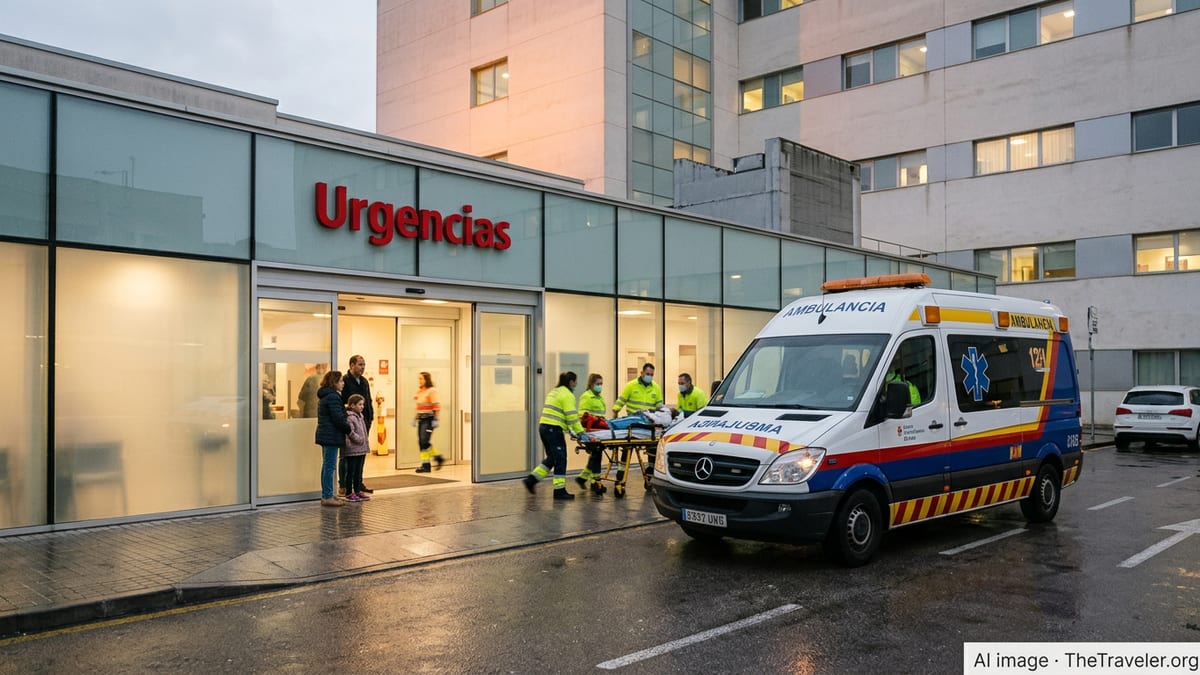
Overview of Emergency Care within Spain’s Health System
Spain’s National Health System provides universal coverage for residents and guarantees access to emergency services without payment at the point of use. International benchmarking commonly places Spain among the stronger health systems in Europe in terms of overall outcomes and accessibility, and emergency care is integrated into this public framework rather than operating as a separate parallel system.
Emergency services are primarily delivered through hospital emergency departments and out-of-hours primary care or urgent care centers. Large university hospitals in metropolitan areas such as Madrid, Barcelona, Valencia, and Seville routinely manage hundreds of thousands of emergency attendances per year. For example, one major hospital complex in Seville reports around 300,000 emergency consultations annually, highlighting the scale at which urban facilities operate.
Spain’s emergency care is regionally organized, with each autonomous community responsible for service planning and funding. This decentralized model leads to substantial variation in waiting times, staffing levels, and infrastructure investment, even though national clinical standards are broadly similar. Relocating individuals should therefore assess conditions at the level of the specific region or city under consideration rather than relying only on national averages.
Overall public satisfaction levels with emergency care are moderate to positive. National health barometer surveys indicate that users rate hospital emergency departments slightly above the midpoint on a ten-point scale, and just over half of the population believes the system functions reasonably well, albeit with the need for improvements. This suggests that while emergency care is generally dependable, there are recognized capacity and quality challenges.
Access, Triage, and Clinical Standards in Emergency Departments
Access to emergency care in Spain is straightforward for residents. Individuals may present directly to hospital emergency departments or call the regional emergency number (112) for ambulance dispatch. Emergency services are legally obliged to provide stabilizing and urgent care regardless of a patient’s insurance status once the person is within the system’s remit. For medium and long term residents correctly registered in the public system, emergency treatment is covered without point-of-care charges.
Spain has adopted structured triage systems to prioritize patients according to clinical urgency. The most widespread is a five-level model that classifies cases from immediate life-threatening emergencies (level 1) to non-urgent presentations (level 5). This model uses hundreds of complaint categories and symptom algorithms combined with brief physical assessment to assign a severity level. A separate advanced out-of-hospital triage methodology is used in mass casualty incidents to coordinate pre-hospital and hospital responses.
Clinical standards for emergency care are anchored in European and national guidelines for acute coronary syndromes, stroke, sepsis, trauma, and pediatric emergencies. Time-critical pathways such as thrombolysis for stroke or percutaneous intervention for heart attack are widely available in tertiary hospitals and many regional centers, though access in smaller or more remote facilities may depend on transfer agreements. Overall, severe life-threatening emergencies are generally managed according to contemporary European norms, especially in urban university hospitals.
For non-life-threatening but urgent problems, quality depends more heavily on local organizational factors. There is strong professional expertise, but non-clinical elements such as overcrowding, handover delays from ambulances, and limited inpatient bed capacity can prolong stays in emergency departments. These operational pressures do not necessarily undermine clinical competence, but they can deteriorate the overall patient experience and, in extreme situations, create safety risks for frail or complex patients.
Waiting Times, Overcrowding, and Seasonal Pressures
Waiting times and crowding represent the most significant concern for emergency care quality in Spain. National reports and regional press coverage frequently document emergency departments operating at or above capacity, with patients accommodated on stretchers in corridors during peak periods. In some hospitals, particularly during winter respiratory virus surges or summer tourist peaks, clinicians have reported patients waiting many hours, and in isolated cases multiple days, for transfer from emergency to inpatient wards.
Several drivers contribute to this pattern. Spain’s population is ageing, which increases demand for emergency and inpatient care. Workforce planning has lagged demographic change, and Ministry of Health analysis acknowledges shortages in key specialties, including emergency and primary care, despite record total numbers of health professionals. The result is that the most visible symptom for the public is congested emergency departments and slower processing of lower-acuity cases.
Regional data illustrate the scale of the issue. In Catalonia, for example, emergency rooms recorded nearly 3.9 million attendances in one year, around a fifth more than three years earlier. Local reports from multiple regions describe routine overcrowding, with some hospital unions and professional associations characterizing the situation in certain facilities as critical during high-demand months. Individual hospitals have documented mean waits of many hours in busy periods, while local news reports have highlighted emergency departments where waiting times for non-life-threatening conditions have exceeded eight hours.
Seasonal and tourism-related surges are especially relevant for would-be relocators considering coastal or island regions. During summer, populations in tourist-heavy areas can multiply, generating peaks of demand that local infrastructure struggles to absorb. Professional bodies in island regions have warned about recurring summer overcrowding driven by bed shortages, the temporary closure or downsizing of some facilities, and limited availability of social care beds, which slows discharge and further backs up emergency pathways.
Regional Variation and Urban vs Rural Experiences
Because health administration is devolved to Spain’s 17 autonomous communities, emergency care quality, staffing, and investment are uneven. Major metropolitan areas tend to concentrate high-technology facilities, larger teams, and subspecialty services, while some smaller provinces and rural zones operate with more constrained resources, especially for round-the-clock specialist coverage.
Urban residents typically benefit from shorter pre-hospital response times and immediate access to advanced diagnostics and interventional procedures, though this advantage can be partially offset by higher attendance volumes and recurrent overcrowding. Large teaching hospitals in Madrid, Barcelona, Seville, and Valencia have sophisticated emergency departments, but they also attract complex referrals and a high number of walk-in patients, which can result in substantial waiting times for non-critical cases during busy shifts.
In rural areas and smaller towns, emergency access is usually organized through local health centers, smaller hospitals, and regional ambulance networks. Response times for ambulances may be longer than in urban cores, but patient volumes are generally lower outside of tourist-heavy seasons. For severe emergencies, protocols typically involve stabilization locally and transfer to regional reference hospitals for advanced care, particularly in cardiology, neurosurgery, and major trauma.
The degree of regional variation has practical implications for relocation decisions. Some communities have invested more aggressively in emergency and urgent care capacity, including extended-hours primary care centers and intermediate urgent care units aimed at diverting lower acuity cases away from hospital emergency departments. Others have faced criticism from clinicians and patient groups for slower investment, persistent understaffing, or delayed modernization of facilities. Evaluating the specific region, and even the local hospital catchment area, is therefore advisable.
Public Satisfaction, Safety Concerns, and System Resilience
National health barometer surveys indicate that around half of Spaniards see the health system as functioning reasonably well with room for improvement, and around four out of five express satisfaction with their experiences in primary care. Within this context, hospital emergency departments receive moderate ratings slightly above the midpoint of a ten-point scale, reflecting both appreciation for professional competence and frustration with waiting times and crowding.
Professional associations, trade unions, and some patient organizations have raised explicit safety concerns related to emergency department overcrowding. Reports have described patients spending extended periods on stretchers in corridors, limited privacy, delayed pain management, and challenges in infection control when departments operate beyond capacity. In some documented instances, clinicians have linked adverse outcomes to prolonged waiting or boarding times, although systematic national-level data on harm attributable to crowding are limited.
At a systemic level, Spanish authorities have attempted to address these pressures through incremental measures rather than a single national reform. Examples include the construction or expansion of emergency-focused hospitals in some regions, the development of new urgent care centers, and pilot projects using predictive analytics and telemedicine to manage flows. However, no unified national waiting time guarantee specific to emergency departments is in place, and strategy documents acknowledge that long waits and crowding remain unresolved structural challenges.
System resilience is therefore mixed. Spain has demonstrated the capacity to adapt rapidly in crises, such as during pandemic waves, by expanding beds and emergency infrastructure on short notice. Yet between crises, chronic workforce and bed shortages persist in many regions. For relocating individuals, this means that emergency care is reliably accessible and clinically competent, but experiences in crowded urban facilities during winter or peak tourist periods may be stressful and involve long delays for non-urgent problems.
Practical Implications for Relocating Individuals and Families
From a relocation-planning perspective, Spain’s emergency care profile combines strong baseline strengths with specific, predictable weaknesses. Strengths include universal access for residents, reasonably robust clinical standards for life-threatening conditions, and widespread availability of hospital emergency departments even outside major metropolitan centers. These features provide a degree of security for long term residents, especially compared with countries where access is strongly dependent on private insurance or ability to pay at the point of use.
The main weaknesses to consider relate to congestion, waiting times, and variability between regions and facilities. Prospective relocators who anticipate frequent emergency use because of age, complex chronic disease, or caring responsibilities for older relatives should pay particular attention to local reports and indicators about waiting times in the intended area of residence. Relocating to neighborhoods that fall within the catchment areas of better-resourced hospitals or that have multiple urgent care alternatives can materially influence day-to-day experiences.
Individuals used to health systems where emergency waiting times for non-life-threatening issues are consistently short may find the Spanish public emergency system slower and more crowded, especially in large cities. Conversely, those relocating from settings with less comprehensive coverage but severe financial barriers to care may view Spain’s model more favorably despite operational shortcomings, given the protection against catastrophic out-of-pocket expenses and the solid performance in handling serious emergencies.
For decision-grade planning, it is advisable to combine national-level understanding with concrete local intelligence about the nearest hospitals, out-of-hours primary care options, and the presence of seasonal pressures such as tourism peaks. This approach enables a realistic assessment of how emergency care will function in everyday life rather than in abstract rankings.
The Takeaway
Emergency care quality in Spain can be summarized as a high baseline of clinical competence and universal access constrained by structural capacity limitations and significant regional variation. Spain’s public health system provides a dependable safety net for life-threatening emergencies, with modern triage systems and adherence to contemporary European clinical protocols in most major hospitals. For residents, this substantially reduces the risk that a serious acute event will go untreated for financial reasons.
At the same time, overcrowding and long waits are persistent features of the system, especially in busy metropolitan hospitals and tourist-intensive regions during winter and summer peaks. These operational pressures primarily affect non-urgent and moderately urgent cases but can also strain staff and infrastructure in ways that concern professional bodies and sometimes impact patient safety and experience. Such issues are not universal across all regions, but they are sufficiently widespread to be a material factor in relocation decisions.
For individuals and families evaluating a move to Spain, emergency care should generally be seen as acceptable to good, with notable strengths in severe acute care but potential frustrations linked to crowding and delays. Decision makers should supplement national assessments with targeted research on local hospital performance and seasonal demand patterns in their specific destination. This localized view will provide a more accurate picture of what emergency care quality will look like in day-to-day life after relocation.
FAQ
Q1. How reliable is Spain’s emergency care for life-threatening conditions?
Spain’s emergency care for severe conditions such as heart attacks, strokes, and major trauma is generally reliable, particularly in urban hospitals that follow modern European clinical protocols and have access to advanced diagnostics and specialist teams.
Q2. Are emergency services in Spain free for residents?
For residents properly registered in the public health system, hospital emergency care is covered by the National Health System without point-of-care charges, although non-residents and visitors may be billed depending on their insurance status and reciprocal agreements.
Q3. How long are typical waits in Spanish emergency departments?
Waiting times vary widely by region, hospital, and season. In some urban centers non-critical patients may be treated within a few hours, while during peak periods in crowded hospitals waits exceeding several hours for non-urgent cases are regularly reported.
Q4. Is there a big difference between emergency care in cities and rural areas?
Yes. Cities usually have larger hospitals with more specialties and advanced treatments but also higher demand and crowding, while rural areas tend to have fewer facilities and longer travel times but lower routine attendance volumes outside tourist peaks.
Q5. How is urgency determined when I arrive at a Spanish emergency department?
Hospitals use structured five-level triage systems that classify patients according to clinical urgency based on symptoms, vital signs, and quick assessment, ensuring life-threatening problems are treated ahead of non-urgent complaints.
Q6. Are emergency departments in Spain overcrowded year-round?
Overcrowding is a recurring issue, but intensity fluctuates. Winter respiratory seasons and summer in tourist regions are especially pressured, whereas off-peak periods in some areas can be noticeably calmer.
Q7. Does regional variation significantly affect emergency care quality?
Regional variation is significant. Autonomous communities differ in investment, staffing, and organization of urgent care, so two residents in different regions can experience quite different waiting times and levels of crowding.
Q8. How do Spanish authorities respond to emergency department crowding?
Responses include expanding facilities in some regions, adding urgent care centers to divert low-acuity cases, and piloting new management and forecasting tools, but no single nationwide solution has eliminated crowding.
Q9. What should families with older relatives consider about emergency care in Spain?
Families with older or frail relatives should pay close attention to local hospital capacity, availability of nearby urgent care centers, and the prevalence of reported crowding, since older adults are more vulnerable to long waits and boarding in emergency departments.
Q10. Overall, is Spain’s emergency care adequate for long term relocation?
For most relocating individuals, Spain’s emergency care is adequate to good, offering universal access and strong management of serious emergencies, though realistic expectations about crowding and regional variation are essential for informed decisions.