

More news on this day
As airspace restrictions across the Middle East continue to disrupt routes and schedules, Emirates has introduced a more flexible 72-hour online rebooking and amendment window, giving travelers departing from or transiting through the United Arab Emirates new tools to manage last-minute changes without queuing at airport counters or call centers.
Get the latest news straight to your inbox!
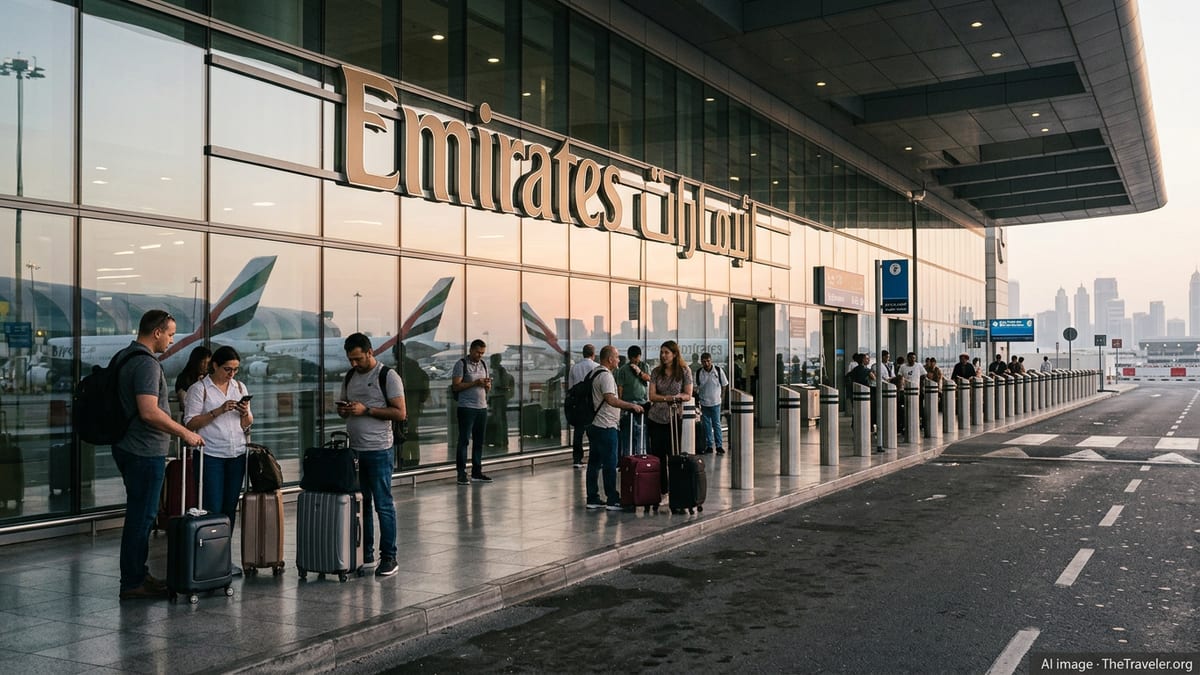
New 72-Hour Online Rebooking Window Explained
According to publicly available information and traveler reports, Emirates customers can now amend or rebook flights online within 72 hours of their original departure time, using the Manage Booking tools on the airline’s website and mobile app. The option is designed to reduce pressure on customer-service channels as the carrier responds to widespread disruption linked to the escalating regional crisis and temporary airspace closures.
The 72-hour window applies to eligible tickets that have been affected by schedule changes, cancellations or rerouting connected to the current Middle East airspace situation. In many cases, change fees are being waived for impacted itineraries, although any fare difference between the original and new flights may still apply depending on the fare type and route.
While Emirates has previously allowed many changes to be handled digitally, travelers indicate that last‑72‑hour rebookings and certain disruption-related amendments were more likely to require a phone call or airport visit. The newly highlighted window brings these short-notice changes into the online environment, where passengers can see real-time availability and alternatives before committing to an updated itinerary.
Importantly, customers whose flights are operating normally but who wish to alter plans for personal reasons may still be subject to the original fare rules. The expanded flexibility primarily supports passengers whose journeys are directly disrupted by airspace restrictions, cancellations or significant schedule shifts.
How the Policy Works for Disrupted Journeys
Publicly available guidance on disrupted travel indicates that when a flight is canceled or significantly delayed for operational reasons, Emirates typically offers a choice of rebooking on the next available service, rerouting to the final destination, or requesting a refund in line with the fare conditions and applicable regulations. Under the current crisis-driven measures, the 72-hour online rebooking window is being emphasized as the primary channel to action those options quickly.
Once a booking is flagged as disrupted in the airline’s system, affected passengers can usually log into Manage Booking to view new travel options. These may include alternative dates from the same origin, rerouted connections that avoid restricted airspace, or in some cases different gateways within the region. Where fee waivers are in place, eligible changes can often be completed without additional penalties.
Travelers are being advised through various public channels to avoid heading to the airport until they have confirmed that their flight is operating and that any changes have been processed. The online tools are intended to reduce long lines at check-in and ticket desks, particularly during peak disruption periods when multiple departures are being rescheduled simultaneously.
For multi-sector itineraries, the system may propose an entirely re-sequenced journey, especially where onward connections are impacted by knock-on delays. Passengers are encouraged to review minimum connection times and layover durations before accepting updated options, as some routes may involve extended stops in Dubai or other hubs while airspace restrictions remain in place.
Impact of Middle East Airspace Restrictions
The 72-hour online rebooking feature comes against the backdrop of an evolving airspace shutdown that has affected corridors over and around the Gulf, forcing carriers to suspend or reroute flights. Industry briefings indicate that airspace over several states, including the United Arab Emirates, has faced varying levels of restriction since early March, prompting temporary suspensions, diversions and elongated routings.
For Emirates, whose network is built around Dubai as a high-frequency connecting hub, these restrictions have ripple effects across Asia, Europe, Africa and the Americas. Aircraft and crew rotations have required rapid re-planning, with some flights canceled outright and others operating on longer, more southerly tracks to avoid closed corridors. The resulting operational complexity has translated into last-minute schedule changes for passengers on both point-to-point and connecting journeys.
Travel analysts and corporate travel managers note that during such regional disruptions, flexible booking policies can significantly reduce the financial and logistical burden on travelers. Waived change fees, expanded rebooking windows and digital self-service tools are increasingly seen as core elements of crisis-response strategies for major airlines, particularly those operating large connecting hubs in geopolitically sensitive regions.
Reports from travel management companies and passenger forums suggest that Emirates has been adjusting its policies incrementally as the situation evolves, broadening eligibility for fee waivers and emphasizing self-service options as airspace closures have been extended or modified.
What Travelers Need to Do Before Departure
Given the pace of operational changes, passengers holding upcoming Emirates tickets are being encouraged through public advisories and media coverage to monitor their flight status closely in the 72 hours leading up to departure. The carrier’s digital channels, including its website and app, are generally updated before airport departure boards, providing an earlier indication of cancellations, delays or equipment changes.
Within that same 72-hour window, passengers can typically use Manage Booking to adjust travel dates, select alternative connections or, where permitted, request a change of destination within the same region. To make full use of the online tools, it is important that contact details in the booking are up to date, ensuring that schedule-change notifications and rebooking confirmations reach travelers by email or SMS.
Travelers are also advised in published commentary to keep documentation of any disruption, including screenshots of delay notifications and revised itineraries. This record can assist with subsequent claims for out-of-pocket expenses through travel insurance providers or credit card protections, particularly in cases where hotel stays, meals or alternative transport are required due to extended disruption.
Families and groups traveling together should check that all passengers on the same booking reference are rebooked consistently. When making amendments online, the tool may allow changes for some travelers while leaving others on the original flight if availability is tight; reviewing the final confirmation carefully can help avoid unintentional split bookings.
Practical Tips for Navigating the New Flexibility
While the 72-hour online rebooking window gives passengers more control, the current crisis conditions mean that preferred alternatives may fill quickly, especially on popular long-haul routes. Travel experts writing about the situation recommend logging in as soon as a disruption message is received, rather than waiting until the day of departure, to secure seats on the most suitable replacement flights.
Where several options are available, passengers may wish to consider slightly less direct routings or off-peak departure times, which can sometimes offer more reliable connections during periods of constrained airspace. Choosing flights with longer layovers can also provide a buffer against knock-on delays, though this may extend total journey time.
For travelers who no longer wish to travel because of the security situation, fare rules and temporary waivers will determine whether a refund or credit is available. Publicly available guidance points out that policies can vary by ticket type and route, and that disruption-related refunds are more likely when a flight is formally canceled or significantly rescheduled by the airline.
As the regional situation remains fluid, industry observers expect Emirates and other Gulf carriers to continue refining their disruption policies. For now, the introduction and emphasis of a flexible 72-hour online rebooking and amendments window signals a clear move toward digital, self-service solutions to help travelers adapt their plans quickly amid one of the most complex airspace crises the region has experienced in recent years.