

More news on this day
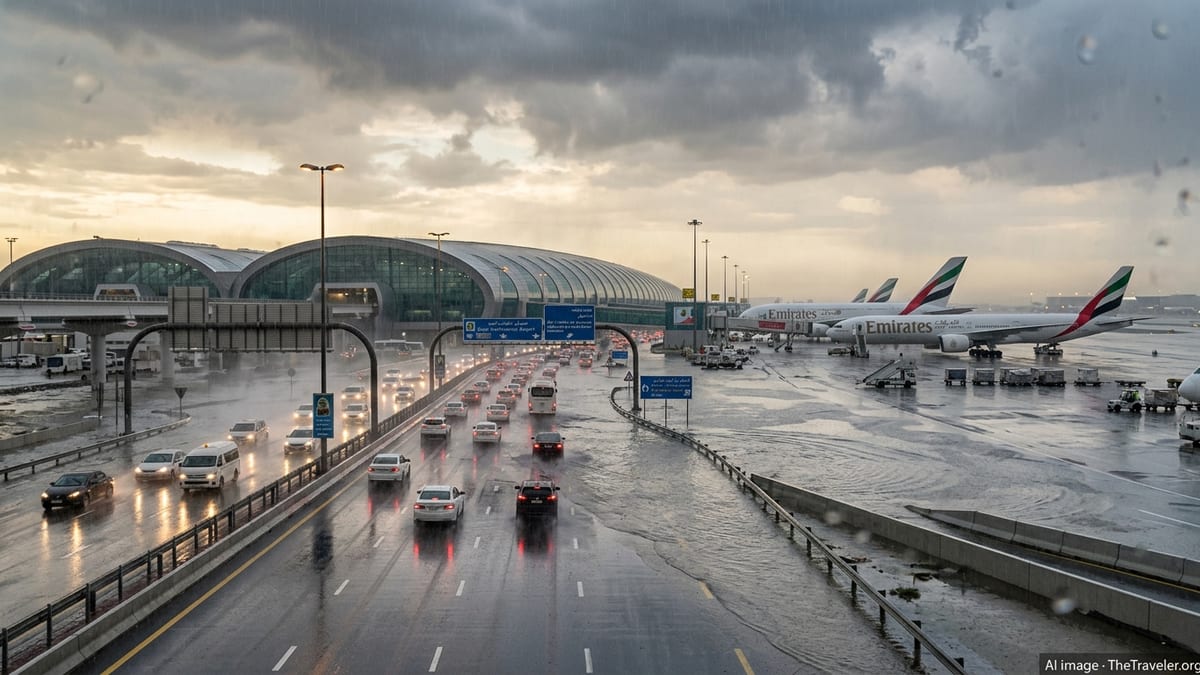
Emirates is adjusting operations at Dubai International Airport as forecasters warn of another spell of heavy rain and thunderstorms across the United Arab Emirates, prompting renewed concern about delays, diversions and longer processing times for passengers traveling through one of the world’s busiest hubs.
Get the latest news straight to your inbox!
Severe Weather Forecast Rekindles Disruption Fears
Recent days have brought a series of strong storms and unsettled weather patterns across the United Arab Emirates, with meteorological discussions pointing to another period of intense rain, thunderstorms and localized flooding around Dubai. Publicly available forecasts shared by weather enthusiasts and regional commentators indicate that the most challenging conditions are expected over several days, with particular concern about high rainfall totals and short, sharp downpours that can overwhelm drainage around key road corridors leading to Dubai International Airport.
The renewed alerts come only weeks after earlier regional disruption linked to both security events and unstable weather, during which Dubai International Airport experienced temporary suspensions and a gradual, phased restoration of flights. Travel advisories issued in early March described partial resumptions of service at Dubai International and Al Maktoum International, with limited schedules, longer connection times and backlogs of displaced passengers that took days to clear.
Memories are also still fresh of past extreme rainfall episodes in the emirate, including the April 2024 floods that inundated parts of Dubai and Sharjah. Coverage at the time described some of the heaviest rainfall in decades, with waterlogged roads, widespread traffic jams and diverted flights. Against this backdrop, any new forecast that combines heavy rain with strong winds immediately raises questions about how quickly operations at Dubai International can adapt.
While the latest forecasts focus on weather rather than security concerns, the combination of intense rain, low visibility and potential water accumulation on aprons and taxiways can still reduce runway capacity, slow ground handling and lengthen turnaround times for Emirates flights. Travel industry analyses emphasize that even short suspensions in such a tightly scheduled hub can create knock-on delays across the network.
How Emirates Is Managing Schedules and Capacity
Emirates has spent much of March gradually rebuilding its schedule following earlier regional airspace restrictions, moving from a full suspension of flights into and out of Dubai to a limited roster of services and then a broader resumption. Public operational updates reviewed by aviation watchers show that the airline has been using a mix of additional sections, upgauged aircraft and retimed departures in an effort to re-accommodate passengers disrupted by earlier events.
With severe weather again in the forecast, industry observers expect Emirates to rely on similar playbooks if heavy rain significantly reduces capacity at Dubai International. That typically involves temporarily slowing or consolidating departures during the most intense periods of bad weather, while maintaining a core schedule to key long-haul destinations when conditions allow. In previous disruption cycles this month, the airline has prioritized customers who were already holding bookings on affected dates, rebooking them on the first available services once operations permitted.
Analysts also point to the carrier’s extensive use of widebody aircraft, particularly the Airbus A380 and Boeing 777, as an advantage when trying to recover from periods of disruption. Larger aircraft allow more displaced passengers to be carried once slots become available, which can shorten the overall recovery period after a bout of bad weather. However, that strategy depends on runway availability and safe operating conditions, which remain closely tied to the intensity and timing of the forecast storms.
Public coverage of recent disruptions notes that during earlier suspensions Emirates also relied on a small number of repatriation and cargo flights, subject to operational approvals, to maintain essential connectivity and reposition aircraft and crews. Travel consultants expect that, should the latest storms severely affect the hub again, the airline would again focus first on safety, then on gradually scaling up passenger services as soon as airport conditions and airspace management allow.
What Passengers Should Expect at Dubai International
For travelers, the most immediate impact of severe weather at Dubai International is often felt long before boarding. Past events have shown that intense rain can slow traffic on key approach roads to the airport, complicate drop-offs and pickups, and extend the time needed to move between terminals. Reports during previous storms described standing water on some arterial routes and heavy congestion as drivers navigated reduced visibility and localized flooding.
Inside the terminals, heavy rain and associated delays can translate into crowded check-in halls and security areas, as passengers from delayed flights overlap with those arriving on time for later departures. Travel advisories issued this month in response to earlier disruptions have repeatedly urged customers not to travel to the airport unless they hold a confirmed booking and have checked the latest status of their flight. Observers say that guidance remains relevant whenever severe weather is expected, because unnecessary early arrivals can add strain to already busy facilities.
Passengers transiting through Dubai can also face extended layovers if inbound flights are held on the ground at their origin, diverted to alternative airports or subject to air traffic flow restrictions. In earlier March disruption phases, social media posts from travelers described missed connections and rebookings onto services later in the week, reflecting the pressure that even a short suspension can place on a global connecting hub.
Airport operations specialists note that rain itself is only one part of the equation. Thunderstorms in the vicinity of the airport can temporarily halt ground handling due to lightning risk, while strong winds may require changes in runway configuration or place crosswind limits on certain takeoffs and landings. As a result, travelers should be prepared for a dynamic situation in which departure boards and gate assignments change frequently as conditions evolve.
Practical Steps for a Smoother Journey
With a fresh round of unsettled weather on the horizon, travel experts recommend that Emirates passengers build additional flexibility into their plans when flying via Dubai in the coming days. Allowing extra time to reach the airport, particularly during forecast peak rainfall periods, can reduce the stress of unexpected traffic delays. Passengers are also encouraged to monitor flight status through official airline channels before leaving home or their hotel, as schedules can adjust at short notice when storms intensify.
For those already ticketed on tightly timed itineraries, such as same-day connections to long-haul destinations, publicly available guidance from travel management firms suggests exploring whether earlier feeder flights or longer connection windows are available. While not all tickets can be changed without cost, Emirates and other regional carriers have previously introduced flexible rebooking policies during severe disruption cycles, and similar measures may appear again if the latest storms significantly affect operations.
At the airport, travelers can help reduce bottlenecks by arriving with digital boarding passes where possible, having travel documents ready at check-in and security, and following any signage related to temporary queuing systems or rerouted passenger flows. Aviation analysts note that when operations are constrained, small efficiencies at each processing point can collectively make a noticeable difference to overall throughput.
Families and passengers with reduced mobility may wish to factor in additional time and consider prearranging assistance through the airline, as wheelchairs and escorted transfers can face high demand during periods of disruption. Public reports from previous weather events indicate that assistance services remained available but were stretched when large numbers of flights were retimed over short windows.
Looking Ahead: Weather Resilience at a Global Hub
The latest severe weather forecast arrives amid a broader regional conversation about resilience and climate impacts on Gulf infrastructure. Analyses of the April 2024 floods highlighted how rare but intense rainfall events can quickly test drainage, transport and airport systems in cities more accustomed to extreme heat than prolonged downpours. Commentators have pointed to that episode as a catalyst for continued investment in stormwater management and contingency planning.
Dubai International’s role as a central connection point for Emirates means that weather-related disruptions in the emirate can ripple across global travel patterns, from Europe and the Americas to Asia and Australasia. Aviation observers therefore expect the carrier and airport operator to keep refining playbooks developed during recent weeks of combined security and weather volatility, including clearer passenger communications, more agile crew positioning and rapid rescheduling tools.
For now, publicly available information suggests that Emirates intends to keep services running where safely possible while adapting schedules in response to the most intense phases of the coming storms. Travelers planning to pass through Dubai in the days ahead are being encouraged by travel industry advisories to stay informed, remain flexible and anticipate that journeys may take longer than usual, even if flights ultimately operate as planned.
As the region navigates another challenging weather pattern, the experience at Dubai International over the next several days is likely to provide further insight into how one of the world’s busiest long-haul hubs manages an era of increasingly variable and sometimes extreme conditions.