

More news on this day
Emirates and Flydubai are maintaining broadly stable operations out of Dubai International Airport, with schedule data indicating 218 combined departures on Sunday and 209 on Monday between March 29 and 30, underscoring a measured recovery in the United Arab Emirates’ key aviation hub despite ongoing regional airspace constraints.
Get the latest news straight to your inbox!
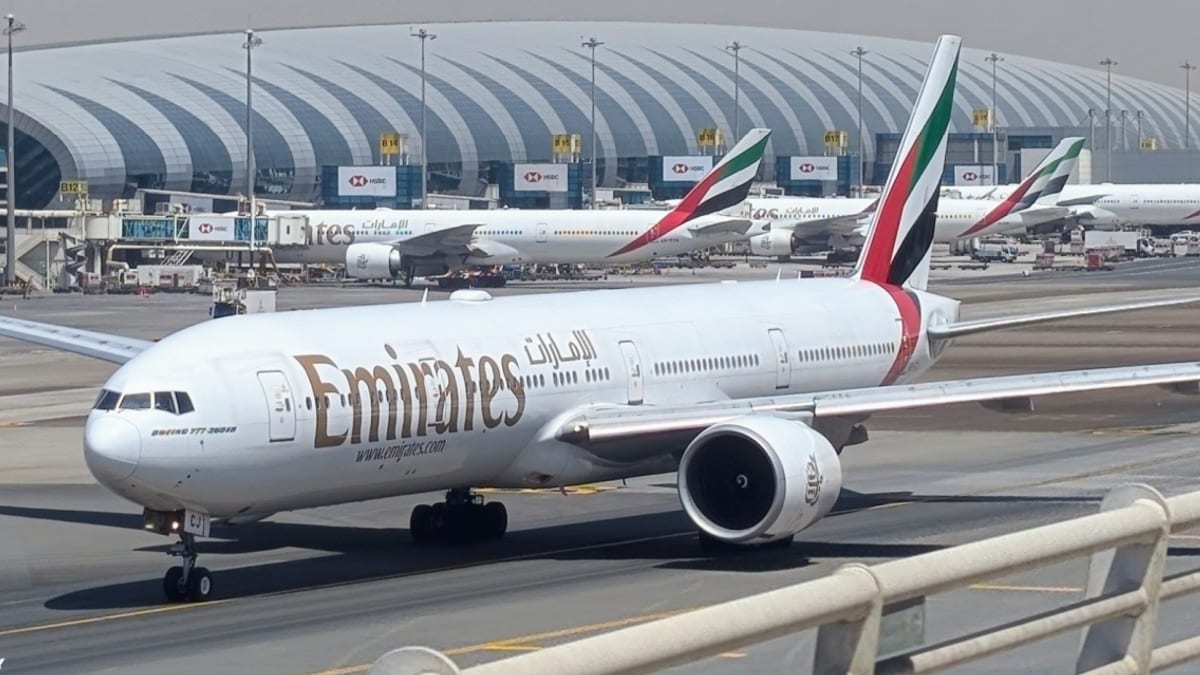
Image by LoyaltyLobby
Stable Weekend Schedule After Weeks Of Disruption
Publicly available flight listings and aviation tracking data for March 29 and 30 indicate that Emirates and Flydubai together are operating 218 departures from Dubai International Airport on Sunday, followed by 209 on Monday. While below peak-season levels, the figures point to a relatively stable weekend schedule compared with recent weeks of significant disruption linked to regional airspace closures and rerouting.
The two carriers account for the majority of departures from Dubai, according to airport and travel-industry reporting, so their ability to hold operations close to the 200-flight mark on consecutive days is being read in the market as a sign of controlled recovery rather than a return to normal. Capacity remains carefully managed, with some long-haul sectors reportedly operating at slightly reduced frequencies and a handful of regional routes still seeing irregular timings.
Industry analysts note that the weekend is a key test for Gulf hubs, which typically see heavy transfer traffic between Europe, Asia, Africa and Australasia. The relatively narrow gap between the 218 and 209 departures suggests that scheduling teams at both airlines are focusing on consistency from one day to the next, which can help passengers and travel agents plan connections more confidently, even when overall capacity is constrained.
Travel trade sources in the region point out that this apparent stabilization follows several weeks in which airlines operating from Dubai were forced to cancel or reschedule hundreds of flights as airspace conditions shifted rapidly. Against that backdrop, holding more than 200 departures per day is being interpreted as a deliberate pivot from crisis response to managed, medium-term operations.
Emirates Prioritises Long Haul And High-Demand Gateways
Emirates, Dubai’s flagship carrier, continues to anchor the city’s international network with widebody operations that connect the Gulf to major cities across six continents. Recent published coverage and airline network updates show the carrier concentrating on its highest-demand corridors, including routes to Europe, North America, South and Southeast Asia, and the South Pacific.
Within the 218 Sunday and 209 Monday departures ex-DXB across both airlines, Emirates is understood to represent the larger share, particularly on long-haul sectors operated by Airbus A380 and Boeing 777 aircraft. Publicly available schedules show that frequencies on some trunk routes have been maintained or restored, while certain secondary destinations still operate with fewer weekly flights than in fully unconstrained periods.
Observers in the aviation sector suggest that Emirates’ approach reflects a focus on global connectivity and revenue optimization. By maintaining daily or near-daily services on flagship routes and relying on strong connecting flows via Dubai, the airline can support premium and corporate traffic while also providing vital lift for leisure travellers trying to leave or transit the region.
Schedule data also indicates that the carrier continues to adjust timings and routings in response to evolving airspace restrictions. Even when departure counts appear stable on paper, some flights are understood to be operating on slightly longer flight paths or altered departure slots, which can have knock-on effects for aircraft utilisation and crew scheduling.
Flydubai Underpins Regional And Short-Haul Connectivity
Flydubai, the city’s low-cost and hybrid carrier, remains central to Dubai’s short and medium-haul connectivity, particularly across the Middle East, South Asia, Eastern Europe and parts of Africa. According to travel-industry reporting and government tourism information, the airline operates from Dubai International and Dubai World Central, offering a mix of point-to-point and connecting traffic that complements Emirates’ long-haul network.
Within the combined 218 and 209 departures over Sunday and Monday, Flydubai’s operations are particularly visible on regional and niche routes that might not sustain widebody service. Publicly available flight boards show a steady pattern of Boeing 737 departures to Gulf capitals, secondary cities in the Indian subcontinent and popular leisure destinations around the Black Sea and Red Sea.
Reports from recent weeks indicated that Flydubai initially faced pronounced disruption on certain routes as regional airspace conditions changed, leading to selected cancellations and timing shifts. The current weekend pattern, with departures holding relatively close from one day to the next, suggests that planners have now locked in a short-term schedule that can be sustained even under constrained conditions.
Travel analysts add that Flydubhai’s role has been especially important for residents and regional business travellers who rely on frequent, relatively low-fare flights for short stays and family visits. Keeping these services running on a predictable schedule, even if frequencies are not yet back to their highest historic levels, helps underpin confidence in Dubai’s position as a regional hub.
DXB Operating Below Peak Capacity But Showing Resilience
Dubai International Airport remains one of the world’s busiest hubs, but recent interviews and travel advisories cited in international media describe operations as running below full capacity while regional airspace restrictions continue. One widely quoted senior airport executive recently placed activity in the range of roughly 40 to 45 percent of normal schedules, with Emirates and Flydubai accounting for the majority of movements.
Against that backdrop, a weekend with 427 combined Emirates and Flydubai departures on Sunday and Monday illustrates both the scale that still exists in the system and the gap to historic peaks. Before recent disruptions, DXB routinely handled substantially higher daily movements, including a denser wave structure in the overnight and early-morning banks used for international connections.
Airport-focused reporting notes that some foreign carriers remain on reduced schedules into Dubai, and that certain routes are operating with smaller aircraft or fewer weekly frequencies than previously planned for the spring period. Even so, passenger accounts circulating in travel forums in late March describe the airport environment as broadly orderly, with check-in, security and transfer processes largely functioning as normal for those whose flights are operating.
Aviation specialists say that Dubai’s ability to keep a significant volume of flights running while airspace remains constrained reflects both the scale of its home carriers and the flexibility of the hub model. By rebalancing capacity across routes and using widebody aircraft efficiently, Emirates and Flydubai can protect key flows and gradually rebuild the network as restrictions ease.
Advice For Travellers Departing Dubai On March 29 And 30
For passengers booked on Emirates or Flydubai services ex-DXB this Sunday and Monday, travel advisers continue to recommend close monitoring of flight status through official airline channels and airport information boards. Even with 218 and 209 scheduled departures on March 29 and 30, individual flights may still be subject to last-minute timing changes or routing adjustments as operational teams respond to evolving conditions.
Published guidance from airlines and Dubai airport operators over recent weeks has consistently urged travellers not to make their way to the terminals without a confirmed, operating booking. Given the lingering possibility of disruption, observers suggest arriving earlier than usual for check-in and security, particularly for long-haul departures or complex itineraries involving tight connections.
Travel-industry commentary also highlights the importance of checking any onward connections that rely on airspace outside the United Arab Emirates. While the departure from Dubai might appear stable, restrictions or congestion along the route can still affect arrival times and subsequent legs of a journey.
For now, the weekend’s figures show that Dubai’s two main based carriers are keeping a substantial portion of their schedules in the air, even if the broader regional backdrop remains uncertain. How quickly those 218 and 209 departures can be increased in the weeks ahead will depend largely on the pace at which airspace constraints ease and demand patterns normalise across the network.