

More news on this day
Emirates is set to significantly raise the bar for travel between the Middle East and East Asia, as the Dubai-based carrier prepares to roll out expanded Airbus A380 services to Hong Kong and Guangzhou from October 2026, bringing its latest high-comfort cabins and enhanced capacity to two of China’s most important aviation hubs.
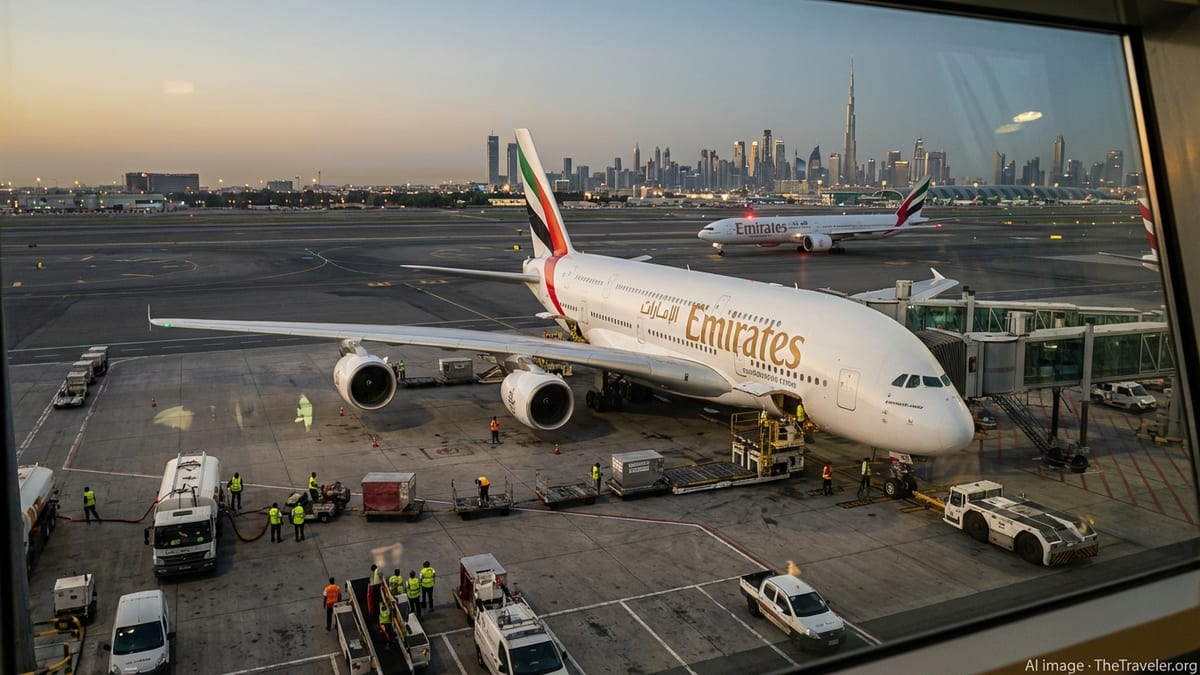
Flagship A380s Take Center Stage on Key China Routes
Emirates has filed plans to introduce daily Airbus A380 services from Dubai to both Hong Kong and Guangzhou from 1 October 2026, in a move that underscores the strategic importance of the Greater Bay Area and the wider East Asia market. The changes, reflected in recent scheduling data, will see the airline replace Boeing 777-300ER aircraft with three and four class A380s on high-demand routes linking Dubai to these major commercial centres.
On the Dubai–Guangzhou route, Emirates intends to operate a three class A380 equipped with First, Business and Economy cabins, restoring its flagship double decker to southern China on a permanent basis after earlier, shorter-term deployments. For Dubai–Hong Kong, the carrier plans to switch its EK382 and EK383 flights to A380 operation from October, before introducing a fully refurbished four class A380, including Premium Economy, from 1 December 2026.
The move is part of a broader rebalancing of capacity across the airline’s global network as Emirates accelerates the rollout of its retrofitted widebody fleet. By placing the high-profile A380 back on two of its busiest East Asia routes, the carrier is aiming to capture surging demand in both premium and leisure segments while differentiating its product in a highly competitive marketplace.
Premium Economy and Refreshed Cabins Target Growing Demand
The centrepiece of Emirates’ A380 expansion in East Asia is the rollout of its latest cabin products, led by Premium Economy. The airline has spent the past two years overhauling the interiors of its Airbus A380 and Boeing 777 fleets, converting older layouts and adding a dedicated mid-tier cabin aimed at travellers seeking more space and comfort without paying full business class fares.
From December 2026, Hong Kong will be served by a refurbished four class A380 that features Emirates’ new Premium Economy seats on the main deck, alongside updated Business and Economy cabins and refreshed First Class suites. Guangzhou will receive a three class A380 from October, offering a high-capacity mix of First, Business and Economy that mirrors the configuration deployed on several of the airline’s other Asian trunk routes.
Regional aviation analysts say the addition of Premium Economy and upgraded interiors is likely to resonate strongly with business travellers from the Pearl River Delta, small and medium enterprises trading via Dubai, and affluent leisure passengers heading to Europe, the Middle East and Africa. For Emirates, standardising its latest product on such routes helps maintain yield while broadening the appeal of its network to a wider demographic of long haul travellers.
Strategic Bet on Hong Kong and the Greater Bay Area
Hong Kong’s elevation to full A380 status from October, followed by a retrofitted four class superjumbo in December, reflects a strong rebound in demand for connecting traffic through Dubai. After several years of pandemic-related disruption, Hong Kong has seen a rapid recovery in premium and long haul segments, with airlines competing aggressively for transfer traffic to Europe and North America via their respective hubs.
Emirates’ upgrade positions it to capitalise on that resurgence. By deploying its largest aircraft with the latest interiors, the carrier can offer high volumes of seats in Economy alongside expanded premium capacity, supported by its well-known lounge, bar and shower spa products for First and Business passengers on the A380. The move also supports its growing interline and codeshare partnerships across the region, giving travellers from secondary Chinese and Southeast Asian cities an upgraded option to connect via Hong Kong and Dubai.
The decision dovetails with the airline’s recently enhanced cooperation with Chinese carriers and regional partners, which extends its reach from Hong Kong and southern China into dozens of additional domestic points. By anchoring that connectivity on an A380 service, Emirates is seeking to make Hong Kong one of its flagship East Asia gateways for both corporate and leisure traffic.
Guangzhou Rejoins the Global A380 Destination Map
Guangzhou, capital of Guangdong province and a key node in China’s manufacturing and export economy, will once again join Emirates’ global list of A380 destinations under the new schedule. While the airline has previously deployed the double decker to the city, including a short-term A380 substitution planned for February 2026, the shift to year-round A380 operation from October marks a more permanent commitment to the southern China market.
The scheduled A380 service, operating as EK362 and EK363, will provide significantly more capacity than the Boeing 777-300ER it replaces, particularly in premium cabins. First Class suites and lie flat Business Class seats on the upper deck will appeal to executives and traders shuttling between southern China, the Middle East, Europe and Africa, while the expansive Economy cabin caters to tour groups, migrant workers and visiting friends and relatives traffic.
Industry observers note that Guangzhou’s inclusion in the A380 network aligns with the Chinese government’s broader push to enhance international connectivity for the Greater Bay Area, encompassing Guangzhou, Shenzhen, Hong Kong and other nearby cities. With an A380 link to Dubai, travellers in this region gain one stop access to a wide swathe of Emirates’ network in Africa, the Middle East, Central Asia and Europe, strengthening Guangzhou’s role as an international gateway.
Retrofit Programme Drives Global Product Consistency
The East Asia A380 additions are enabled by Emirates’ multibillion dollar fleet retrofit programme, described by the airline as the largest cabin upgrade project in commercial aviation. Since late 2022, teams at the Emirates Engineering Centre in Dubai have been working around the clock to update both Airbus A380s and Boeing 777s with new interiors, including Premium Economy cabins and refreshed designs across all classes.
Emirates is now rolling these retrofitted aircraft out to additional cities each month, with Asia, Europe, Africa and the Middle East all receiving upgraded services. Hong Kong’s move from Boeing 777 to A380, followed by a refurbished four class A380, fits a wider pattern in which high demand hubs are prioritised for the airline’s top-tier product. Guangzhou’s A380 deployment has also been highlighted in regional aviation coverage as part of the same strategy, giving southern China a comparable onboard experience to cities such as Shanghai, Singapore and Zurich that have already seen A380 or upgraded widebody enhancements.
By late 2026, Emirates expects a large share of its long haul departures to be operated by aircraft with the latest interiors, including a rapidly expanding Premium Economy footprint. For travellers in East Asia, that translates into more consistent product quality regardless of whether they are flying to Dubai nonstop or connecting onward to Europe, Africa or the Americas.
Enhanced Connectivity Across China and Beyond
Emirates’ A380 expansion into Hong Kong and Guangzhou comes as the airline strengthens its broader presence in China. Recent commercial agreements with local carriers, including new interline arrangements, are giving Emirates passengers access to dozens of additional points across the country via hubs such as Hangzhou, Shenzhen and Hong Kong. The upgraded A380 services are expected to feed these networks, creating smoother one stop journeys between secondary Chinese cities and destinations across Emirates’ global network.
For passengers, the combination of improved connectivity and an enhanced onboard product could prove compelling. In practice, travellers from inland cities will be able to connect onto Emirates’ A380 flights in Hong Kong or Guangzhou and continue onward to Dubai and beyond, enjoying a consistent premium offering on the long haul segments. The strategy also supports growing outbound tourism from China, with popular destinations in Europe, the Middle East and Indian Ocean now accessible with a single connection and a high level of onboard comfort.
Inbound flows to China will benefit as well. Business travellers and tourists originating in Europe, the Gulf and Africa will have more capacity and better cabin options on Emirates’ East Asia services, before transferring to partner airlines for domestic sectors. That dynamic could help support regional tourism recovery and facilitate new trade and investment flows through the Greater Bay Area and other Chinese economic centres.
Competitive Landscape in East Asia Long Haul Travel
The introduction of additional A380 capacity into East Asia places Emirates more firmly in competition with other global network carriers that have been upgrading their cabins and increasing capacity to the region. Rival airlines based in East Asia, Europe and the Middle East have all moved to enhance their premium offerings on routes to Hong Kong and mainland China, anticipating sustained demand from both business and high spending leisure segments.
Emirates’ decision to concentrate its most recognisable aircraft type on Hong Kong and Guangzhou is as much a branding play as it is a capacity adjustment. The A380 has long been central to the airline’s marketing, with its onboard bar, shower spa and spacious cabins helping to define the Emirates brand experience. Deploying the aircraft in East Asia reinforces that image for travellers who may connect through Dubai multiple times a year on business or personal trips.
Aviation analysts say that the inclusion of Premium Economy on the Hong Kong route in particular will give Emirates a useful tool in the competitive battle for corporate travel budgets. Companies increasingly view Premium Economy as an acceptable compromise between cost control and employee comfort, which could see more travellers routed via Dubai on Emirates flights as the product becomes widely available in East Asia.
Timings Align With Seasonal Peaks and Future Growth
The timing of the A380 deployment, from October 2026, is designed to coincide with the start of the northern winter season and a traditional peak period for both business and leisure travel. The Greater Bay Area typically sees strong traffic in the final quarter of the year, as trade fairs, corporate events and year end holidays drive demand for long haul flights. Emirates’ schedule adjustments will position it to capture that seasonal upswing with increased capacity and an upgraded onboard product.
Looking further ahead, the airline’s expanded A380 presence in East Asia creates a platform for additional network development. With Hong Kong and Guangzhou anchored by flagship aircraft, Emirates can layer in more frequencies, adjust timings or add new partner connections as demand grows. The moves also signal continued confidence in the long term viability of the A380 on key trunk routes, despite broader industry trends towards smaller, more fuel efficient twin engine models.
For travellers planning trips between East Asia and destinations served by Emirates, the latest schedule changes mean more seats, more comfort and a more uniform experience across cabins. For airports and tourism authorities in Hong Kong and Guangzhou, the return and expansion of the A380 is a visible vote of confidence that international demand is back and that the region remains central to global travel flows.