

More news on this day
After weeks of disruption across Gulf airspace, Emirates customers flying from Dubai in April are navigating a shifting mix of schedule changes, cancellations and temporary waivers that determine whether they can rebook for free or claim a refund.
Get the latest news straight to your inbox!
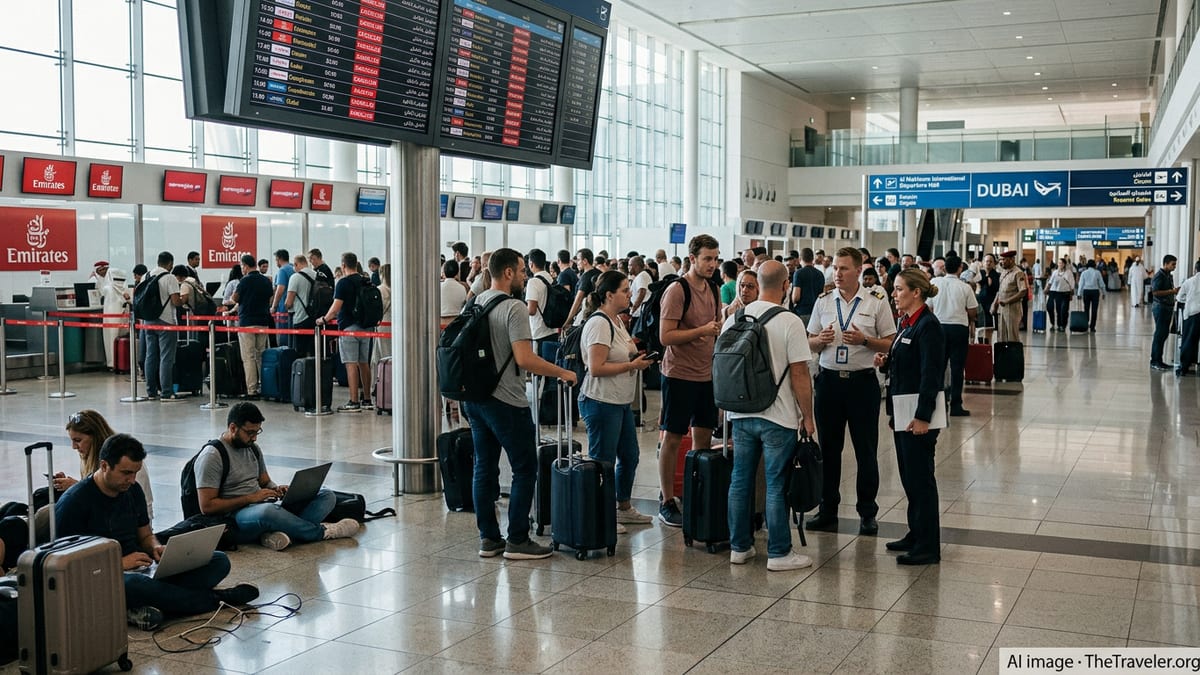
What is causing April cancellations from Dubai?
Operations at Dubai International Airport have been affected since late February by a combination of regional airspace restrictions and bouts of severe weather, according to public advisories and travel industry coverage. Airlines using Gulf hubs, including Emirates, have repeatedly thinned schedules, rerouted services and placed capacity limits through March as conditions evolved.
Reports indicate that Emirates initially focused its disruption policy on late February and March departures, but later advisories extended some flexibility into April as the knock-on effects of earlier cancellations rippled through the network. Travel analysis sites note that carriers are still operating under caution, using temporary timetables and late adjustments rather than committing to full pre-disruption schedules.
For passengers departing Dubai in April, this means that a flight can remain “confirmed” in the booking system until relatively close to departure, then be retimed or cancelled as operational constraints firm up. The most up to date picture of what is flying on a given day remains the airline’s own flight-status tools rather than third party trackers or historic schedules.
Travel commentators advise that anyone booked to travel through Dubai in early to mid April should check their itinerary frequently and treat long onward connections with care, particularly when combining separate tickets or low cost add-on flights that are not covered by the same disruption policy.
Current Emirates waiver window and who it applies to
Publicly available information on Emirates’ travel updates page indicates that the carrier’s main disruption waiver now applies to customers booked to travel between 28 February and 15 April, covering both inbound and outbound journeys touching Dubai. Within this window, affected passengers generally have a choice between changing dates without a rebooking fee or requesting a refund if they no longer wish to travel.
Travel blogs that track airline policies report that Emirates has paired this refund cut off with a longer rebooking horizon, allowing customers to move disrupted travel forward to late April or into May without standard change penalties, subject to seat availability and any fare differences. Some coverage describes free rebooking being offered on departures through the end of May for itineraries originally scheduled within the core disruption period.
The waiver language focuses on travel dates rather than purchase dates, meaning that recently bought tickets can fall under the policy if the first flight segment departs on or before the mid April threshold. However, normal fare rules resume on later April and summer departures, where cancellation penalties and change fees can still apply unless the airline itself makes a significant schedule change.
Because wording on general refund forms and automated tools can lag behind the latest travel update, consumer advocates recommend that passengers rely on the conditions set out in the disruption advisory and retain screenshots, especially when the waiver end date has just been extended.
How to rebook a cancelled Emirates flight from Dubai
Emirates is encouraging customers whose flights from Dubai are cancelled or heavily retimed in April to use its online self service channels for most rebookings. Public guidance highlights the Manage Booking function on the airline’s website and mobile app as the primary route for selecting alternative dates or nearby flights once a disruption has been recorded on the reservation.
In many cases, eligible passengers can move their travel to another Emirates-operated flight to the same destination without paying a change fee, as long as the new departure falls within the waiver window and booking class conditions. Published advice notes that fare differences may still apply when shifting between high and low demand days or switching to routes with different cabin layouts.
Tickets purchased through travel agents or online intermediaries generally need to be handled by the original issuing agent. Industry coverage stresses that while Emirates sets the overarching disruption policy, agencies manage changes on their own bookings and may need to manually apply the waiver to avoid automatic penalties in their systems. This can add processing time during busy periods.
Analysts also point out that partner or code share flights operated by other airlines can fall under a separate set of rules, even when they carry an Emirates flight number. In such cases, passengers may be rebooked only on services that the operating carrier makes available, and options such as rerouting via a different hub or delaying travel by several weeks might be more constrained.
When a refund is possible and how to request one
For customers whose Emirates flight from Dubai in April is cancelled outright, publicly available information and consumer rights guidance agree on a core principle: if the airline does not operate the flight, passengers are normally entitled to a refund for the unused portion of their ticket as an alternative to rebooking.
Emirates has activated a dedicated online process for disruption related refunds on tickets covered by the current waiver. Travel reports explain that customers who booked directly with the airline can submit a request through a specific refund form, choosing cancellation due to schedule change or disruption. Once accepted, refunds are typically returned to the original form of payment, although processing times can vary during periods of high demand.
Those who purchased via a travel agent are generally instructed to contact that agent to initiate the refund under the same waiver rules. Industry sources note that agencies may first need confirmation that the flight has been cancelled or significantly rescheduled before releasing funds, since they hold the original payment and handle settlement with the airline.
Passengers should be aware that voluntarily cancelling a still operating April flight from Dubai, without a qualifying schedule change, can place the booking under standard fare conditions rather than disruption rules. In those cases, refunds may be partial or limited to tax elements, particularly on non refundable economy fares, unless local regulations or credit card protections provide broader coverage.
Practical steps for Dubai travelers holding April tickets
Travel specialists recommend a series of practical checks for anyone holding Emirates tickets from Dubai during April, especially in the early part of the month. The first is to verify flight status repeatedly in the days and hours before departure, using the airline’s own status tools and app notifications, as schedules remain subject to late adjustment.
The second is to review the latest wording on the Emirates travel updates page, confirming whether the passenger’s exact travel dates still fall within the current waiver window and what options are explicitly offered. Because different phases of the disruption have used slightly different end dates for refunds and fee free changes, making decisions based on an outdated screenshot or social media post can lead to confusion.
Third, passengers considering cancelling entirely should compare the value of a refund with the cost of rebooking later in the year, taking into account rapidly changing fares on competitive routes. Travel insurance policies may cover some out of pocket costs such as accommodation during extended delays, but many plans exclude cancellations made purely out of concern about future disruption.
Finally, experts advise allowing extra buffer time for connections, avoiding separate tickets where possible, and keeping all documentation related to cancellations, rebookings and advisory wording. In a fluid situation where policies may be updated again if conditions worsen, clear records can help travelers argue for the most favorable interpretation of the rules that applied on the day their plans were affected.