

More news on this day
Thousands of travelers around the world have been left stranded after Emirates slashed more than two hundred flights from its schedule amid widespread airspace closures across the Middle East, throwing one of global aviation’s busiest networks into turmoil.
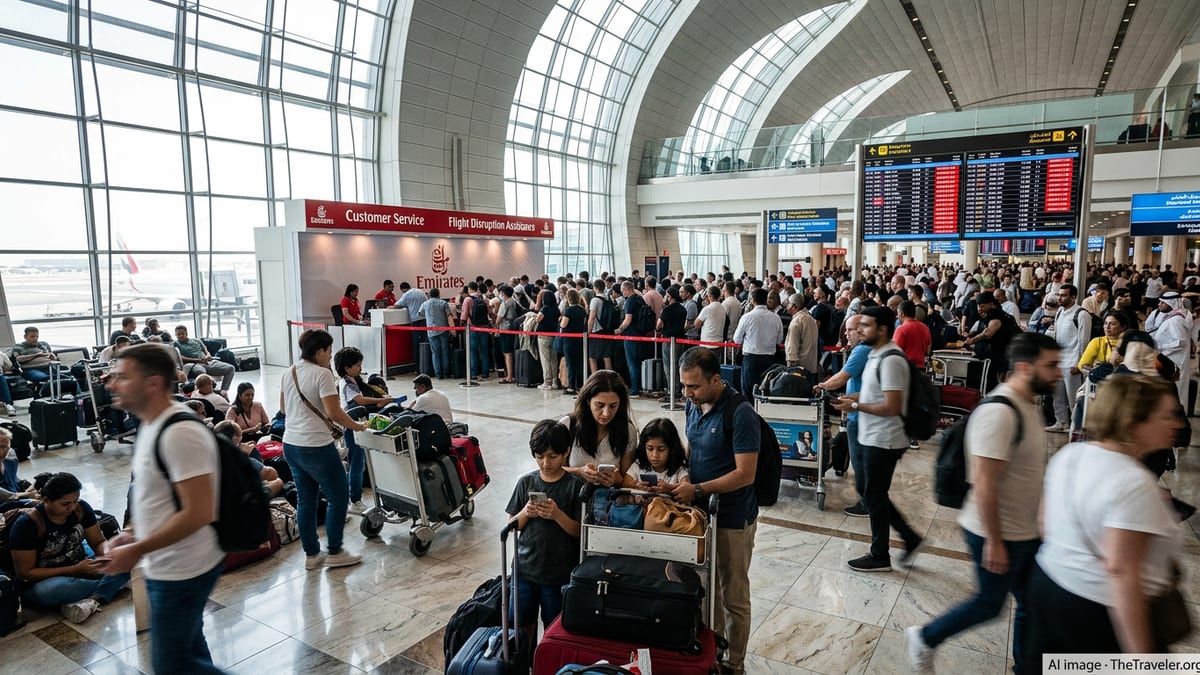
How a Regional Crisis Grounded a Global Giant
The disruption began when a wave of airspace closures swept across the Middle East following a sharp escalation in regional conflict, forcing airlines to suspend or reroute services through the Gulf’s key hubs. Emirates, which relies on Dubai International Airport as the heart of its global network, was among the hardest hit as authorities halted most commercial flight movements in and out of the United Arab Emirates.
With airspace above Iran, Iraq, Israel, Qatar, Bahrain and parts of the UAE closed or heavily restricted, many of Emirates’ long haul routes between Europe, Africa, Asia and Australasia suddenly became impossible to operate as scheduled. Flight tracking data showed a steep spike in cancellations and diversions, with Emirates scrapping more than two hundred services in a matter of days and parking wide body aircraft that normally operate almost continuously.
The carrier has framed the cuts as a safety driven response to conditions beyond its control, noting that flight paths in and out of Dubai must cross or skirt multiple affected airspace zones. Aviation analysts say the scale of the shutdown is unprecedented for the region’s hub and spoke carriers in recent years, rivaling only the shock of earlier pandemic and extreme weather disruptions.
While some limited repatriation and cargo services have continued, regular passenger operations on many routes remain suspended or severely thinned out. Industry observers warn that as long as conflict related restrictions remain in place, Emirates will struggle to restore anything close to its usual timetable.
Scenes of Turmoil at Dubai and Beyond
Inside Dubai International Airport, one of the world’s busiest international gateways, normally choreographed flows of transit passengers have given way to snaking queues at rebooking desks and crowded gate areas. Travelers report spending long hours waiting for information only to be told that their flights have been cancelled with no immediate alternative available.
Those caught mid journey on multi leg itineraries via Dubai have been among the worst affected. With onward flights dropped from the schedule and connections severed, holidaymakers, business travelers and expatriate workers have found themselves stranded in the transit zone or diverted to secondary airports with limited capacity to absorb the sudden influx.
Beyond the Gulf, the knock on effects stretch across Europe, Asia and Africa. Airports from London and Frankfurt to Mumbai and Johannesburg have seen Emirates departures scrubbed at short notice, leaving departure boards studded with cancellations and forcing airport staff to scramble to assist confused passengers. Hotel capacity in key stopover cities has tightened as airlines, including Emirates, race to secure rooms for those unable to travel onward.
Social media has filled with images of exhausted families camped out on terminal floors and accounts of travelers sleeping in departure halls while they wait for seats on scarce replacement services. Many complain of limited real time communication from the airline as overwhelmed contact centers struggle to keep pace with the surge in inquiries.
Emirates’ Response and What Passengers Are Being Offered
Emirates has activated emergency disruption protocols aimed at stabilizing operations and providing basic care for those stuck far from home. The airline is prioritizing safety critical decisions on routing and crew deployment while working with airports, hotel partners and local authorities to secure accommodation, meals and ground transport for stranded travelers where possible.
Passengers whose flights have been cancelled are being offered complimentary rebooking at a later date, subject to seat availability, with most change fees waived. Travelers who no longer wish to fly are being directed to request refunds or travel vouchers through the airline’s official channels. In many cases, however, the immediate challenge is not financial compensation but the practical question of how and when to reach their intended destination.
Because the disruption stems from sweeping airspace closures rather than airline specific technical issues, Emirates is operating with constrained options. Some long haul routes can be rerouted around conflict zones, but this adds significant flight time, fuel burn and crew duty complications. As a result, aviation experts say the airline is selectively restoring services where viable while keeping others grounded until more direct paths become available.
Government authorities in the UAE have also stepped in, directing hotels to extend guest stays for travelers who cannot depart and pledging to cover essential costs for those left in limbo. Travel rights groups advise affected passengers to retain all receipts for incidentals and to document communications with the airline in case additional compensation mechanisms are introduced later.
What Stranded Travelers Should Do Now
For passengers still trying to navigate the fallout, the most urgent advice from aviation and consumer advocates is to stay closely informed and act quickly when alternatives appear. With phone lines congested, Emirates is urging customers to use its website and mobile app to check the latest flight status, manage bookings and submit refund or rebooking requests.
Travelers with imminent departures are being encouraged to verify whether their flight is operating before heading to the airport, as on the ground facilities in some cities remain strained. Those already in transit may have more success dealing with Emirates staff at airport service desks, where additional personnel have been deployed in key hubs to handle complex reroutings and special assistance cases.
Passengers booked through travel agencies or corporate travel managers should also loop in their intermediaries, who may have access to separate booking channels or negotiated fares on alternative airlines. However, options are limited while much of the region’s airspace remains closed, and replacement itineraries often involve lengthy detours or extended layovers.
Experts caution that, given the scale of the disruption, normal Emirates schedules are unlikely to resume immediately even after some airspace corridors reopen. Travelers with flexible plans are advised to consider postponing non essential trips or accepting longer routings via alternate hubs outside the Gulf in order to avoid the worst congestion.
How Long Could the Disruption Last for Emirates?
The duration of the crisis hinges largely on political and military developments rather than on airline or airport decisions. Airspace closures imposed by governments are typically lifted only after aviation safety regulators are satisfied that the risk of missile strikes or other conflict related hazards has diminished to acceptable levels.
Industry analysts note that Emirates has previously demonstrated an ability to recover rapidly from short lived shocks, including severe storms and brief regional flare ups, by redeploying aircraft and crew at speed. In this case, however, the breadth of the affected area and the involvement of multiple states make forecasting a clear timeline particularly difficult.
In the meantime, the carrier faces mounting operational and reputational pressures. Every cancelled rotation represents lost revenue on routes that usually run at high load factors, while prolonged network fragmentation threatens Emirates’ appeal as a seamless one stop link between continents. The airline’s handling of communication, passenger care and backlog management over the coming days will play a significant role in how quickly confidence returns once skies begin to reopen.
For now, thousands of travelers remain scattered across continents, waiting for updates and hoping that the world’s largest long haul carrier can once again stitch together the connections that have long defined modern global travel through Dubai.