

More news on this day
Emirates has brought its innovative “Travel Rehearsal” programme to Bali, staging a full mock airport journey at Denpasar International Airport that is being hailed as a new benchmark for accessible air travel in Asia and beyond.
A Groundbreaking Accessible Travel First for Bali
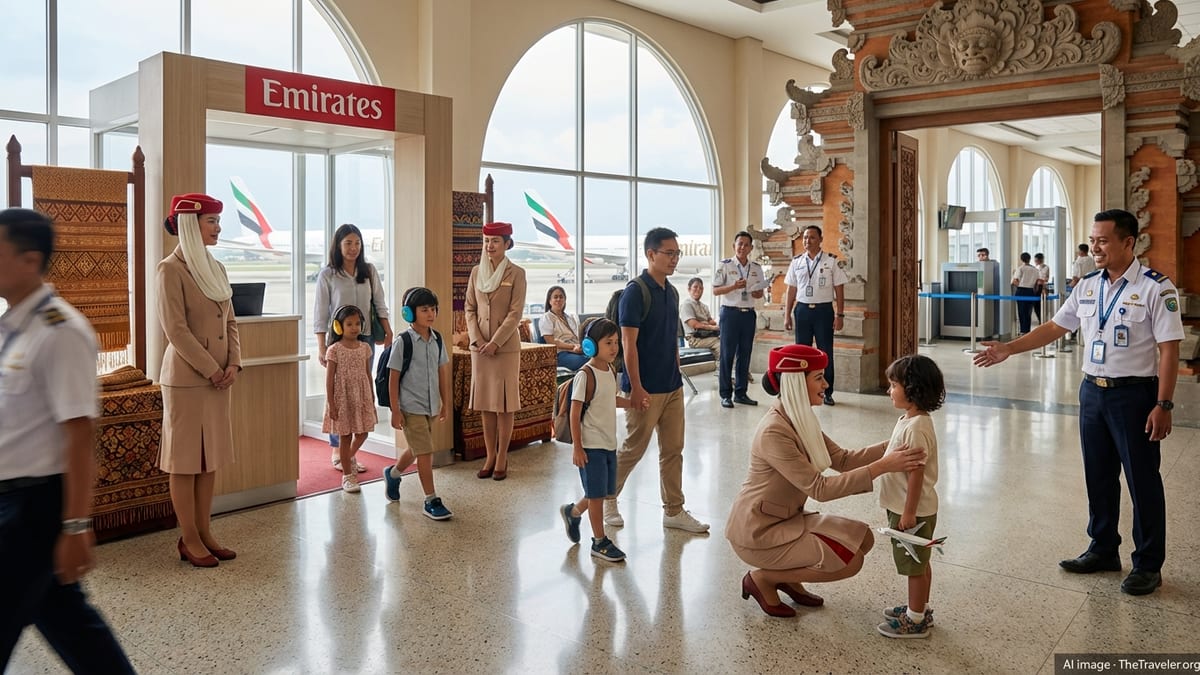
On 18 February 2026, a small group of families arrived at Denpasar International Airport not to catch a flight, but to rehearse one. Seventeen participants, including eight children with autism, took part in Emirates’ first Travel Rehearsal in Bali, a guided simulation of the entire airport and flight experience designed specifically for neurodiverse passengers and their caregivers.
The initiative forms part of Emirates’ broader “Accessible Travel for All” strategy and marks the latest expansion of a programme first tested in Dubai in 2024. By bringing the rehearsal concept to one of the world’s most popular island destinations, the airline is signaling that inclusive travel is no longer peripheral to the industry, but central to how routes and services are developed.
Bali’s debut session is already being closely watched by tourism authorities and disability advocates across the region. Many see it as a potential blueprint for how airports in other high-traffic leisure destinations could better support passengers who experience anxiety, sensory overload, or communication challenges when they travel.
The move also reinforces Emirates’ positioning as a leader in autism-friendly air travel. The carrier was recognized in 2025 as the world’s first Autism Certified Airline, after training tens of thousands of staff to support neurodiverse customers throughout their journeys.
Inside the “Travel Rehearsal” Journey in Denpasar
The Bali Travel Rehearsal was carefully choreographed to mimic every key stage of a real trip, but without the time pressure, crowds, or noise that can make airports overwhelming for neurodiverse travellers. Families began at the international drop-off zone before moving through check-in, security screening, immigration, boarding gates, aircraft familiarisation, and finally baggage claim and pick-up.
Throughout the simulation, Emirates staff and airport partners used visual aids, simple explanations, and predictable routines to help the children understand what would happen next. Participants were encouraged to touch equipment, hear typical announcements, and see security and boarding procedures up close, turning an unfamiliar environment into something knowable and manageable.
For many parents and teachers, the controlled setting was particularly valuable. Without the pressure of catching a real flight, they could pause to answer questions, repeat steps, or step away briefly if a child felt overwhelmed. The aim was not to test the children, organisers stressed, but to rehearse the environment until it felt less threatening and more routine.
By the end of the day, participants had completed a full “there and back” journey through the airport, often the most daunting part of travel for families of children on the autism spectrum. Organisers reported visible gains in confidence, with several children who initially clung to caregivers later walking independently through checkpoints they had already practised.
Why Bali Is Emerging as a Testbed for Inclusive Tourism
Bali’s selection as the latest host for Emirates’ Travel Rehearsal is no coincidence. The island has long cultivated a reputation as a welcoming destination for international visitors, with strong demand from families seeking beach breaks, wellness escapes, and cultural immersion. As arrivals continue to climb, the pressure has grown for local infrastructure to respond to a broader spectrum of accessibility needs.
Denpasar International Airport is a critical gateway for long-haul travellers into Indonesia, linking Bali directly with major hubs in the Middle East, Europe, and Asia-Pacific. For families embarking on lengthy journeys, the airport experience can set the tone for an entire trip, particularly when a child is sensitive to noise, crowds, or changes in routine.
Local authorities have in recent years stepped up investment in disability awareness and passenger assistance programmes, and the Emirates rehearsal dovetails with those efforts. The event brought together airport operators, frontline staff, and regulators in a real-time exercise that highlighted how signage, layout, and staff interactions can dramatically affect the comfort of neurodiverse travellers.
For Bali’s tourism industry, the rehearsal also carries strategic weight. Destinations that can credibly market themselves as inclusive and accessible gain a competitive advantage, especially among multigenerational families and travellers who factor support services into their choice of holiday location. Emirates’ decision to run its first Indonesian Travel Rehearsal in Denpasar effectively spotlights Bali as an early mover in this space.
Global Programme with Local Partnerships
The Bali launch is part of a global roll-out of Emirates’ Travel Rehearsal concept, which began as a community collaboration in Dubai. After its debut there in 2024, the airline gradually extended the initiative to a network of cities including Barcelona, Brisbane, Manila, Madrid, Toronto, and others, tailoring each session to local airport layouts and partner capabilities.
In Denpasar, the programme relied on close cooperation between Emirates and a broad coalition of Indonesian stakeholders. Ground handling company PT JAS Airport Services, airport operator Angkasa Pura Indonesia, as well as customs, immigration, and quarantine officials all played a role in opening up restricted areas and adjusting procedures for the rehearsal environment.
This multi-agency involvement was essential to recreating the full spectrum of touchpoints a family might encounter on an actual travel day. From document checks to security protocols and baggage handling, each department had to coordinate so that children and caregivers experienced a realistic but lower-stress version of the process.
Officials involved in the initiative say the exercise doubled as training for staff themselves, who were able to observe how small adjustments in tone, timing, and physical space could ease anxiety for passengers with hidden disabilities. The rehearsal has already prompted discussions about how some of these changes might be incorporated into regular operations at Denpasar.
Emirates’ Autism Certification and Staff Training Push
Behind the Bali trial is a broader, multiyear investment by Emirates in staff training and specialised certification. The airline became the world’s first Autism Certified Airline in 2025, after subjecting its policies, ground operations, and onboard experience to external review focused on the needs of autistic passengers and other neurodivergent travellers.
Central to that recognition was a sweeping training programme for employees. More than 30,000 cabin crew and ground staff have now received instruction on recognising signs of sensory overload, communicating clearly with non-verbal or anxious passengers, and offering practical adjustments such as quieter seating areas or alternative boarding arrangements when possible.
The airline has also integrated neurodiversity awareness into its passenger communications and inflight entertainment. Curated films, documentaries, and podcasts explore lived experiences of autism and disability, helping to normalise conversations about accessibility and to educate a wider flying public.
Executives say initiatives like Travel Rehearsal and autism-focused content are mutually reinforcing. By pairing training and awareness with hands-on simulations, the airline aims to embed accessibility considerations into day-to-day decision-making, rather than treating them as occasional, stand-alone projects.
Addressing the Anxiety of Air Travel for Neurodiverse Families
For many families of children on the autism spectrum, the idea of navigating a major international airport can be enough to deter them from travelling altogether. Studies and industry surveys have repeatedly found that concerns over noise, crowds, sudden changes, and complex procedures are among the top reasons neurodiverse families opt out of flying.
The Travel Rehearsal model seeks to reduce that barrier by treating air travel as a skill that can be practised in advance, just like crossing a busy street or starting at a new school. By exposing children to the airport environment ahead of a real journey, the programme helps them build familiarity with sights and sounds that might otherwise come as a shock on departure day.
Parents who joined earlier rehearsals in Dubai and other global hubs have reported that simply knowing what the check-in counter looks like, what a boarding gate announcement sounds like, or how the security screening belt moves can substantially lower stress levels. The ability to rehearse with supportive staff on hand gives caregivers a chance to test coping strategies and visual supports in a low-stakes environment.
Although the Bali session focused on children with autism, organisers note that the principles behind the programme can benefit a wide range of passengers who experience anxiety around travel, from those with sensory processing disorders to adults who have had distressing experiences in airports in the past.
Implications for Airlines and Destinations Worldwide
Emirates’ decision to export its Travel Rehearsal concept to Bali is being read by analysts as a signal that accessibility has moved firmly into the mainstream of airline strategy. What began as a trial in a single hub has evolved into a replicable model that can be adapted to different airports, cultures, and regulatory environments.
For competing carriers, the programme raises the bar on what it means to serve passengers with hidden disabilities. Autism-friendly measures are no longer limited to priority boarding or basic staff awareness; they now include immersive, pre-travel experiences that require significant coordination but can transform customer confidence and loyalty.
Destinations, too, are being drawn into the conversation. As more tourists seek reassurance that their needs will be respected across the entire journey, cities and tourism boards may increasingly partner with airlines and airports to deliver rehearsals, familiarisation visits, and sensory-friendly facilities. Bali’s involvement could encourage other leisure hotspots to pursue similar collaborations, particularly where tourism is a cornerstone of the local economy.
Advocates for disability rights argue that programmes like this also provide data and real-world case studies that can shape regulation, from design standards in terminal buildings to guidelines on staff training and emergency procedures. The Bali rehearsal adds another chapter to that evolving body of evidence, demonstrating how relatively modest operational changes can make a vast difference to particular groups of travellers.
What Comes Next for Accessible Travel in Bali
Following the success of the February event, Emirates and its partners in Denpasar are expected to review feedback from participating families, teachers, and frontline staff before planning future rehearsals. Organisers are already exploring options to increase capacity, refine the sensory environment, and extend invitations to a broader range of local centres and foundations working with neurodiverse communities.
There is also interest in aligning future sessions with peak school holiday periods, when families are more likely to travel and may be planning their first international flight since the pandemic. For Bali’s tourism stakeholders, the timing aligns with ongoing efforts to recover visitor numbers while also improving the quality and inclusivity of the travel experience.
In the longer term, observers expect Bali’s involvement in the Travel Rehearsal programme to feed into wider upgrades to airport infrastructure and services, from clearer wayfinding and quieter zones to expanded training for staff across airlines, security, and immigration. If realised, those changes would benefit not only neurodiverse passengers but anyone who finds modern air travel stressful or confusing.
For the families who walked through Denpasar’s terminals during the inaugural rehearsal, however, the impact is immediate and personal. The chance to practise check-in, security, boarding, and arrival in a calm, supportive setting offers something that can be hard to come by in travel: the confidence that their next journey to or from Bali will be not just possible, but genuinely enjoyable.