

More news on this day
An Emirates flight from Edinburgh to Dubai was diverted over Egypt after a drone attack near Dubai International Airport triggered fresh disruption across an already fragile Middle East airspace, adding new uncertainty for passengers connecting through the region.
Get the latest news straight to your inbox!
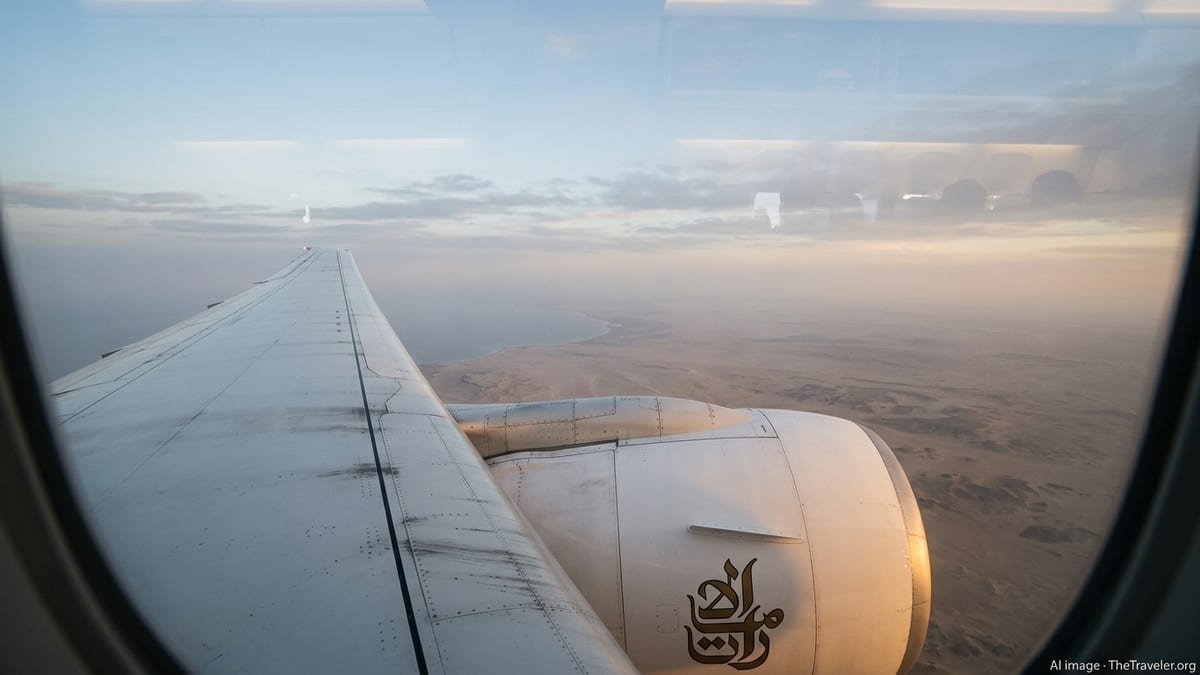
What Happened to the Edinburgh to Dubai Flight
According to flight-tracking data and passenger accounts discussed on public forums, an Emirates service operating between Edinburgh and Dubai was well into its journey when it was instructed to divert while over Egyptian airspace. The diversion followed reports of a drone attack targeting fuel infrastructure close to Dubai International Airport, which led to a temporary suspension of some operations.
Publicly available information indicates that the incident formed part of a broader pattern of drone and missile activity linked to the wider regional conflict, which has already prompted intermittent closures and restrictions in parts of Middle Eastern airspace. Earlier strikes in late February and March had already forced carriers to cancel, reroute, or delay numerous flights into and out of the United Arab Emirates.
Initial reports shared by travelers suggest the Edinburgh flight was turned back rather than continuing toward Dubai or diverting to an alternate airport within the Gulf. Passengers described a prolonged period in the air before the aircraft returned, resulting in extended journey times and missed onward connections.
While detailed operational timelines for this specific flight have not been fully published, the diversion has quickly become a focal example of how quickly conditions can change for long-haul services bound for Dubai, even after they have safely crossed Europe and entered Middle Eastern air corridors.
How the Drone Attack Affected Dubai Airport Operations
Publicly available coverage of the wider situation shows that drone activity around the United Arab Emirates has repeatedly targeted strategic infrastructure, including facilities close to major international airports. In the latest incident affecting Dubai, a drone strike near fuel storage reportedly sparked a fire and triggered heightened safety protocols, including the temporary suspension of some arrivals and departures.
Aviation analysts note that even when physical damage is described as limited or quickly contained, any confirmed attack close to a major hub such as Dubai International Airport can prompt immediate, precautionary traffic holds and diversions. This is due to the need to protect aircraft on final approach, manage potential debris risks, and keep emergency access routes clear while airport responders assess the situation.
In recent weeks, Dubai has operated under varying levels of constraint, with periods of near-normal activity interspersed with sudden pauses whenever missile or drone interceptions occur near the city. The result has been a patchwork pattern of cancellations, rolling delays, and last-minute rerouting, especially for widebody aircraft arriving from Europe and North America.
Against this backdrop, the diversion of the Edinburgh flight appears consistent with a cautious operational posture. Airlines have been prioritizing aircraft and passenger safety over schedule reliability, accepting the cost and complexity of diversions rather than exposing flights to evolving risks in the immediate vicinity of the airport.
Impact on Passengers and Connecting Journeys
For travelers on the disrupted Edinburgh to Dubai service, the diversion over Egypt translated into substantial inconvenience. Instead of arriving into Dubai in time to connect to onward flights to Asia, Africa, or Australia, many passengers found themselves facing missed connections, overnight delays, and the need for rebooking on a network still operating under strain.
Accounts shared by affected travelers across social platforms describe uncertainty about next steps, with some reporting extended waits on the ground and limited immediate information while aircraft were being held or repositioned. In some cases on other recent flights, passengers have reported spending prolonged periods in transit airports or being rebooked on special repatriation or limited-schedule services once partial operations resumed.
For those with time-sensitive itineraries such as cruises, business meetings, or onward regional connections, the knock-on effects can be significant. Even when airlines provide meals, accommodation, or alternative flights in line with their policies, the loss of time and changes to carefully planned trips are proving difficult to absorb for many travelers.
The situation also underscores how dependent international itineraries are on major Gulf hubs. With Dubai functioning as a central connection point between Europe and large parts of Asia and Oceania, any prolonged disruption or sudden shutdown can ripple through global travel plans, affecting passengers far beyond the immediate region.
What This Means for International Travel in the Region
The diversion of the Edinburgh to Dubai flight is one example of a wider pattern of instability affecting air travel across the Middle East since late February. Public reporting highlights repeated missile and drone launches targeting facilities in the United Arab Emirates, Oman, Saudi Arabia, and other states, leading to temporary closures of airspace and restrictions on key routes.
Risk assessments from aviation consultancies and travel risk firms point to a dynamic environment in which airspace status can shift with little warning. Even when a country’s airspace remains technically open, carriers may choose to reroute or suspend flights if nearby attacks, interceptions, or military activity raise concerns about overflight safety.
For international travelers, this means that itineraries involving hubs such as Dubai, Abu Dhabi, Doha, and other regional gateways may be subject to sudden change. Airlines are still operating many services, but often on adjusted schedules, with reconfigured routings that can add time and complexity to journeys. In some cases, wide detours around higher-risk areas are increasing flight times and fuel costs.
Industry observers also note that the concentration of long-haul connectivity through a small number of Gulf hubs amplifies the impact of any single incident. When a major airport experiences even a brief operational pause, the disruption can quickly cascade through global networks, affecting flights that never enter the region’s airspace but rely on aircraft and crews cycling through these hubs.
Practical Advice for Travelers Booked via Dubai
Travel specialists and publicly available advisories are urging passengers with upcoming trips routed through Dubai to take a more proactive approach than usual. This starts with checking flight status frequently in the 24 to 48 hours before departure, as schedules have been changing closer to departure time than usual amid the shifting security environment.
Passengers are also being encouraged to ensure that their contact details are correctly registered in their booking profiles so that airlines can send real-time notifications about cancellations, delays, or rebookings. In the current climate, relying solely on printed itineraries or static confirmations issued days earlier can leave travelers exposed to last-minute surprises.
Those with critical connections or essential travel dates may wish to discuss contingency options with their airline or travel agent, including the possibility of routing via alternative hubs outside the immediate conflict zone where feasible. While such re-routing may extend total travel time, it can provide additional resilience if conditions around Dubai deteriorate again.
Finally, passengers are being advised to allow for generous connection times, travel with essential medications and valuables in carry-on luggage, and consider flexible accommodation and ground transport arrangements at their final destination. As the diversion of the Edinburgh to Dubai flight demonstrates, even flights that have progressed well into their journey can still be forced to change course when security events unfold near key hubs.