

More news on this day
Emirates Airlines flight EK133 from Dubai to Moscow was forced to make an urgent emergency landing back in Dubai on Saturday after Iran suddenly closed its airspace in response to joint United States and Israeli strikes, triggering fresh disruption across already tense Middle Eastern skies.
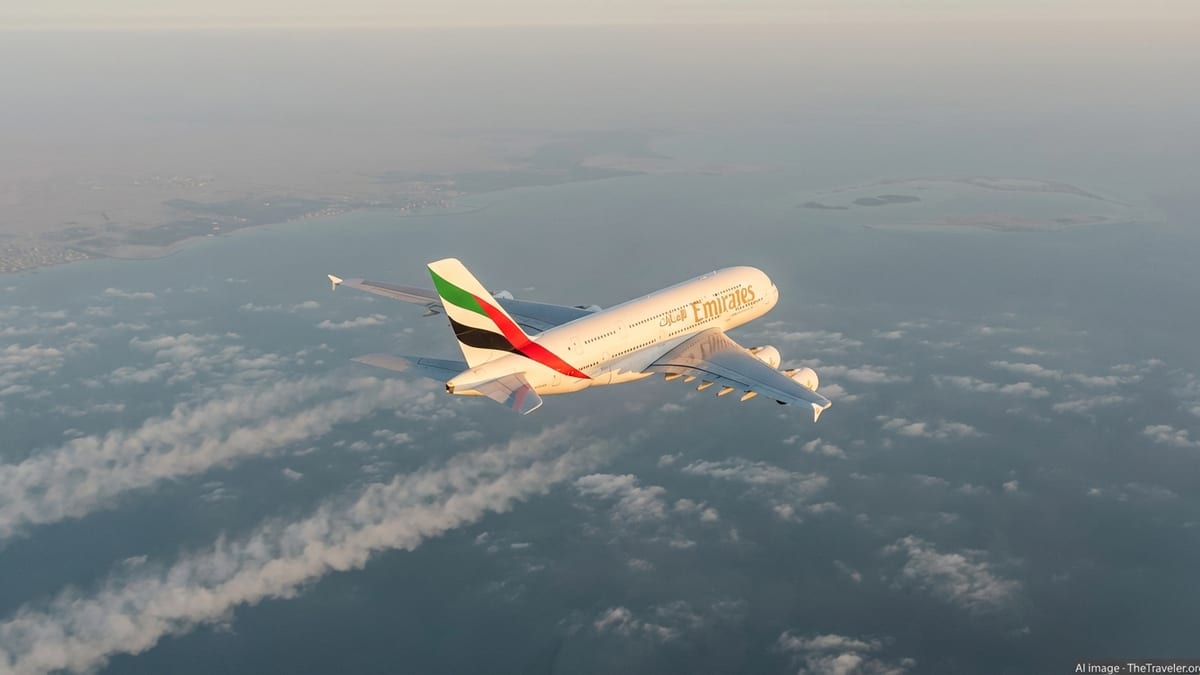
Sudden Turnback Over Escalating Regional Conflict
Flight EK133 departed Dubai International Airport early on February 28, 2026, bound for Moscow and operating on an Airbus A380, one of Emirates’ flagship widebody aircraft. The service initially proceeded normally, climbing to cruising altitude and following its usual corridor across the Gulf toward Iranian airspace, which forms a critical segment for northbound flights from the United Arab Emirates to Russia and Europe.
Shortly after entering the en route phase, flight crews received notification that Iran had closed its airspace to civilian traffic following a wave of coordinated strikes by the United States and Israel on Iranian targets. With no viable and immediately available rerouting options that would maintain fuel and safety margins for the lengthy sector to Moscow, air traffic control instructed EK133 to return to Dubai.
The aircraft reversed course and headed back to Dubai, where it landed without incident. Passengers were informed of the diversion as the situation unfolded, with the captain citing regional security developments and airspace restrictions as the reason for the unexpected return.
Initial passenger accounts described a calm but tense atmosphere on board as travelers monitored news of the widening military confrontation. Cabin crew continued service where possible, while preparing the cabin for an earlier-than-planned landing back at the departure hub.
Iran Airspace Closure Ripples Across Flight Networks
Iran’s decision to shut its skies to almost all civilian aviation sent a shockwave through global air traffic patterns. The country’s airspace connects key corridors linking Europe with South Asia and the Gulf, meaning a closure instantly forces airlines to consider longer, more complex routes around the region or to suspend affected services altogether.
On Saturday, flights transiting between Europe and destinations in the Gulf, South Asia and beyond began to show significant deviations and cancellations, as carriers reassessed risk levels and fuel requirements. Aircraft already airborne were among the first to feel the impact, with some, like EK133, obliged to divert or return to origin rather than attempt lengthy detours at short notice.
Regional carriers, including those based in the United Arab Emirates, Saudi Arabia and Qatar, faced immediate operational headaches as they juggled aircraft rotations, crew duty times and airport slots. Aviation authorities warned travelers to brace for cascading delays, missed connections and same-day cancellations as schedules were hastily rewritten.
For Emirates, which operates one of the world’s largest long-haul networks and relies heavily on overflying Iran for connections between Europe, Asia and Australasia, the closure introduced substantial complexity. While the airline pledged to support rebooking and care for disrupted passengers, it also cautioned that knock-on effects could persist even after airspace gradually reopens.
US and Israeli Strikes Deepen Aviation Security Concerns
The airspace shutdown followed a series of coordinated US and Israeli strikes on Iranian military and strategic sites, including locations in and around Tehran. The operation marked a sharp escalation in already fraught regional tensions and prompted air defense alerts and security measures across multiple neighboring states.
Authorities in Iran framed the strikes as aggression and responded by moving quickly to restrict overflights, citing security and risk to civilian aircraft. Regional observers noted that the move mirrored earlier crises in which Middle Eastern states have temporarily closed airspace amid missile exchanges and drone attacks.
Israel also imposed restrictions on its own skies as conflict dynamics evolved, while Gulf states heightened their aviation alert levels. The potential risk of misidentification or debris from aerial engagements has placed commercial airlines on high caution, reviving memories of prior conflicts in which civilian jets inadvertently entered hazardous zones.
Industry analysts said that with major powers now openly engaged in combat operations, route planning teams must closely track rapidly changing notices to airmen and military advisories. Operators flying near affected regions are re-evaluating cruising altitudes, routings and flight times to maintain safe separation from conflict areas.
Passenger Disruption and Operational Response in Dubai
For travelers on EK133, the urgent turnback transformed a routine morning flight into an unexpected day of airport rebooking and uncertainty. On arrival, Emirates ground staff directed passengers to transfer desks and customer service counters, where options ranged from rebooking on later flights, rerouting via alternative hubs, or accepting accommodation and meal vouchers while waiting for further updates.
Dubai International, one of the world’s busiest international gateways, quickly became a focal point for the developing airspace crisis, with departure boards showing a rising number of delays and cancellations on routes crossing Iran and neighboring conflict-affected areas. Airport operators urged passengers to arrive early, stay in contact with their airlines and anticipate longer processing times.
Travelers connecting from EK133 to onward destinations in Europe and North America faced further complications, as the closure altered flight paths for multiple long-haul sectors. Some passengers elected to postpone travel entirely, wary of being stranded mid-journey as the security situation evolved hour by hour.
Despite the disruption, reports from the terminal indicated that operations remained orderly, with additional staff deployed to manage queues and provide information. Airports in the United Arab Emirates remained open but were subject to strict movement controls and capacity adjustments as authorities coordinated with airlines on revised schedules.
Broader Impact on Regional and Global Travel
The diversion of EK133 is one of the most visible early signs of what aviation experts warn could become a prolonged period of instability for air travel through the Middle East. With Iran’s airspace closed and neighboring countries periodically tightening restrictions, many of the fastest and most fuel-efficient corridors between Europe and Asia are under strain.
Airlines are exploring southern and northern detours that significantly extend flight times and increase fuel burn, adding to operational costs and environmental impact. Some carriers may temporarily suspend certain routes altogether if the risk profile or financial burden becomes unsustainable.
Travel advisors are urging passengers with upcoming itineraries involving Dubai, Doha, Abu Dhabi, Tel Aviv or Iranian cities to monitor airline communications closely and consider flexible tickets or travel insurance that covers geopolitically driven disruptions. Business travelers in particular are reassessing the timing and necessity of trips that rely on transiting the Gulf.
For now, the priority across the industry is immediate passenger safety, even at the cost of severe schedule upheaval. As EK133’s unscheduled return to Dubai illustrates, the rapid intersection of military action and civilian aviation can alter flight plans within minutes, leaving airlines and travelers alike navigating a highly volatile landscape.