

More news on this day
A dramatic mid-air diversion by Emirates flight EK501 over the Gulf of Oman on March 3 has become a defining image of the aviation turmoil unleashed by escalating Iran–US–Israel hostilities, as missile salvos triggered emergency airspace restrictions that stranded tens of thousands of travelers across the United Arab Emirates and wider Gulf.
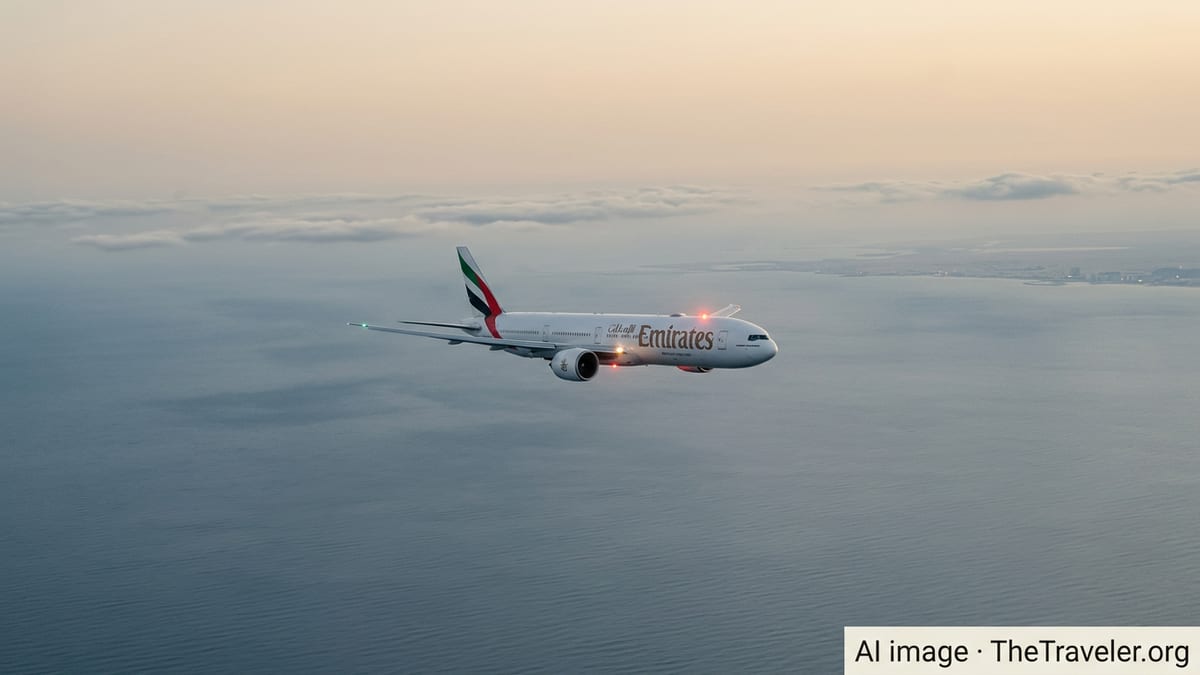
Double Reverse in the Sky as EK501 Dodges Missile Alert
The Dubai-bound Emirates service EK501 from Mumbai was nearing the Gulf when a fresh wave of Iranian missile and drone launches toward the UAE prompted an immediate reassessment of its route. Flight-tracking data and passenger accounts indicate that the Boeing jet performed an unusual “double reverse” in mid-air, first turning back toward India, then again reversing course when a narrow window into the UAE’s restricted airspace appeared to open.
The maneuver, carried out at cruise altitude above the Arabian Sea and Gulf of Oman, was designed to keep the aircraft clear of potential interception debris and active military operations while awaiting updated routing from air traffic control. Aviation analysts described the sequence as rare but consistent with robust contingency planning for flying near a live conflict zone.
EK501 eventually landed safely in Dubai after extended holding and re-routing, but its flight path has gone viral among aviation watchers, symbolizing the confusion and split-second decisions airlines now face as missile alerts and airspace rule changes evolve hour by hour.
Emirates has not reported any onboard injuries or technical issues on EK501, but the episode has added to passenger anxiety on routes that only days ago were considered among the world’s most routine long-haul connections.
Iranian Missile Strikes Jolt UAE Airspace and Gulf Corridors
The EK501 drama unfolded against the backdrop of sustained Iranian missile and drone barrages targeting US and Israeli interests and allied Gulf states, including the UAE. Since late February, UAE air defenses have intercepted large numbers of incoming projectiles, with some debris striking civilian areas in Abu Dhabi and Dubai and triggering temporary shutdowns at key airports.
In response, UAE authorities activated emergency controls on air traffic, effectively placing large portions of the country’s skies under military-style management. For several days, all routine commercial arrivals and departures at Dubai International, Dubai World Central and Abu Dhabi’s Zayed International were halted, with only a limited number of humanitarian, military and pre-cleared movements allowed.
Regional flight corridors that normally funnel traffic across Iran, Iraq, Kuwait, Qatar and Bahrain were also shuttered or heavily restricted, forcing airlines to make lengthy detours via the Arabian Sea, Red Sea or eastern Mediterranean. Operational bulletins circulated among airlines described the central Middle East corridor as essentially unusable, cutting one of the globe’s busiest east–west bridges for international travel.
Although the UAE has begun to reopen limited corridors into its airspace under strict routing and timing conditions, aviation authorities and security advisers continue to classify the region as highly volatile, warning that further missile activity could prompt renewed closures with little notice.
Tens of Thousands Stranded as Hubs Grind to a Halt
The closure of UAE and neighboring airspace turned Dubai and Abu Dhabi from powerful connecting hubs into massive holding zones for displaced travelers. Authorities in the UAE have acknowledged housing more than 20,000 passengers in hotels and temporary accommodation at state expense, while private estimates from industry analysts suggest the total number of stranded or severely delayed travelers across Gulf airports has run into the hundreds of thousands.
With outbound flights canceled en masse, many stranded passengers reported days-long queues at airline desks, difficulty rebooking itineraries and uncertainty over when they might leave. Airport concourses, normally engineered for rapid transit, instead filled with makeshift sleeping areas, scattered luggage and ad hoc charging stations as travelers settled in for prolonged waits.
Data from global flight trackers points to more than 9,000 cancellations at major Gulf airports since the crisis began, with Dubai International alone accounting for a significant share. Airlines have chartered additional aircraft and mounted special relief services where possible, but bottlenecks in airspace availability have limited how quickly the backlog can be cleared.
Tourism bodies and corporate travel departments are now racing to quantify the wider impact. Travel agents report widespread disruptions to business travel, holiday packages and cruise connections, with ripple effects spreading to European, Asian and African destinations that rely on Gulf hubs as key transfer points.
Airlines Scramble With Detours, Refunds and Limited Restart
Emirates and Etihad, the UAE’s two major carriers, initially suspended nearly all services to and from their hubs as the first missile waves hit, later announcing a phased restart once aviation regulators authorized restricted corridors. Priority has been given to customers whose original flights were canceled earliest, with airlines contacting affected passengers directly as seats on limited services become available.
Other regional and international carriers have either diverted aircraft around the Gulf entirely or temporarily halted operations into affected airspace. Flight plans that once crossed Iran or the Gulf in a straight line are now being redrawn to loop south over the Arabian Sea or west over Egypt and the Mediterranean, adding hours of flight time, fuel burn and crew duty constraints.
Airlines have broadly relaxed change fees and are offering refunds or rebooking options on itineraries touching the Middle East in the coming days, though availability is tightening on alternative routes. Travel insurers are fielding a surge in claims and inquiries, particularly from leisure travelers who now face abandoned trips or lengthy overland detours to reach their final destinations.
For aviation planners, the EK501 incident underscores the challenge of maintaining safety and schedule integrity in an environment where airspace status can change within minutes, and where missile interception debris can be as serious a hazard as direct strikes.
What International Travelers Should Do Now
Security and travel-risk consultants are advising against non-essential trips to the broader conflict zone and urging travelers with confirmed bookings through Gulf hubs to adopt a “wait for airline instructions” approach rather than rushing to airports. With flight slots tightly rationed, turning up without a reissued ticket risks further crowding terminals already stretched by stranded passengers.
Prospective travelers are being urged to monitor airline apps and official social media feeds closely, as well as local government travel advisories, for rapid changes to flight status and routing. Those with flexible plans are being encouraged to consider rerouting through alternative hubs in Europe or Asia, even if it means longer journey times and higher costs.
Meanwhile, aviation authorities and carriers insist that, despite the highly abnormal patterns on radar screens, safety remains paramount. EK501’s safe arrival in Dubai after its headline-grabbing double diversion is being cited by industry figures as evidence that layered airspace controls, cockpit decision-making and modern surveillance tools can keep passengers secure even amid one of the most turbulent weeks the Gulf’s skies have seen in decades.