

More news on this day
Gulf carriers Emirates, Etihad Airways and Flydubai have begun cautiously restarting a limited number of flights from Dubai and Abu Dhabi, offering essential relief to thousands of passengers stranded after sweeping airspace closures triggered days of unprecedented disruption across the Middle East.
Phased Reopenings After Unprecedented Shutdown
The first wave of departures left Dubai and Abu Dhabi on Monday, following a weekend in which large sections of regional airspace were shut and major hubs across the Gulf brought to a near standstill. The partial reopening comes as aviation authorities gradually ease restrictions introduced after US and Israeli strikes on Iran and subsequent retaliatory action prompted widespread safety concerns.
Emirates has confirmed that a limited schedule is now operating from Dubai International, prioritising high-demand regional and short-haul routes as well as select long-haul services where safe corridors have been approved. Flydubai, the Dubai-based low-cost carrier, is also operating a reduced programme, with flights concentrated on destinations where airspace remains accessible and airport operations are stable.
In Abu Dhabi, Etihad Airways has restarted some departures and arrivals from Zayed International Airport after earlier suspending all flights to and from the UAE capital. The airline stressed that schedules remain highly dynamic and subject to short-notice change as regional authorities reassess airspace availability and overflight permissions on an hour-by-hour basis.
Although the restarts mark an important psychological and operational turning point, officials and industry analysts warn that the recovery will be uneven and extended, with reroutings, delays and rolling cancellations likely to continue for days as airlines re-crew aircraft, reposition fleets and work through massive passenger backlogs.
Stranded Passengers Prioritised on Early Services
With tens of thousands of travellers stranded in transit hubs and outstations over the weekend, the first flights out of Dubai and Abu Dhabi are being used primarily to clear the most urgent cases: passengers separated from families, those with expiring visas, and travellers needing to return home for work or medical reasons. Emirates, Etihad and Flydubai have each signalled that repatriation and disrupted itineraries are taking precedence over new ticket sales.
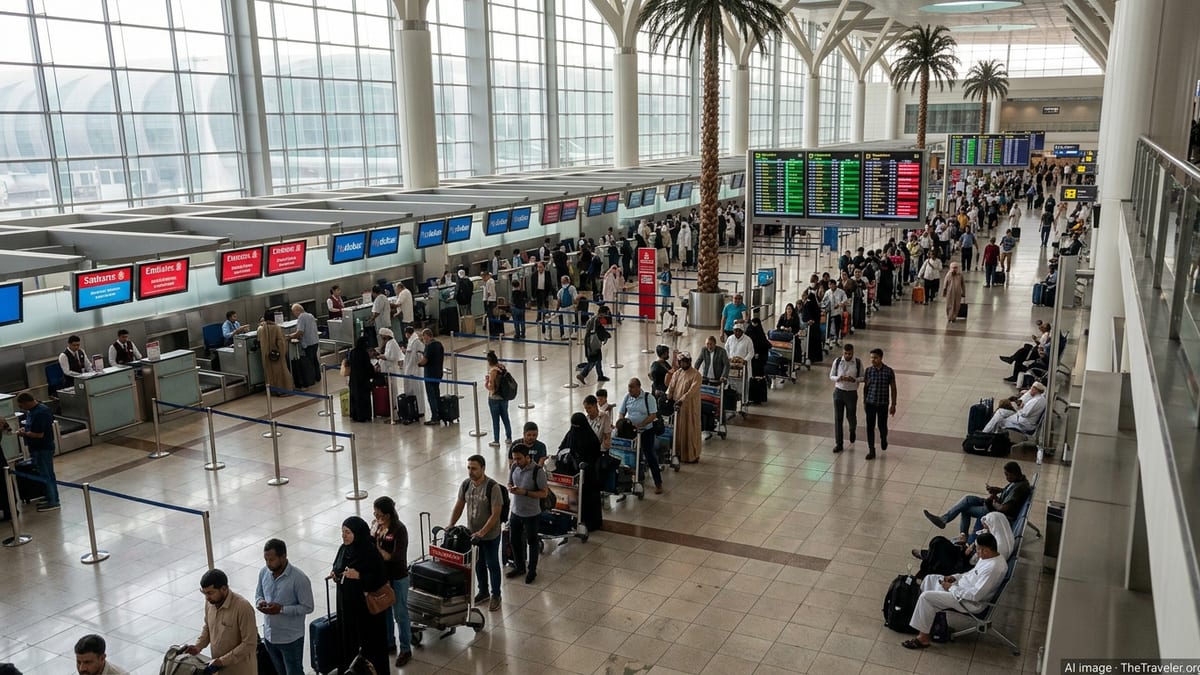
Airport terminals that had been packed with weary passengers sleeping on benches and queueing for hours at customer service desks saw modest but visible movement on Monday as departure boards, previously dominated by red cancellation notices, began to show scattered green “boarding” and “on time” alerts. Ground staff and volunteers have been redeployed to assist with rebookings, distribute refreshments and direct travellers to updated departure gates.
In India, Pakistan, the UK and several key African and Southeast Asian markets, the resumption of even a handful of flights from the UAE is easing pressure on local airports where outbound passengers have been unable to travel onward. Aviation data providers report that while total cancellations across the region remain elevated, the share of successfully operated services from the UAE is inching up as carriers re-establish predictable routings around closed or restricted airspace.
Despite the limited restarts, customer demand continues to far outstrip available capacity. Many passengers are still facing multi-day waits for seats as airlines work through rebooking queues sorted by original travel date and fare conditions. Industry observers caution that passengers should be prepared for extended layovers, last-minute schedule shifts and complex rerouting via alternative hubs.
Complex Detours and Safety-First Routing
The carefully calibrated resumptions are being shaped as much by geopolitics as by airline logistics. Airspace closures and heavy restrictions remain in force over parts of Iran, Iraq, Israel, Syria and segments of the Gulf, forcing carriers to redesign flight paths that normally rely on direct east–west corridors linking Europe, Africa, Asia and Australasia through Dubai and Abu Dhabi.
Emirates and Etihad have introduced longer, circuitous routings on certain services to avoid restricted zones, adding significant flying time and fuel burn. Some Europe–Asia flights that would usually transit the Gulf are now operating via detours over the Arabian Sea or alternative corridors cleared by aviation authorities, with flight times extended by an hour or more in some cases.
Operationally, that means fewer flights can be flown with the same aircraft and crew resources, slowing the pace at which airlines can restore their schedules. Crew duty time limits, the need for additional fuel stops and the challenge of securing short-notice slots at diversion airports are all constraining the speed of recovery, according to industry sources.
Carriers have repeatedly emphasised that safety remains the overriding priority. Route planners are working closely with regulators and air navigation authorities to validate each corridor before a flight is dispatched, and services can still be cancelled at the last minute if threat assessments change or new restrictions are imposed.
Travel Advice: Check, Recheck and Avoid Airport Crowds
For travellers, the message from both airlines and airport authorities is to stay away from terminals unless they have explicit confirmation that their flight is operating. With call centres overwhelmed, Emirates, Etihad and Flydubai are directing customers to manage bookings and check real-time status through digital channels rather than joining queues at airports.
Passengers holding tickets for flights that were cancelled during the shutdown are generally being offered free rebooking within a specified window or refunds, though exact policies vary by carrier and fare type. Travel agents in key source markets report that many customers are opting to keep their itineraries in place rather than cancel outright, in the hope that capacity will steadily return over the coming days.
Industry analysts advise travellers with non-essential journeys to consider postponing or rerouting via unaffected regions until operations stabilise. Those who must travel are being urged to build in generous connection times, keep contact details updated with their airline, and monitor advisories from both carriers and their home governments, which have issued or expanded Middle East travel warnings in recent days.
Travel insurance providers are also bracing for a spike in claims related to delays, missed connections and additional accommodation costs. Policy coverage varies widely, and passengers are being encouraged to check whether their plans include disruption caused by conflict-related airspace closures.
Longer-Term Questions for Gulf Aviation Hubs
While attention is currently focused on the immediate task of getting people home, the crisis has raised broader questions about the vulnerability of global aviation to concentrated airspace shocks in strategic transit regions. The UAE’s big three carriers, together with neighbouring Qatar Airways, have built their business models around funnelling long-haul traffic through a small number of mega-hubs that sit at the crossroads of major continents.
Analysts note that the near-total halt in operations over recent days highlights both the strength and fragility of that model. When airspace is fully open, Gulf hubs offer unrivalled connectivity. When multiple adjacent countries close their skies, large portions of the international network can be disrupted in a matter of hours, leaving airlines scrambling to reconfigure global schedules.
Airport operators in Dubai and Abu Dhabi are expected to conduct detailed reviews of contingency planning once the immediate crisis subsides, drawing on lessons from this shutdown and earlier disruptions. That will likely include renewed investment in passenger welfare infrastructure, from surge accommodation capacity and communication systems to partnerships with local authorities responsible for immigration, health and emergency support.
For now, however, the focus for Emirates, Etihad and Flydubai is squarely on stabilising operations and gradually expanding the list of destinations served from the UAE. Each additional departure represents a small but significant step toward normality for the thousands of travellers who have spent days in limbo across one of the world’s most important aviation crossroads.