

More news on this day
Emirates has extended its pioneering Travel Rehearsal programme for neurodiverse passengers to Bali, staging a full practice run of the airport and flight experience at Denpasar International Airport to help children with autism and their families navigate air travel with more confidence.
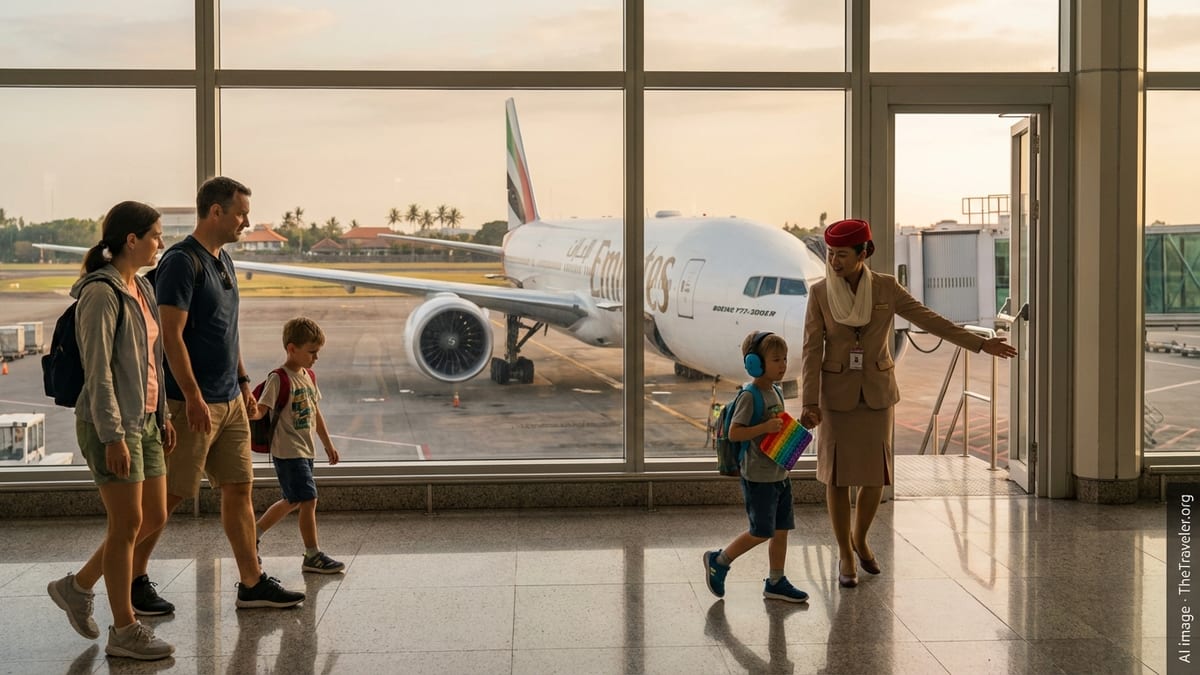
Global Autism-Friendly Initiative Reaches Bali
The latest edition of Emirates’ Travel Rehearsal programme took place this week at Denpasar International Airport, marking the first time the initiative has been hosted in Bali. The session is part of the airline’s broader Accessible Travel for All strategy, which is being rolled out across key destinations in its network to support passengers with autism and other hidden disabilities.
Emirates, which became the world’s first Autism Certified Airline in 2025, has positioned Bali as a central hub in its global accessibility push. The island is one of the carrier’s busiest leisure destinations in Southeast Asia, with families, including those with neurodiverse children, forming a growing share of inbound and outbound travellers.
The move follows successful travel rehearsals in cities such as Dubai, Barcelona, Brisbane, Madrid, Manila and Toronto, where families have been invited to walk through each stage of a typical journey before they actually fly. By adding Denpasar to this list, Emirates is signalling that inclusive services for neurodiverse travellers are no longer limited to its hub but are becoming embedded in its wider route network.
Airline executives and local partners in Indonesia framed the Bali rehearsal as both a practical support measure and a statement of intent for the country’s tourism sector, which is working to improve its accessibility credentials as global visitor numbers return to and exceed pre-pandemic levels.
What the Travel Rehearsal Involves
The Bali event brought together 17 participants, including eight children with autism and their caregivers, for a structured simulation that mirrored the end-to-end airport and flight process. Families began at the international drop-off area at Denpasar, then moved through check-in, security screening, immigration and boarding, before continuing the mock journey through disembarkation, baggage reclaim and customs.
At each stage, Emirates staff and airport partners explained what would normally happen on a real travel day, allowing children and caregivers to anticipate sounds, queues, waiting periods and interactions with officials. Participants handled boarding passes, passed through metal detectors, interacted with check-in agents and explored the aircraft cabin, giving them a tangible sense of the environment they will encounter when they travel.
For many families of autistic children, unfamiliar procedures and sensory overload can make airports intimidating. By breaking down the journey into predictable, repeatable steps, the rehearsal is designed to lower anxiety, reduce the risk of meltdowns and build familiarity with potentially stressful points such as security checks or the moment of boarding.
The Bali session also provided a feedback loop for Emirates and its partners, who observed how families responded at different touchpoints. Staff and airport authorities collected comments on signage, noise levels, queue management and communication styles, using the rehearsal as a live testing ground for service improvements.
Training and Certification Underpinning the Programme
Emirates’ Travel Rehearsal in Bali is supported by extensive staff training and an airline-wide focus on accessibility. More than 30,000 cabin crew and ground employees have completed autism and hidden disability awareness training, learning how to recognise sensory sensitivities, communicate with neurodivergent passengers and respond calmly to signs of distress.
The airline’s Autism Certified status is backed by an external credentialing body that audits facilities and processes. In Dubai, Emirates has already secured Certified Autism Centre designations for its main Terminal 3 hub and several city and cruise check-in locations, where staff are trained to adjust lighting, noise and interaction styles based on passenger needs.
In practice, this training means that during rehearsals and real journeys alike, staff are better prepared to offer flexible boarding options, provide quieter waiting areas where possible, and speak in clear, simple language. They are also trained to direct families to pre-arranged assistance points and to collaborate closely with airport security, immigration officials and ground handlers.
Emirates has stated that new standards for neurodivergent passengers will continue to be introduced across its network. These include digital sensory guides that describe the typical sounds, lights and crowds in airport areas, as well as the introduction of sensory support items on board, such as simple fidget tools that can help some passengers stay calm during take-off and landing.
Bali’s Growing Role in Accessible Tourism
Bali’s inclusion in the Travel Rehearsal programme highlights the island’s evolving profile as a destination that caters not only to mainstream tourists but also to travellers with specific accessibility needs. Denpasar International Airport has steadily upgraded its infrastructure and services, and initiatives such as Emirates’ rehearsal show how airlines and local operators can work together to close remaining gaps.
Indonesia’s tourism authorities have been promoting Bali as a flagship destination at events such as the Bali and Beyond Travel Fair, emphasising sustainability and inclusivity as pillars of the island’s long-term appeal. By partnering with a global carrier that is investing in autism-friendly services, Bali gains a practical example of how accessibility can move from policy ambition to concrete implementation at the airport level.
Local stakeholders involved in the rehearsal included ground handling company PT JAS Airport Services, airport operator Angkasa Pura and representatives from immigration, quarantine and customs. Their participation was essential in replicating a realistic journey and ensuring that any future adjustments to procedures for neurodivergent passengers can be coordinated across all agencies.
Tourism analysts say that as Bali competes with other beach and culture destinations in the region, visible efforts to support families with disabled or neurodivergent members could become a differentiating factor. For many parents, knowing that their child has had the chance to practice a journey in a controlled setting could be the deciding factor in booking an international trip.
Listening to Neurodiverse Families’ Experiences
Families who take part in the Travel Rehearsal often describe the experience as a rare opportunity to test air travel in a low-pressure environment. Rather than confronting all the unknowns of a busy holiday departure day, they can focus on how their child reacts to new spaces, sounds and routines, and adjust their plans accordingly.
In Bali, caregivers were able to walk at their own pace, pausing when children needed time to acclimatise or ask questions. Staff explained options that are available during actual travel, such as requesting seats in quieter parts of the cabin where possible, using priority lanes in cooperation with airport partners, or flagging special assistance needs in advance of departure.
Parents of autistic children often highlight the challenge of managing sudden changes, unexpected announcements and security interactions that require rapid compliance. The rehearsal helped them script their own social stories and visual schedules, based on the exact layout and signage of Denpasar International Airport, so they can continue preparing their children at home.
The event also created an informal peer-support setting, with families sharing tips on everything from choosing flight timings that match their child’s sensory profile to packing familiar snacks or comfort items. For some, simply seeing other neurodiverse families moving through the same process was a reminder that they are not alone in navigating the complexities of air travel.
From Dubai Pilot to Global Network Rollout
The Bali rehearsal builds on a model first developed at Emirates’ Dubai hub, where the airline and airport operator have been working with schools, autism advocacy groups and therapists since 2022 to trial travel practice days for neurodivergent children. Those early sessions demonstrated that a relatively small investment of time and coordination could significantly change families’ willingness to fly.
Encouraged by the response, Emirates began exporting the concept to other stations across its network. In the past year, travel rehearsals have been held in cities including Barcelona, Brisbane, Madrid, Manila, Toronto and Istanbul, each adapted to local airport layouts and regulations but following the same core principle of a step-by-step, guided journey.
The airline has framed these rehearsals as a living laboratory for inclusive design. Feedback from participants has informed adjustments to signage, staff deployment and communication scripts, not only for special events but also for everyday operations. At some airports, for example, dedicated meeting points and quiet spaces have been identified that can be used for families who request assistance ahead of travel.
As the programme reaches more destinations, industry observers note that it may set a template for other carriers and airports to follow. With international regulators and tourism bodies increasingly highlighting accessibility as a benchmark of quality, practical initiatives that can be replicated across borders are drawing attention from peers in the sector.
Air Travel and the Needs of Neurodivergent Travellers
Airports and aircraft cabins can present a particularly challenging environment for neurodivergent travellers. Long queues, bright lights, unfamiliar smells, engine noise and frequent public announcements can all trigger sensory overload. In addition, the highly structured nature of security procedures and boarding can be difficult for passengers who struggle with sudden instructions or close contact with strangers.
For families of autistic children, concerns over how their child will cope with these pressures can be a major barrier to booking flights, especially long-haul journeys. Some avoid flying altogether, while others limit travel to destinations within driving distance. Programmes that demystify the process can help to shift this dynamic by demonstrating that with preparation, support and reasonable adjustments, international air travel is possible.
Emirates’ Travel Rehearsal is one example of a broader movement across the aviation industry to recognise neurodiversity within accessibility planning. Airlines and airports are exploring sensory maps, dedicated quiet rooms, clearer information on their websites and more flexible customer-service approaches tailored to hidden disabilities.
Advocates argue that such efforts benefit a far wider group than the families who attend rehearsals. Clearer processes, calmer environments and empathic communication can improve the travel experience for older passengers, people with anxiety disorders, those with cognitive impairments and even infrequent travellers who are simply unfamiliar with airport routines.
What This Means for the Future of Inclusive Travel
By bringing its Travel Rehearsal programme to Bali, Emirates is reinforcing the idea that accessibility is not confined to a single airport or route but can be embedded across a global network. The choice of a high-profile leisure destination, popular with families from Asia, Australia and Europe, underlines the commercial and social case for investing in neurodiversity-aware services.
For Indonesia, the initiative arrives as the country seeks to expand tourism beyond traditional markets and encourage longer, higher-value stays. Demonstrating that major gateways like Denpasar can accommodate neurodivergent passengers more thoughtfully could make the island more attractive to international tour operators and individual travellers weighing up where to spend their holiday budget.
Industry experts say that the success of programmes such as Emirates’ rehearsals will depend on continued collaboration among airlines, airports, regulators and disability advocates. Regular practice sessions, transparent communication and careful measurement of outcomes will be needed to ensure that the benefits reach as many families as possible and translate into permanent changes in how services are designed.
As more carriers highlight inclusivity in their branding, passengers and advocacy groups are likely to look closely at whether commitments are backed by concrete initiatives of the kind now visible in Bali. For neurodiverse families planning a long-awaited trip, the presence of a travel rehearsal may soon be more than a welcome extra; it may become a key factor in deciding which airline and destination they trust with their journey.