

More news on this day
Emirates has launched its autism-focused Travel Rehearsal programme at Istanbul Airport, marking a significant step in the airline’s global push to make air travel more predictable, accessible and less stressful for neurodiverse children and their families.
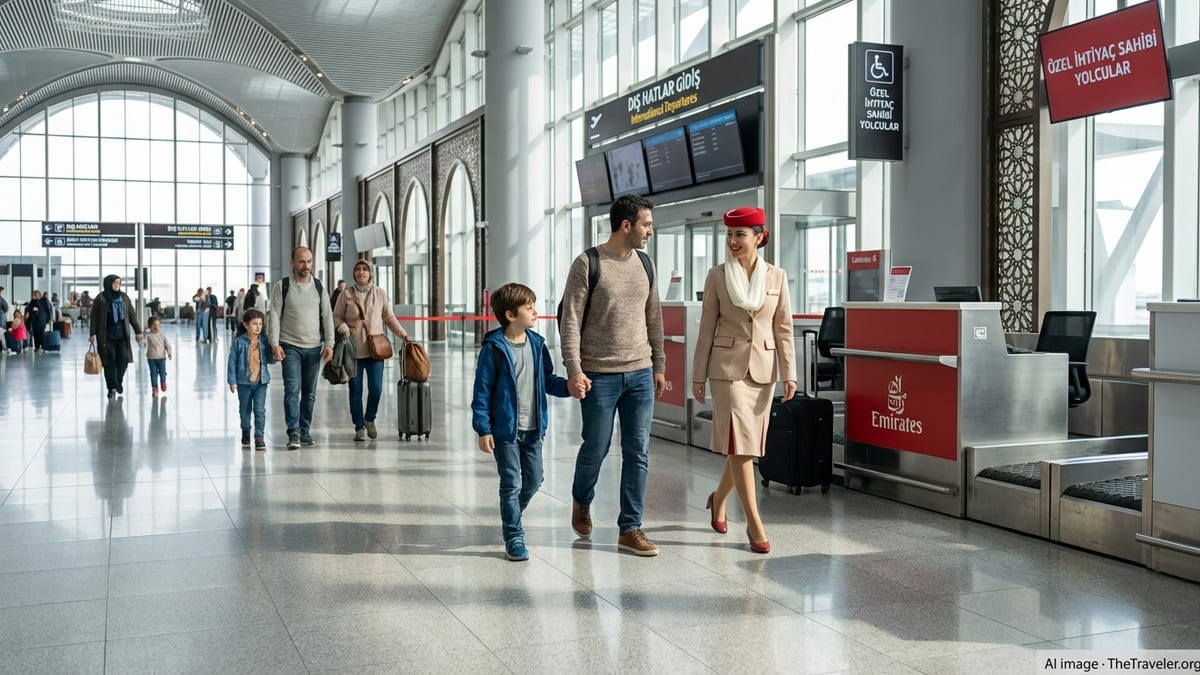
New Milestone for Inclusive Air Travel in Türkiye
The debut of the Travel Rehearsal initiative in Istanbul positions the city at the forefront of inclusive travel in the region, bringing a structured, practice-based approach to flying for autistic children. Under the banner of Emirates’ Accessible Travel for All strategy, the programme gives families the chance to rehearse every stage of the airport and in-flight experience before they commit to a real journey.
Hosted at Istanbul Airport, the latest activation follows similar sessions in Dubai and a growing list of global gateways, including Barcelona, Brisbane, Toronto, Manila and Denpasar. The move reflects both Emirates’ expanding network-wide commitment to accessibility and Türkiye’s broader efforts to adapt major tourism infrastructure to the needs of travellers with hidden disabilities.
For Istanbul’s large and diverse population, as well as the millions of transit passengers who pass through the hub each year, the programme signals a shift in how airlines and airports design services for families whose children experience sensory sensitivities, communication differences or anxiety in unfamiliar environments.
By bringing its autism-friendly model to one of Europe’s busiest airports, Emirates is also sending a message to the wider aviation industry that inclusive design and specialised support can be integrated into complex, high-traffic terminals without slowing down operations.
How the Travel Rehearsal Programme Works
The Travel Rehearsal concept is built around a guided, end-to-end simulation of the air travel journey. Participating families are invited to the airport on a dedicated day, outside the pressure of a real departure, and taken step by step through the same procedures they would encounter on an actual Emirates flight.
Children and their caregivers practice arriving at the terminal, using the check-in counters, dropping baggage and navigating security screening and passport control. They experience the ambient noise of the concourse, the visual stimuli of busy departure boards and retail areas, and the sequence of boarding at the gate, all with trained staff on hand to explain each stage and respond to signs of discomfort.
Inside the aircraft, or a mock-up cabin when used, participants can walk through the seating area, hear safety announcements, feel the vibration and sounds associated with engine start-up and taxiing, and familiarise themselves with seatbelts, tray tables and inflight entertainment screens. The aim is to transform unpredictable sensations into recognisable, manageable experiences.
Crucially, the Istanbul rehearsal is not a marketing event but a carefully structured trial that allows airline and airport teams to observe how autistic children react to specific touchpoints. The insights gathered are used to fine-tune queueing procedures, visual cues, signage and staff responses for future sessions and for regular commercial flights.
Supporting Autistic Children and Their Families
For many families of autistic children, the idea of international air travel can feel overwhelming. Crowds, loud announcements, security checkpoints and confined cabin spaces can trigger sensory overload, leading some parents to delay or avoid flying altogether. The Travel Rehearsal programme in Istanbul is designed specifically to reduce these barriers and rebuild confidence.
By allowing children to explore the airport at their own pace and ask questions in a calm setting, the initiative helps demystify the process. Caregivers are encouraged to share specific triggers and coping strategies with Emirates staff during the rehearsal, so that individual needs can be better anticipated on future journeys.
The structured nature of the rehearsal also supports visual and routine-based learning styles common among autistic children. Repeating the same route from entrance to gate, and then into the cabin, can make the eventual travel day feel more like a familiar routine than an unpredictable event. Families often leave with personalised tips on timing, packing, and communication with airline staff, tailored to their child’s profile.
For parents and guardians, the psychological impact can be just as significant. Experiencing a full journey without the financial and emotional stakes of a paid ticket helps them test how their child responds to each step. Many report that this dry run gives them the assurance they need to consider future holidays, family reunions or medical trips that had previously felt out of reach.
Training and Infrastructure Behind the Initiative
The Istanbul rollout is supported by Emirates’ extensive investment in training and infrastructure for accessible travel. The airline is recognised as the world’s first Autism Certified Airline, following a multi-year collaboration with specialist organisations to design autism and sensory awareness training for its teams. Tens of thousands of cabin crew and ground staff have now completed modules covering communication strategies, sensory triggers and de-escalation techniques.
In practice, this means that the staff who greet families in Istanbul are equipped to recognise early signs of distress, adjust their body language and tone of voice, and offer alternatives such as quieter waiting areas or flexible boarding. They are trained to speak directly but gently to children when appropriate, while also listening closely to caregivers who know their child’s needs best.
Emirates has also integrated accessibility considerations into its digital planning tools and airport procedures. Families can declare hidden disabilities in advance, request specific seating arrangements such as bulkhead seats or quieter cabin zones where available, and receive detailed pre-travel information that helps them prepare social stories or visual schedules for their children.
On board, features such as noise-reducing headsets, adjustable lighting and curated inflight entertainment with neurodiversity-themed content contribute to an environment that is more manageable for passengers with heightened sensory awareness. The Istanbul Travel Rehearsal is used to test how these offerings are communicated and delivered in a real-world context.
Istanbul Airport’s Role as an Inclusive Global Hub
Istanbul Airport has rapidly developed into one of the world’s major intercontinental hubs, connecting Europe, Asia, Africa and the Middle East. Hosting Emirates’ Travel Rehearsal programme underscores the airport’s ambition to match its global reach with a similarly global standard of accessibility and customer care for people of determination and those with hidden disabilities.
The collaboration with Emirates brings together airport authorities, ground handling partners and local autism-focused organisations to ensure that adaptations are meaningful rather than symbolic. This includes reviewing signage for clarity, providing access to quieter routes through the terminal where feasible, and aligning security and immigration procedures with the needs of participants during rehearsal sessions.
For Istanbul, the initiative carries a broader tourism message. By embracing an autism-friendly approach at a flagship airport, Türkiye signals that it is ready to welcome more neurodiverse travellers and their families, not only in transit but as visitors to the country’s cultural and coastal destinations. The programme’s visibility may encourage hotels, attractions and local transport providers to look more closely at how they accommodate sensory and cognitive differences.
Other airlines and hubs are watching closely. As Istanbul demonstrates that large-scale terminals can host structured rehearsals without disrupting regular operations, the model could be replicated across additional carriers and partner airports, reinforcing the city’s role as a testbed for inclusive travel innovations.
Global Network Growth of the Travel Rehearsal Model
The Istanbul launch comes as Emirates accelerates the global expansion of its Travel Rehearsal programme. Originating in Dubai in 2023 as a local collaboration with government agencies and autism centres, the concept has evolved into a multi-city initiative reaching families in Europe, Asia, Africa and the Pacific.
Recent sessions in Denpasar and other destinations have followed a similar pattern of close engagement with community partners, including schools, therapy centres and parent associations. In each location, participants provide feedback on what worked well and where additional adjustments are needed, from signage and queuing systems to how information is communicated to non-verbal children.
The airline’s long-term goal is to make rehearsals a recurring feature across key points in its network, not just a one-off awareness event. By building a consistent yet locally adapted framework, Emirates aims to create a recognisable experience for families, whether they are practising in Istanbul ahead of a regional trip or in another city before a long-haul journey through Dubai.
As more airports sign on, the cumulative impact is expected to extend far beyond the participating sessions. Lessons learned are gradually integrated into standard operating procedures, meaning that even passengers who never attend a rehearsal benefit from clearer processes and more confident, better-trained staff.
Implications for Tourism, Policy and Industry Standards
The introduction of the Travel Rehearsal programme in Istanbul resonates with broader policy discussions about accessibility, disability rights and inclusive tourism. Internationally, advocacy groups have long argued that neurodiverse travellers face disproportionate barriers to mobility, education and leisure because transport systems are designed primarily for neurotypical users.
By proactively addressing these barriers, airlines such as Emirates are helping to reshape expectations of what mainstream air travel should provide. The initiative aligns with national and regional frameworks on people of determination and disability inclusion, and it provides a tangible, measurable example of how policy principles can translate into day-to-day practice at a busy international hub.
There are also commercial implications. Research cited by industry bodies suggests that many families with autistic children would travel more frequently if they had confidence in the support they would receive at airports and on board. By offering rehearsals and clearly signposted assistance, airlines can open the door to a segment of travellers who have historically been underserved, while also strengthening their reputation among socially conscious consumers.
For the wider aviation sector, Istanbul’s experience adds to a growing body of evidence that inclusive design can coexist with efficiency. Rather than relying solely on specialist carriers or niche services, major network airlines and hub airports are beginning to recognise that accessibility for autistic passengers is a mainstream requirement that can enhance the travel experience for everyone.