

More news on this day
Emirates has extended its flexible cancellation and rebooking policy for affected flights until April 30, 2026, giving passengers more time to adjust travel plans in response to ongoing instability in parts of the Middle East and related operational disruption across its network.
Get the latest news straight to your inbox!
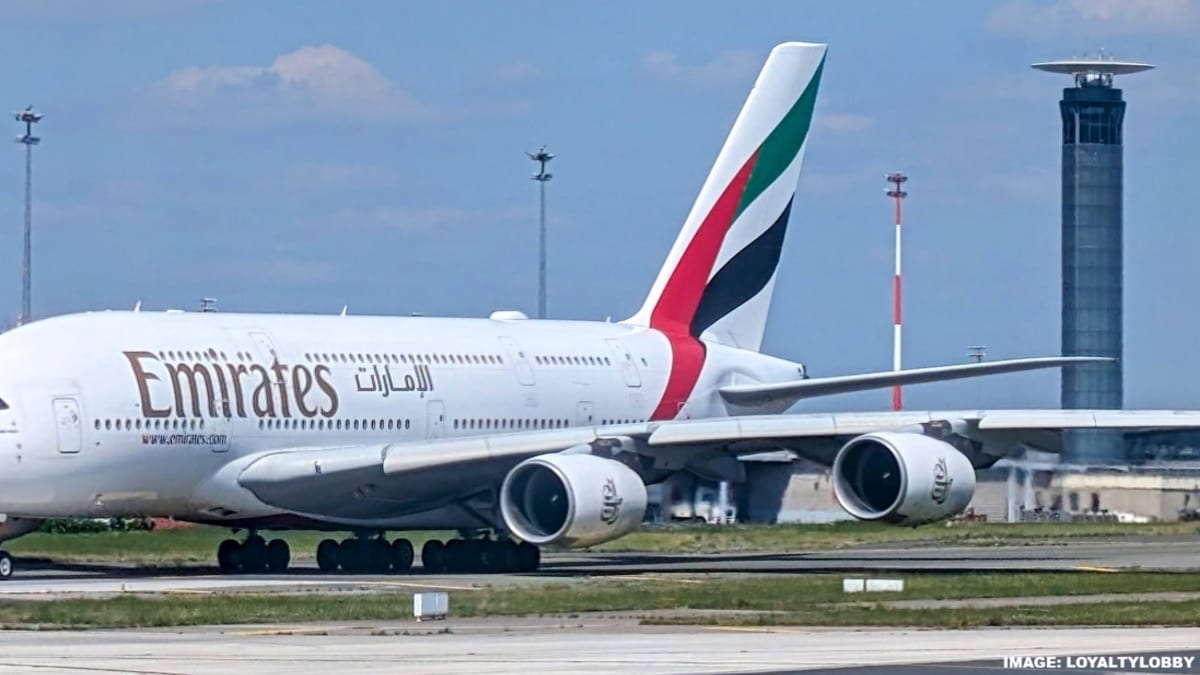
Image by LoyaltyLobby
Latest Extension Covers Late April Departures
Publicly available information indicates that Emirates has pushed its current waiver window for select disrupted services through to April 30, 2026. The move follows a series of incremental extensions during March that initially covered mid April departures before being expanded to the end of the month, according to recent industry and consumer reports.
The policy extension is targeted at itineraries impacted by the security situation in the wider Middle East region and by associated schedule changes. While detailed fare rules vary by booking class and route, the overarching framework allows eligible customers to cancel or rebook without standard change penalties when their flights fall within the revised waiver dates.
Travel forums and agency advisories suggest that the eligibility window has gradually shifted forward as conditions in the region evolved, with passengers holding tickets for late April departures closely watching each update. The latest change to April 30, 2026 is being interpreted by many travellers as a critical threshold for spring and early summer plans involving Dubai connections.
Unlike broad pandemic era waivers, the current scheme is more geographically and date specific, designed to respond to a defined period of elevated operational risk. However, its extension through the end of April marks one of the longest continuous disruption windows Emirates has applied outside the earlier Covid related policies.
What the Flexible Waiver Allows Passengers to Do
Emirates’ current approach builds on its established practice of giving affected customers several pathways when flights are disrupted. In most documented cases within the April 30 window, travellers are being offered the option to rebook on alternative Emirates services, request refunds in line with fare conditions or, where applicable, receive credit toward future travel.
Advisories shared by travel management companies describe a structure where change fees are typically waived for one-time rebooking on the same route or to nearby destinations within the same region, subject to availability. In some instances, fare differences are also being relaxed or reduced, particularly when customers keep broadly comparable itineraries.
For passengers who no longer wish to travel, publicly posted guidance indicates that refunds are possible for many tickets when flights are cancelled by the airline or when a significant schedule change makes the original journey impractical. Where full cash refunds are not automatically available, credit vouchers and extended ticket validity have been used as additional forms of relief, similar in concept to policies deployed during the pandemic period.
The extended policy also appears to acknowledge the complexity of multi sector itineraries that route through Dubai. Travellers with return journeys or onward connections scheduled just beyond previous waiver cutoffs have closely monitored each extension to understand whether their entire booking, or only segments within the affected window, qualify for penalty free changes.
Continuity With Earlier Flexible Booking Measures
Emirates was one of several major Gulf carriers that introduced expansive flexibility during the Covid 19 crisis, including options to keep tickets open for up to 24 or 36 months, convert bookings into travel vouchers and waive reissue fees across broad travel periods. Those measures were widely reported by regional outlets and aviation industry publications as among the more generous in the market at the time.
Although the current waiver tied to April 30, 2026 is more narrowly focused on security related disruption rather than global health restrictions, its structure reflects that earlier experience. The airline has retained mechanisms such as extended ticket validity and simplified rebooking rules, adapting them to a different operational context.
Updated policy documents shared with trade partners in recent months outline how tickets issued during the pandemic window could already be rebooked many months beyond original travel dates without standard penalties. The new extension for April 2026 sits on top of that framework, ensuring continuity for customers whose plans are affected by the latest regional developments.
Aviation analysts note that such flexibility helps carriers maintain customer confidence during periods of uncertainty while avoiding a complete collapse in forward bookings. By signalling that passengers will not be locked into inflexible tickets when conditions change, airlines aim to preserve demand even as they adjust schedules, routes and capacity in response to external events.
Implications for Travellers Planning Spring and Summer Trips
The shift of Emirates’ waiver window to April 30, 2026 carries particular weight for travellers connecting between Europe, Asia, Africa and Australasia through Dubai during the busy spring shoulder season. Many of these journeys were booked months in advance, before the full extent of recent regional instability became apparent.
For travellers whose outbound or inbound sectors now fall within the extended dates, the policy provides an opportunity to either advance or delay their trips, reroute to alternative gateways, or pause plans entirely while retaining the underlying value of their tickets. Travel advisers are encouraging passengers to review their itineraries carefully, as eligibility can depend on the exact departure date and flight number.
The extension may also influence new bookings for late April and early May. While the waiver primarily applies to existing tickets, the pattern of repeated updates is being closely watched by those considering fresh reservations. Some travellers are reportedly opting for more flexible fare types or planning itineraries that can be adjusted with minimal additional cost should the disruption period expand again.
At the same time, capacity adjustments and route changes across the region are affecting seat availability on certain days and corridors. Prospective passengers are weighing the benefits of waiting for further clarity against the risk that preferred dates and cabins may sell out once conditions stabilize and demand rebounds.
How to Check if a Booking Is Covered
Customers seeking to understand whether their flights are covered by the extended waiver to April 30, 2026 are being directed by publicly available guidance to review the latest advisory language associated with their booking reference and ticket issue date. The most reliable information tends to be the specific conditions attached to each fare, combined with any disruption notices linked to the route.
Industry documentation notes that coverage can differ depending on whether a ticket was purchased directly from Emirates, through a codeshare partner, or via a travel agency. In general, bookings made through intermediaries must often be changed via the original point of sale, even when the underlying waiver is defined by Emirates.
Travellers are also paying attention to emerging patterns described in online communities where passengers share recent outcomes on refunds and rebookings. While individual experiences vary, these reports provide a practical view of how the policy is being applied in real time, particularly around edge cases such as open jaw itineraries, mixed cabin tickets and journeys that straddle the April 30 cutoff.
Observers expect that if regional conditions remain volatile, Emirates could adjust or expand the waiver parameters again, as occurred several times in March. For now, the publicly reported extension through April 30, 2026 offers a clearer planning horizon for passengers who need to make timely decisions about upcoming travel through Dubai.