

More news on this day
Regional airspace closures following joint United States and Israeli strikes in Iran have triggered a wave of Emirates flight cancellations and delays across the United Arab Emirates, stranding passengers and disrupting key routes linking Dubai with Beirut, Amman and Baghdad.
Airspace Closures Trigger Widespread Emirates Disruptions
Authorities across parts of the Gulf and wider Middle East moved quickly to restrict or close sections of airspace on Saturday in response to the latest strikes on Iranian territory, forcing airlines to suspend or reroute services. Dubai-based Emirates, one of the world’s largest long-haul carriers, said safety considerations and regulatory restrictions had compelled it to halt dozens of flights and impose extensive delays on its network.
Dubai Airports confirmed that multiple Emirates services to regional destinations were cancelled as operators adjusted flight paths to avoid Iranian and Iraqi skies. Operational data from the carrier and airport officials indicated that at least 30 Emirates flights were cancelled and more than 100 delayed within hours, with knock-on effects rippling through the afternoon and evening schedule. The interruptions hit heavily trafficked links between Dubai and major Levant and Iraqi gateways, including Beirut, Amman and Baghdad.
Aviation analysts noted that the Gulf’s role as a global connecting hub has made it particularly vulnerable to sudden airspace changes. With Iran, Iraq and parts of the eastern Mediterranean all subject to tighter controls, Emirates was forced to weigh longer alternative routings against fuel limits, crew duty hours and airport curfews, resulting in cancellations on some sectors and rolling delays on others.
Passengers Stranded At UAE Hubs As Connections Collapse
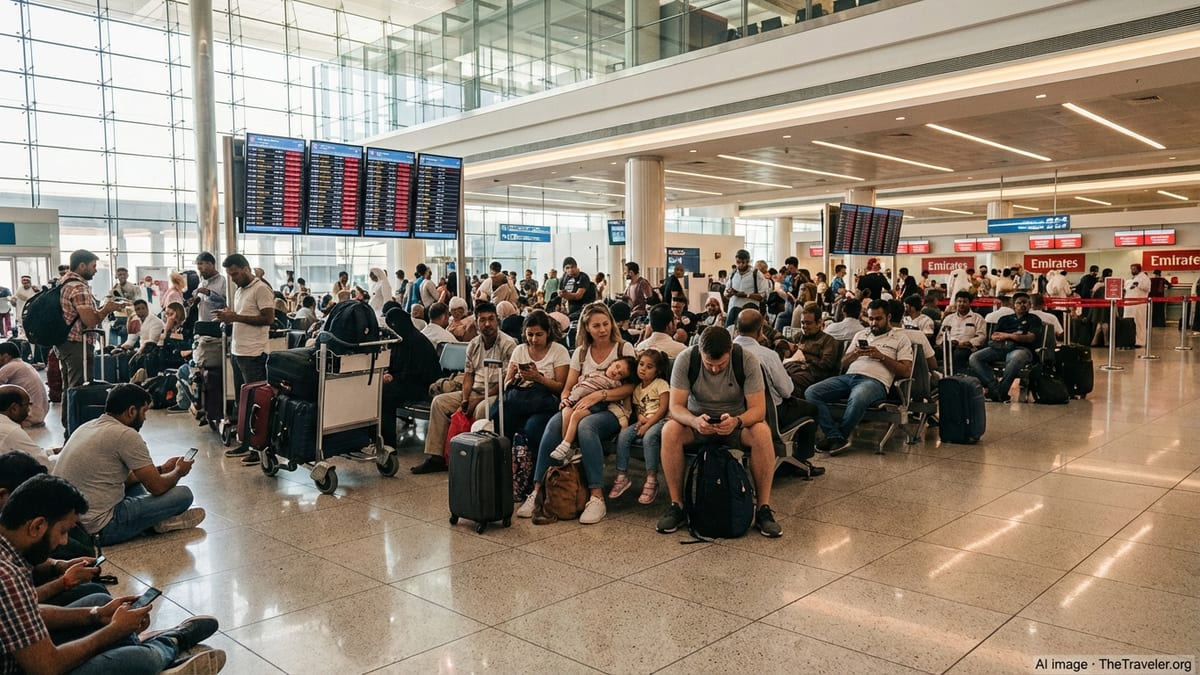
The abrupt changes left thousands of passengers marooned in terminals at Dubai International and other UAE airports, as inbound flights arrived late and onward connections vanished from departure boards. Families bound for Beirut and Amman described overnight waits, long queues at rebooking counters and limited hotel availability as the carrier worked through a mounting backlog of disrupted itineraries.
Travelers heading to Baghdad and other Iraqi cities were among the worst affected, as Emirates suspended services on routes that typically rely on overflying Iranian and Iraqi airspace. Many transit passengers learned only on arrival in Dubai that they would not be accepted onward to their final destinations, in line with temporary restrictions published by the airline. Ground staff distributed refreshments and hotel vouchers where possible, but congestion and rapidly changing flight information fueled frustration.
Some passengers reported being advised to rebook several days later or seek alternative routings via other carriers once regional airspace began to reopen. With hotel rooms near the airport filling quickly, others opted to remain in the terminal, sleeping in seating areas while monitoring departure boards and airline apps for updates.
Emirates Cites Safety Priorities Amid Iran–Israel Tensions
Emirates reiterated that the safety of passengers, crew and aircraft remained its overriding priority as it navigated the fast-moving security situation. The carrier said it was coordinating closely with UAE authorities and international aviation regulators, adjusting schedules in line with real-time airspace notices and risk assessments. Flights operating on modified routings were planned with additional fuel and contingency time to account for detours around affected regions.
The airline’s latest disruption comes after a series of suspensions and schedule cuts on routes to Iraq, Jordan, Lebanon and Iran during previous spikes in regional tension linked to the Iran–Israel confrontation. Industry observers noted that each new round of strikes and retaliatory threats has translated into renewed caution from Gulf-based carriers, particularly when military activity overlaps with commercial flight corridors.
While Emirates resumed many of its global services after earlier flare-ups, the new wave of restrictions underlined how quickly operations can be curtailed when conflict escalates. The carrier is expected to recalculate capacity on vulnerable regional routes in the coming days, depending on how long airspace constraints persist and whether further military action materializes.
Knock-On Effects For Global Travel Through Dubai
The cancellations and delays had repercussions far beyond the immediate region, given Dubai’s role as a major transfer point between Europe, Asia, Africa and Australasia. Passengers traveling from North America and Europe to destinations such as Beirut, Amman and Baghdad via Dubai faced missed connections and involuntary stopovers, forcing airlines and travel agents worldwide to scramble for replacement itineraries.
Some long-haul Emirates flights into Dubai were able to operate with adjusted routings, avoiding restricted zones but adding significant flight time. Those extended journeys increased crew and aircraft utilization, leaving fewer resources available to operate short-haul regional sectors. As a result, even passengers headed to unaffected destinations experienced delays as aircraft and crews were repositioned.
Travel agencies reported a spike in calls from customers seeking clarity on upcoming trips through Dubai, with particular concern about flights scheduled to transit Iranian or Iraqi airspace in the next several days. Industry experts warned that continued uncertainty could prompt some travelers to delay journeys or shift bookings to routings that circumvent the eastern Mediterranean and Gulf altogether, at least in the short term.
What Travelers Should Expect In The Coming Days
Aviation officials in the UAE signaled that restrictions would be reviewed regularly in light of security assessments, raising hopes that some flights could gradually resume as risk levels are reassessed. However, Emirates and other Gulf carriers cautioned that schedules are likely to remain fluid, with further last-minute changes possible as the situation evolves.
Passengers booked on near-term flights to Dubai, Beirut, Amman, Baghdad and other regional cities are being urged to monitor their flight status frequently and ensure contact details are current in airline booking systems. Rebooking options, travel waivers and refunds are being offered on a case-by-case basis, with priority given to travelers who were already en route when cancellations took effect.
For now, travel specialists advise allowing extra time for connections through the UAE, being flexible about routings and dates, and preparing for potential overnight stays if onward connections fail. With airspace over parts of Iran and its neighbors still constrained and the broader security environment unsettled, passengers across the Middle East’s busiest corridors face a period of continued uncertainty every time tensions flare.