

More news on this day
Emirates and flydubai have begun restoring a limited number of flights from Dubai International Airport after a three-day shutdown triggered by regional airspace closures, offering a cautious lifeline to thousands of stranded travelers while regular schedules remain far from normal.
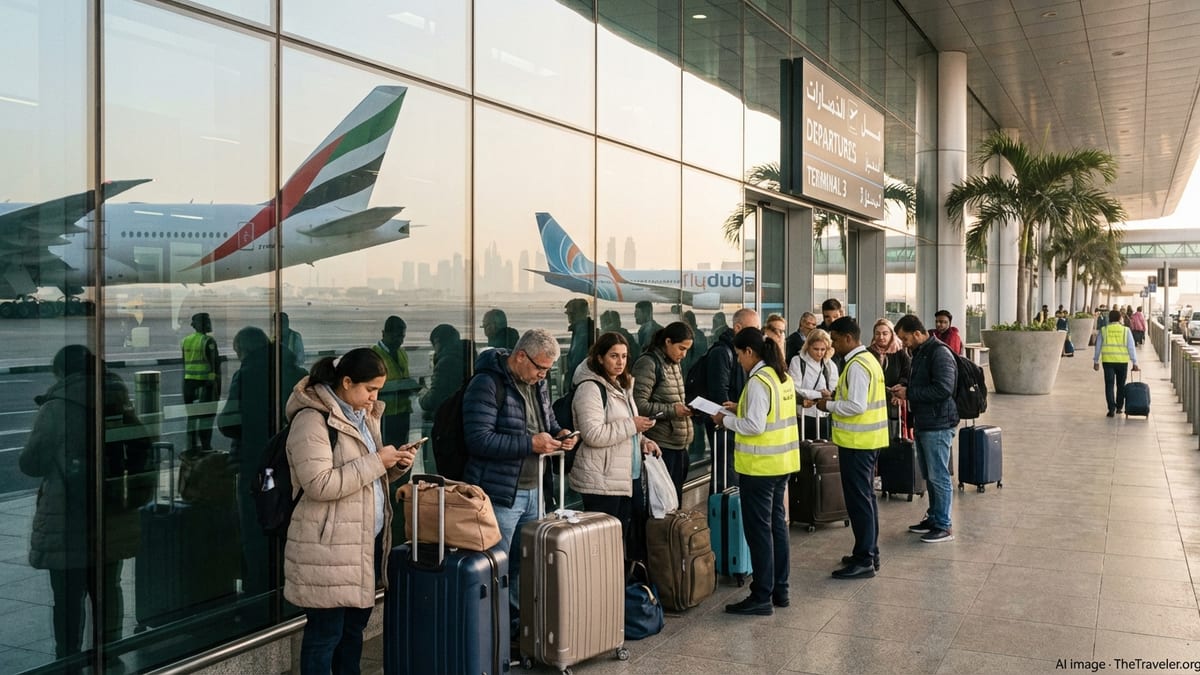
Gradual Restart After Three Days of Disruption
The move to resume select services from the evening of Monday, March 2, follows one of the most significant interruptions to air travel in the Gulf since the pandemic, after Iranian strikes and related airspace closures forced Dubai to halt virtually all operations at both Dubai International (DXB) and Dubai World Central (DWC).
Dubai Airports confirmed that only a “limited” flight schedule is currently operating from DXB, with priority given to outbound services to key regional and short-haul destinations and a small number of inbound flights. The majority of slots remain canceled or on hold while authorities continue to assess airspace conditions and operational safety.
Emirates has begun operating a reduced roster of departures, including select flights to major Indian cities and other high-demand markets, while warning that frequencies and destinations can change at short notice. Flydubai is also restarting a narrow set of routes, largely aimed at repatriating passengers and re-establishing essential regional connectivity.
Airport officials and airlines stress that the restart is designed as a controlled phase-in rather than a rapid return to full capacity, with traffic levels expected to remain well below normal for at least several days.
What This Means for Booked Passengers
For travelers holding tickets on Emirates or flydubai over the coming days, the most important message is that a booking does not guarantee the flight will operate. Both carriers continue to flag widespread cancellations and schedule changes, with some services added at short notice while others are pulled as conditions evolve.
Passengers whose flights were canceled during the shutdown are being offered flexible rebooking options. Emirates is allowing affected customers to move their travel within a set window without change fees or to request refunds, particularly for those no longer able to continue their journeys because of missed connections or canceled events.
Flydubai has issued similar guidance, encouraging customers due to travel within the next 72 hours to manage their bookings online where possible, either shifting dates within a limited timeframe or exploring alternative destinations within the same country on select routes. Both airlines say they are facing heavy call volumes, and travelers are being urged to use digital channels and only contact call centers if travel is imminent.
Travel agents across key source markets report that demand for information is outpacing the number of available seats, as families, business travelers, and transit passengers attempt to secure the first flights out. Many will have to wait for additional capacity as the schedule gradually ramps up.
Do Not Go to the Airport Without Confirmation
Despite the resumption of limited services, Dubai Airports and the airlines are strongly warning passengers not to go to DXB unless they have received explicit confirmation that their flight is operating and that they have a rebooked seat. Officials emphasize that turning up at the terminal in the hope of standby accommodation is likely to end in disappointment.
During the shutdown, terminals at DXB quickly became congested with stranded travelers before operations were fully halted and passengers were told to stay away. With a carefully managed restart now underway, authorities want to avoid a repeat of overcrowding in check-in halls and boarding areas.
Airlines are using email, text messages, and app notifications to advise customers of new departure times or cancellations. Travelers are being asked to ensure that their contact details are up to date in their booking profiles and to monitor their flight status repeatedly on the day of travel, as timings may shift by several hours.
Ground transport operators and hotels close to the airport report a steady flow of passengers extending stays or making last-minute room bookings while they wait for confirmed seats, further underscoring the need for clear communication before anyone makes their way back to the terminal.
Safety, Routes, and Ongoing Airspace Constraints
The limited resumption is taking place under tight safety protocols coordinated between UAE authorities, Dubai Airports, and regional air navigation agencies. While some airspace corridors have reopened, others remain restricted, forcing airlines to adjust routings and, in some cases, temporarily avoid certain regions altogether.
Industry analysts note that many of the initial flights out of Dubai are relatively short-haul services, allowing carriers to test modified routings and turnaround times while minimizing complex overflight issues. Longer-haul and ultra-long-haul routes are expected to take longer to resume, depending on the availability of safe and efficient flight paths.
Emirates and flydubai continue to stress that safety remains their overriding priority and that no route will be reinstated unless it meets internal and regulatory risk thresholds. That may mean extended flight times on some services as aircraft are sent on more southerly or circuitous tracks to avoid restricted zones.
Experts warn that even once most routes are restored, the knock-on effect of aircraft and crew being out of position could linger for days, with occasional last-minute changes and missed connections likely as networks realign.
How to Plan Travel in the Coming Days
For travelers who have not yet departed for Dubai or who are planning to transit through the hub this week, flexibility and vigilance will be crucial. Airlines and travel advisers are recommending that nonessential trips be postponed where possible, particularly for those who are not yet ticketed or whose journeys involve tight connections or time-sensitive events.
Those who must travel are being urged to build in generous buffers, avoid same-day onward connections that cannot be changed, and keep itineraries as simple as possible. Purchasing travel insurance that covers disruption from airspace closures and security events may also provide additional protection for future bookings.
Passengers already in Dubai or nearby destinations should maintain regular contact with their airline and, if applicable, their embassy or consulate. Many foreign ministries have issued updated travel advisories, reflecting both the operational constraints and broader security considerations in the region.
While the restart of limited Emirates and flydubai operations at Dubai International is a welcome sign of progress, both carriers and airport officials are clear that the recovery of normal schedules will be gradual. For now, travelers face a fluid situation that requires patience, preparation, and constant checking before they set out for the airport.