

More news on this day
Emirates has taken the extraordinary step of suspending all scheduled flights to and from Dubai until late March 7, as fast-expanding airspace restrictions across the Middle East force one of the world’s largest international carriers to dramatically curtail operations, leaving global travelers scrambling for answers and alternative routes.
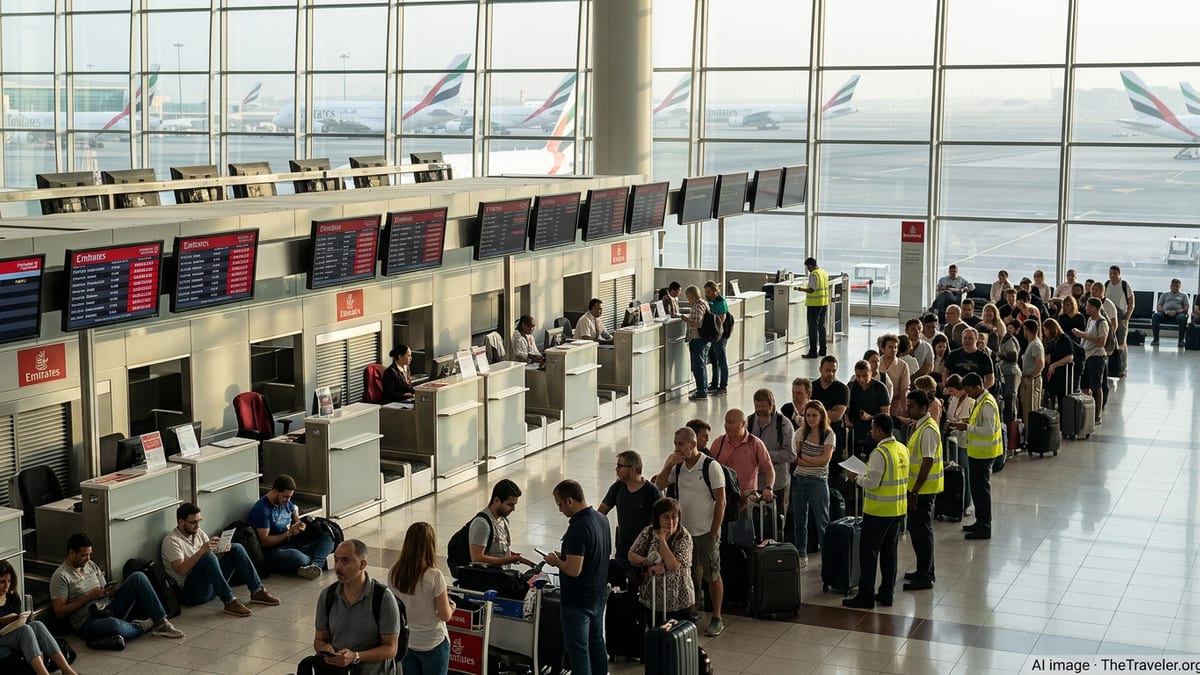
Suspension Extended as Regional Airspace Closes
The Dubai-based airline confirmed that all scheduled passenger flights into and out of Dubai remain grounded until 23:59 UAE time on Saturday, March 7, citing widespread closures and operational limits in key Middle Eastern flight corridors. The move follows several incremental extensions of an initial suspension announced earlier this week as the airspace situation worsened across the region.
Carriers operating to and from the Gulf have been navigating a shifting patchwork of restrictions affecting the skies over Iran, Iraq, Israel and parts of the Gulf states, forcing last-minute route changes, diversions and mass cancellations. For Emirates, whose global network is built around Dubai as a central hub, the latest shutdown effectively freezes the core of its passenger operation for several days.
Industry analysts say the scale and suddenness of the grounding are without precedent for Emirates outside of the pandemic years, highlighting how dependent international aviation remains on open and stable overflight corridors in the Middle East. The airline has framed the decision as a necessary response to safety and regulatory imperatives as authorities tighten control of regional airspace.
Limited Flights Operate Under Tight Controls
Despite the blanket suspension of scheduled services, Emirates is operating a limited number of flights on select routes where airspace remains open and routing is deemed safe and feasible. These services are primarily focused on repatriation needs and essential travel, as well as maintaining critical cargo flows for medical supplies, perishables and high-value goods.
The airline has stressed that priority on these scarce seats is being given to customers with existing bookings who were due to travel during the affected period. Only travelers with a confirmed reservation on a specific operating flight, and who have been directly notified by the airline, are being accepted at check-in. Customers in transit through Dubai are only being allowed to travel if their onward connecting flight is confirmed to operate.
Ground operations in Dubai are also being scaled back in line with the reduced schedule. Airport authorities have tightened access to terminals, with reports of enhanced screening at entry points and warnings that passengers arriving without confirmed flight notifications may be turned away. City check-in facilities and some ancillary services have been temporarily closed to manage passenger flows and staffing.
Global Travelers Face Cancellations, Diversions and Uncertainty
The suspension has immediate consequences across continents, as Emirates is a primary long-haul carrier linking Europe, Asia, Africa, Oceania and the Americas through Dubai. Travelers have reported flights cancelled at short notice, long queues at customer service desks, and aircraft diverted mid-flight to alternate hubs as airspace closures took effect.
Some long-haul services heading toward Dubai in recent days have been rerouted to airports in Europe and other nearby regions, where passengers were either held overnight or rebooked onto other carriers where capacity allowed. Others have found themselves stranded at origin airports after finding out about the grounding only upon attempting to check in.
In major transit markets such as London, Sydney, Mumbai and New York, travel agents and rival airlines are facing a surge in demand from Emirates customers searching for alternative routes that avoid restricted airspace or bypass Dubai entirely. However, with neighboring carriers including other Gulf and regional airlines also subject to varying degrees of disruption, spare capacity remains extremely limited and fares on remaining routes have risen sharply.
Rebooking, Refunds and What Affected Passengers Should Do Now
Emirates has introduced temporary flexibility measures, allowing eligible customers whose flights have been cancelled to rebook travel up to several weeks beyond their original date without penalty, subject to seat availability once normal operations resume. Passengers can also opt to retain the value of their tickets for future travel or request refunds according to fare rules, though processing times are expected to be longer than usual given the volume of cases.
The airline is urging customers not to travel to the airport unless they have received explicit confirmation that their flight is operating and they have a valid, reissued booking. Instead, passengers are being advised to monitor their booking status through official channels, ensure their contact details are up to date, and watch for direct notifications about cancellations, rebookings or schedule changes.
Travel experts recommend that passengers departing from the European Union, United Kingdom or other jurisdictions with strong air passenger protection frameworks familiarize themselves with their rights in cases of extensive delays or cancellations. While compensation rules vary and airspace closures are generally considered extraordinary circumstances, travelers may still be entitled to care provisions such as meals, accommodation and re-routing under certain regimes.
Customers who booked through online travel agencies or third-party platforms are being reminded that any changes may need to be processed through the original booking channel, which can add further delays as intermediaries manage large volumes of affected itineraries.
Next Steps and Outlook for Dubai’s Aviation Hub
The suspension through March 7 raises urgent questions about how quickly Dubai’s role as a global aviation hub can recover once airspace conditions stabilize. Dubai International Airport handled tens of millions of passengers last year and serves as a vital connection point between East and West; any prolonged disruption could reverberate through airline schedules and corporate travel plans well into the spring.
Emirates has emphasized that safety remains its overriding priority and that a full resumption of the schedule is contingent on regulatory approvals and the restoration of reliable, conflict-free routing options across affected regions. Aviation authorities and air navigation providers are continuing to assess risks and adjust restrictions, meaning the situation remains fluid and subject to further changes at short notice.
For now, aviation planners expect a phased return to normality rather than an abrupt restart, with airlines likely to rebuild schedules gradually, test new routings and keep contingency plans in place in case of renewed instability. Travelers booked to fly through Dubai in the coming weeks are being urged to stay flexible, allow extra time for connections, and be prepared for last-minute adjustments as the region’s airspace picture evolves.