

More news on this day
Emirates has taken the extraordinary step of suspending all scheduled flights to and from Dubai until late on March 7, leaving one of the world’s busiest aviation hubs effectively cut off and disrupting travel plans for hundreds of thousands of passengers worldwide.
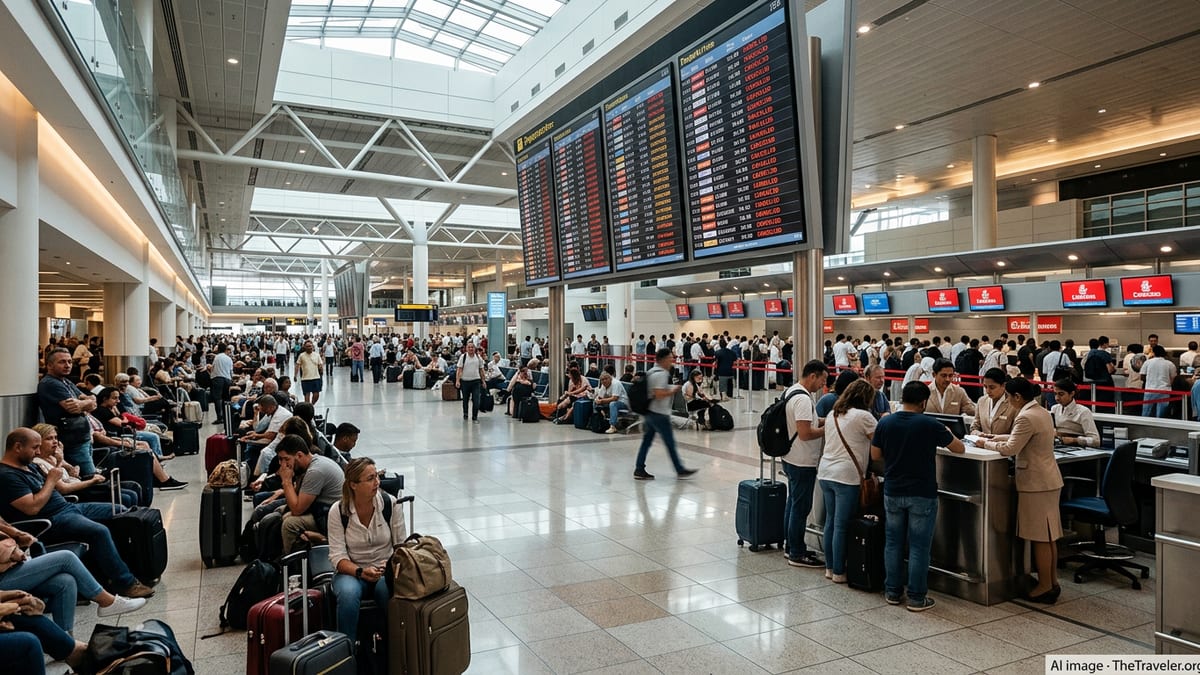
Regional Airspace Closures Paralyse a Global Hub
The suspension, confirmed by the airline in an operational bulletin dated March 4, 2026, follows sweeping airspace restrictions across the Middle East that have forced carriers to reroute or cancel services. Authorities in several countries, including the United Arab Emirates, Iran, Iraq and others, have imposed temporary closures or tight controls over key corridors that normally funnel traffic into Dubai, Abu Dhabi, Doha, Bahrain and other regional hubs.
Dubai International Airport, typically among the world’s busiest for international passengers, has seen its role abruptly curtailed as Emirates grounds the bulk of its schedule. Aviation analysts note that the move effectively severs a major artery of global connectivity, as Dubai traditionally links Europe, Africa and the Americas with South and East Asia via dense banks of connecting flights.
The decision also underscores the vulnerability of modern air travel to geopolitical volatility. With civilian aircraft required to avoid conflict zones and adhere strictly to airspace directives, carriers like Emirates have little operational flexibility when multiple neighboring states simultaneously tighten or close their skies.
Limited Operations and Who Is Still Flying
Despite the headline suspension, Emirates is maintaining a very limited schedule on select routes where airspace remains open and safe. The carrier says customers with existing bookings are being prioritized for these seats, while new ticket sales for many affected routes remain heavily restricted or temporarily unavailable.
Transit passengers are facing especially tight constraints. Emirates has made clear that travelers will only be accepted into Dubai for onward connections if their connecting flight is confirmed to be operating. Those whose onward sectors have been cancelled or are not yet rebooked are not being allowed to commence travel, in an effort to prevent further overcrowding and stranded passengers at Dubai International Airport.
On the ground, Dubai’s airport operator has tightened access to the terminals, with local authorities advising that only travelers holding confirmed bookings on operating flights should approach the airport. Reports from passengers describe quiet terminals punctuated by long queues at airline desks, where staff work through complex rebooking and refund requests while navigating still-evolving airspace rules.
Global Travellers Scramble for Alternatives
The ripple effects of Emirates’ grounding are being felt at airports from London to Sydney, where passengers are discovering last-minute cancellations, missed connections and limited alternative options. Many travelers who had planned to connect through Dubai to destinations in Asia, Africa and the Indian subcontinent are now racing to secure seats on other carriers or via alternative hubs that remain operational.
Travel agents and airline call centers are experiencing a surge in demand as customers seek rerouting via European and Asian gateways that are still accessible. However, capacity is finite, and the sudden removal of Dubai from the global network has tightened seat availability across competing carriers. Budget-conscious travelers, in particular, are finding that remaining options often involve longer routings and significantly higher fares.
Stranded passengers in Dubai and at outstations have voiced frustration over the pace of communication and the difficulty of getting through to support channels. Industry observers caution that, given the scale of the disruption and the ongoing uncertainty around airspace reopening, it may take days before most affected travelers receive definitive rebooking options or refunds.
Airline Response, Passenger Rights and What To Do Now
Emirates has reiterated that the safety and security of passengers and crew remain its highest priority, emphasizing that the suspension is driven by regulatory and security requirements rather than internal operational issues. The airline is offering affected customers the option to rebook travel on later dates, retain the value of their ticket for future use, or seek refunds in line with fare conditions and local consumer regulations.
Passenger rights vary depending on the point of departure and the jurisdiction governing the ticket. Travelers departing from the European Union, the United Kingdom and some other markets may be entitled to care and assistance such as meals, accommodation and re-routing, although compensation for extraordinary circumstances linked to airspace closures is often exempt. Consumer advocates are urging passengers to retain all receipts for out-of-pocket expenses and to document communications with airlines and travel agents.
Special attention is being given to time-sensitive journeys, including medical travel, family emergencies and work assignments. In some cases, consular authorities and corporate travel departments are intervening to secure scarce seats on alternative routes, while humanitarian and repatriation flights are being coordinated separately from regular commercial schedules.
What Travellers Should Do in the Coming Days
With all scheduled Emirates flights to and from Dubai suspended until 23:59 UAE time on March 7, travelers are being urged to avoid unnecessary airport trips and instead manage their bookings remotely wherever possible. Officials stress that passengers should not travel to the airport unless they have received confirmation that their flight is operating and have an updated booking reference reflecting any changes.
Aviation experts say the situation remains highly fluid, with airspace authorities reviewing restrictions on a rolling basis. Even after the current suspension window ends, it is likely that schedules will remain reduced and subject to short-notice change. Travelers with flexible plans are being advised to consider postponing non-essential trips or waiting to rebook until there is greater clarity on regional airspace conditions.
For now, the unprecedented grounding of Emirates’ Dubai operations stands as the most visible symbol of a wider regional aviation crisis. How quickly services can be restored will depend not only on the airline’s operational readiness, but also on the pace at which governments and air navigation authorities deem key corridors safe to reopen, a calculation that remains in flux from hour to hour.