

More news on this day
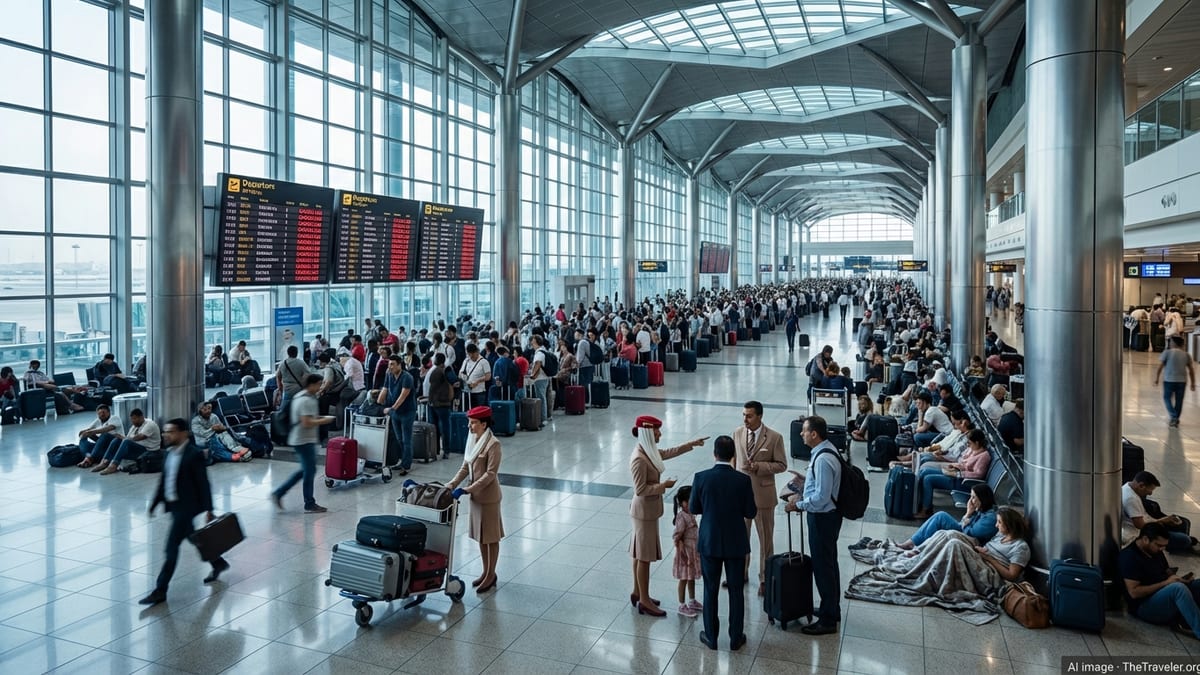
Emirates has temporarily suspended all flights to and from Dubai until 3:00 p.m. UAE time on Sunday, March 1, after regional airspace closures and damage at Dubai International Airport triggered one of the most severe disruptions to global air travel in recent years.
What Emirates Has Announced So Far
The Dubai based carrier confirmed that all operations to and from its Dubai hub are paused until at least 3:00 p.m. local time on Sunday, March 1, citing multiple regional airspace closures and safety concerns. The move effectively grounds Emirates’ vast long haul network at its home base for roughly 24 hours, impacting both origin and connecting traffic.
Dubai Airports has likewise suspended passenger flights at Dubai International Airport and Al Maktoum International, following reports of damage in parts of Terminal 3 and a rapidly evolving security situation. Local authorities said several people were injured during the incident that prompted the shutdown, which is believed to be linked to regional military strikes.
Emirates has stressed that the safety of passengers and crew remains its top priority and that operations will only resume once regulators and aviation authorities deem conditions safe. The airline is monitoring developments in coordination with the United Arab Emirates’ civil aviation authorities and regional air traffic control centers.
While the carrier has set a provisional restart time of Sunday afternoon, officials caution that further extensions are possible if regional airspace remains restricted or if infrastructure assessments at Dubai International reveal additional concerns.
Why Flights Are Paused and How Widespread the Disruption Is
The suspension comes after a cascade of airspace closures across the Gulf and wider Middle East in the wake of United States and Israeli strikes on Iran, followed by retaliatory attacks. Iran, Iraq, Kuwait, Bahrain and Qatar have all imposed varying degrees of airspace restrictions, drastically narrowing the corridors available for commercial aviation.
For Emirates, which relies on Dubai as a central hub linking Europe, Asia, Africa and the Americas, the sudden closure of regional airspace severely limits safe routing options. With key overflight paths either blocked or at risk, the airline opted to halt movements entirely rather than operate a patchwork of diversions that could create further operational and safety challenges.
Industry data show that nearly two thousand flights across the region were cancelled or heavily disrupted in the hours after the strikes, with Dubai International, one of the world’s busiest airports for international traffic, emerging as a focal point of the crisis. Several flights en route to Dubai were forced to divert to alternative airports or return to their points of origin as the situation deteriorated.
Other Gulf carriers, including flydubai and Qatar Airways, have also suspended or curtailed operations in response to the same airspace constraints, amplifying the knock on impact on global schedules. Long haul services between Europe and Asia are among the hardest hit, with airlines scrambling to reroute aircraft over Saudi Arabia or farther south to avoid contested skies.
What Affected Passengers Can Do Right Now
Emirates has issued a broad travel advisory for customers booked to fly to, from or through Dubai over the coming days. Passengers scheduled to travel within the next 72 hours are being offered complimentary rebooking on alternative flights departing or arriving within ten days of their original travel date, subject to seat availability once services resume.
Those who no longer wish to travel can request a full refund, including for unused portions of their tickets. Emirates has asked passengers who booked through travel agents or online travel agencies to contact those providers directly, while customers who purchased tickets via the airline’s website, call centers or ticket offices should liaise with Emirates’ own service channels.
Travelers are strongly advised not to proceed to the airport unless their flight status shows as confirmed and operating. With both Dubai airports effectively shut to regular passenger operations, large crowds and long waits are expected for anyone who arrives without a confirmed rebooking or clear instructions from the airline.
Given the heavy call volumes and digital traffic facing airlines across the region, passengers may experience significant delays reaching customer service teams. Emirates is urging travelers to use online self service tools where possible to modify itineraries, confirm updated contact details and sign up for real time notifications about any changes.
Impact on Global Connections and Transit Passengers
The pause in Emirates services has immediate consequences for transit passengers whose trips rely on a connection through Dubai. Many of the airline’s most popular itineraries, such as journeys between European capitals and cities in South or Southeast Asia, depend on tightly timed transfers at Dubai International.
With the hub offline until at least Sunday afternoon, travelers in the midst of multi segment itineraries may find themselves stranded at intermediate airports or rerouted on complex alternative paths. Some airlines have already begun repositioning passengers via hubs in Istanbul, Doha and Riyadh, though available capacity is limited and schedules remain fluid.
Air cargo flows are also being affected. Emirates SkyCargo, the carrier’s freight arm, moves significant volumes of high value goods through Dubai each day, from pharmaceuticals and electronics to perishables. The current pause is expected to cause short term bottlenecks in some supply chains, especially on routes linking manufacturers in Asia with markets in Europe and North America.
Travel industry analysts note that even a disruption measured in hours can take days for global networks to absorb. Aircraft and crew are now out of position, connections are broken, and a backlog of passengers will need to be re accommodated once services restart, potentially leading to rolling delays and occasional short notice cancellations well into the week.
Key Advice for Travelers With Upcoming Itineraries
For travelers who are due to pass through Dubai in the coming days but are not scheduled to fly until after Sunday, the main message from airlines and airports is to stay informed and be prepared for last minute adjustments. While authorities hope to reopen Emirati airspace and restore operations by late Sunday, the outlook remains contingent on the broader security picture in the region.
Experts recommend checking flight status frequently on the day of departure, reconfirming onward connections and hotel bookings, and allowing extra time for transfers and security screening. Passengers should ensure their contact information is accurate in their booking so that airlines can send timely text or email updates if schedules change.
Those with flexible travel plans may wish to explore alternative routings that bypass the Gulf entirely, particularly for non essential trips. Some carriers outside the region have already started adjusting schedules and re routing flights to avoid congested or restricted airspace, even if their destinations lie outside the immediate conflict zone.
Insurance coverage will vary depending on policy terms, but travelers are being encouraged to review their documentation for provisions related to war, terrorism or government ordered airspace closures. In many cases, airlines’ own rebooking and refund policies will be the primary avenue for recourse, especially while the disruption is ongoing.