

More news on this day
Emirates is set to join a powerful line up of global airline heavyweights including Etihad Airways, Qatar Airways, Air Canada, Lufthansa and Delta Air Lines at Aviation Festival Asia 2026 in Singapore this month, underscoring how the region has become the frontline for rethinking airline strategy, technology and the future shape of global air travel.
Get the latest news straight to your inbox!
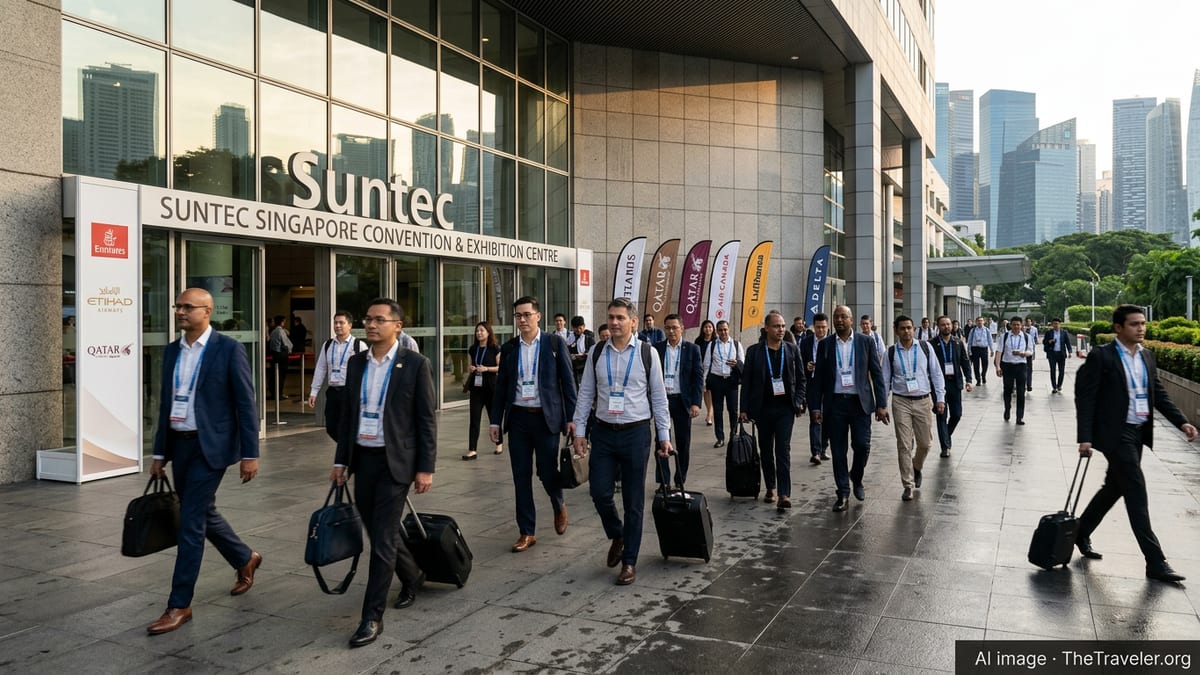
Singapore Takes Center Stage for Aviation Strategy
Hosted at Suntec Singapore on March 25 and 26, Aviation Festival Asia 2026 is expected to draw well over a thousand senior leaders from airlines, airports and travel technology firms, with Singapore positioning itself as the region’s key convening hub for commercial aviation debate. Organisers say the event will focus squarely on how carriers can restore resilience and profitability while investing in digital infrastructure, new business models and greener operations.
Emirates’ decision to send senior representatives comes at a pivotal moment for the Gulf carrier, which has been navigating recent airspace disruptions across the Middle East while continuing long term investment in fleet renewal, airport capacity and digital retailing. Its presence alongside Etihad and Qatar Airways signals that, despite short term operational shocks, the large network airlines see Asia as central to their next phase of growth and innovation.
For Asia Pacific carriers such as Singapore Airlines and major low cost operators, the expanding participation of transcontinental giants at the festival highlights both competition and opportunity. As passenger volumes climb and premium travel corridors between Asia, Europe and North America deepen, the discussions in Singapore are expected to shape how alliances, partnerships and interline agreements evolve over the next decade.
Global Airline Leaders Set to Share Post Disruption Playbooks
The 2026 edition of Aviation Festival Asia arrives just weeks after widespread flight suspensions and reroutings in the Gulf region, which forced Emirates, Etihad and Qatar Airways to temporarily ground or adjust large parts of their networks. With services now gradually returning, executives are under pressure to demonstrate how they will rebuild reliability while safeguarding passengers from further disruption.
Panels featuring Emirates, Etihad, Qatar Airways, Air Canada, Lufthansa and Delta are expected to dissect lessons learned from the crisis, including how to diversify routings, balance hub dependency and strengthen real time operational control. Industry observers anticipate robust debate on the trade offs between maximizing hub efficiency and building more flexible, point to point links that can withstand sudden airspace closures.
North American and European carriers attending the festival are likely to spotlight their own resilience strategies, from dynamic crew and aircraft allocation tools to expanded interline cooperation in times of disruption. For Asian airports and regulators in the room, these insights could influence how contingency plans, slot flexibility and air traffic management reforms are designed in the years ahead.
Technology, AI and Retailing at the Heart of the 2026 Agenda
Aviation Festival Asia has built its reputation around airline retailing, distribution and technology, and the 2026 programme is set to lean even more heavily into artificial intelligence, automation and data driven customer experience. With more than a hundred speakers slated to appear, sessions will explore how carriers can modernize legacy systems, accelerate offers and order transformation and use machine learning to personalise pricing and ancillary sales.
For Emirates and its peers, the stakes are high. The shift to modern retailing platforms promises new revenue but demands significant investment in NDC enabled distribution, cloud based passenger service systems and robust cyber security. Senior digital and commercial leaders are expected to outline how they will phase these upgrades, manage disruption to travel agency partners and ensure that new tools genuinely simplify, rather than complicate, the booking journey for customers.
Airport operators and ground handlers will also feature prominently, showcasing how biometrics, touchless processing and smarter baggage systems can shorten connection times and reduce congestion at major hubs. As Asia Pacific airports expand to handle record passenger numbers, the technology choices examined in Singapore could shape traveller experiences across the region for years to come.
Sustainability and New Fuel Policies Shape Airline Strategy
Environmental pressures are set to frame much of the conversation at this year’s festival, especially after Singapore’s recent move to introduce a levy on tickets to help fund sustainable aviation fuel. The policy, which adds a modest charge per passenger, is designed to kick start wider SAF adoption at Changi Airport and position the city state as a production and distribution hub for cleaner fuels.
Global airlines attending Aviation Festival Asia will be watching closely, as they grapple with how to meet net zero commitments while maintaining competitive fares and capacity growth. Executives from Emirates, Qatar Airways and other long haul carriers are expected to discuss the practicalities of sourcing sufficient SAF, negotiating long term offtake agreements and passing some of the additional costs through to customers.
Alongside fuel and emissions, the programme is set to examine more efficient flight planning, lighter cabin products, sustainable airport design and the role of regional cooperation in accelerating decarbonisation. With Asia Pacific forecast to account for an outsized share of global traffic growth over the next decade, any roadmap forged in Singapore could influence industry standards far beyond the region.
Asia Pacific’s Growing Influence on Global Aviation Policy
The convergence of major Gulf carriers, North American and European airlines and leading Asian operators in Singapore underscores how power in the aviation industry is steadily tilting toward the Asia Pacific. Regulators, tourism authorities and financial institutions will join the airline chiefs in exploring how cross border investment, open skies agreements and infrastructure spending can keep pace with surging demand.
Industry bodies and policy makers are due to brief delegates on traffic forecasts, profitability trends and the impact of shifting trade and tourism flows on route development. For carriers such as Emirates, Etihad, Qatar Airways, Air Canada, Lufthansa and Delta, these discussions are crucial in deciding where to deploy next generation widebody aircraft, deepen joint ventures and open new city pairs.
As delegates arrive in Singapore this month, there is broad recognition that the decisions made in meeting rooms at Suntec Singapore will ripple far beyond Southeast Asia. With Emirates now joining an already heavyweight roster of participants, Aviation Festival Asia 2026 is poised to be a bellwether for how airlines adapt strategy and technology to a future defined by volatility, digital transformation and tightening climate constraints.