

More news on this day
Emirates customers in Kenya can now pay for flights in installments using a new split-payment feature that combines mobile money, mobile banking and local cards into a single booking, easing wallet limits for higher-value international airfares.
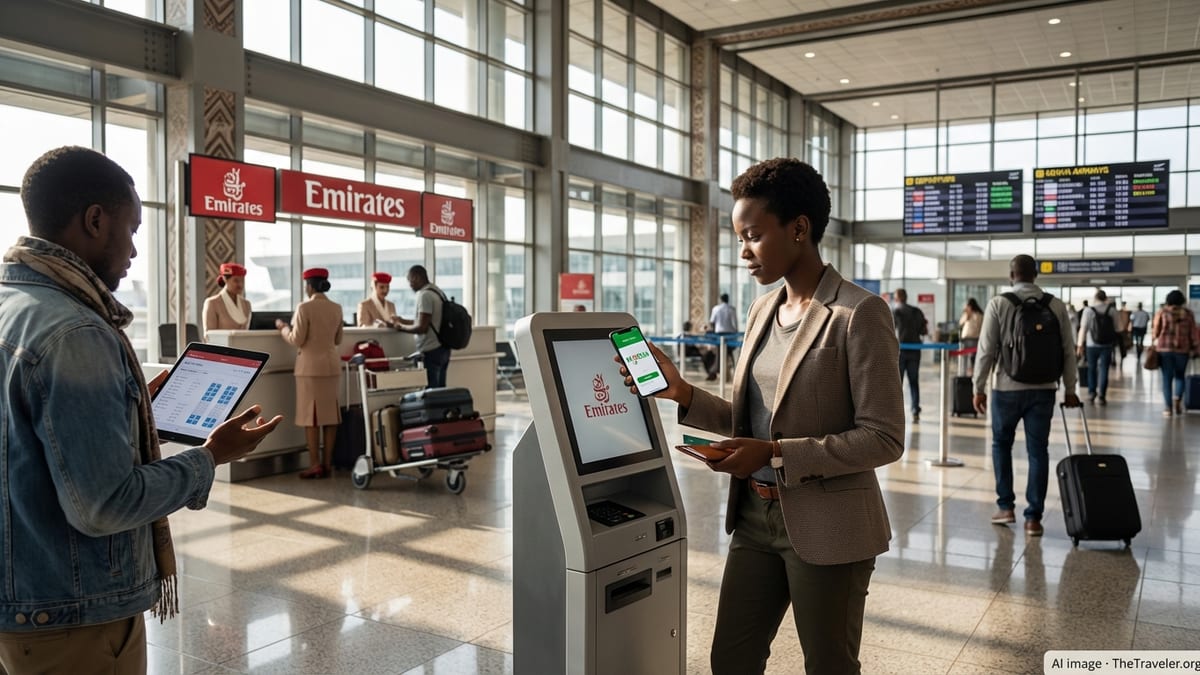
New Split-Payment Feature Targets Mobile-First Kenyan Market
The new payment option, launched this week on Emirates’ Kenyan website, allows travelers to make an initial online payment for their ticket and then complete up to four additional installments within a 24-hour window. The installments can be spread across different local payment channels, including popular mobile money wallets, mobile banking transfers and domestic credit or debit cards, while still being treated as one booking.
The solution is powered by Tingg, the payment gateway developed by African fintech company Cellulant, and is being introduced first in Kenya before a broader rollout to other African markets. The airline describes it as a first-of-its-kind split-payment capability in its network, designed specifically around the realities of mobile-led digital commerce in the region.
By integrating Tingg directly into its website checkout, Emirates is aiming to remove a critical barrier that has often forced customers to abandon bookings at the final step. The airline says the feature is particularly suited to Kenya’s mobile-first travelers, who rely heavily on digital wallets but frequently hit daily or per-transaction ceilings when attempting to pay for international tickets.
Kenya has long been a bellwether for mobile money adoption in Africa, with services such as M-Pesa and Airtel Money embedded in everyday spending. Emirates already accepts mobile money and bank transfers in the market, but the new split-payment option adds structured installments and multi-source payments to that toolkit.
Addressing Transaction Limits on Mobile Money Wallets
Mobile money has become the dominant form of payment across much of Africa, supporting billions of transactions each year. However, strict transaction and daily wallet limits are a widespread feature of these platforms, introduced to manage risk and comply with regulation. Those caps can quickly become an obstacle when customers attempt big-ticket purchases such as long-haul air travel.
In practice, travelers have often resorted to workarounds, including visiting physical offices, splitting payments manually across several days or turning to intermediaries to complete bookings. Those options add friction and can make international travel feel out of reach for customers who otherwise have sufficient funds spread across accounts.
Emirates and Cellulant say the new split-payment capability is designed to mirror how customers actually manage their finances. Instead of being constrained by the limit on a single wallet or card, a customer can now combine multiple sources within a single booking flow, staying within individual transaction limits while reaching the total airfare amount.
The installment structure within 24 hours also helps customers who may need to move money between wallets or accounts. Once the initial payment is made and the booking initiated, they have a full day to complete up to four additional payments before the reservation expires, giving more flexibility without introducing long-term debt.
Cellulant Partnership Deepens Across African Network
The split-payment launch builds on a longstanding relationship between Emirates and Cellulant, which already supports a variety of local payment and financing options for the airline in more than a dozen African countries. Through Tingg, Cellulant connects merchants to over 200 payment methods and processes millions of transactions daily across the continent.
For Emirates, the collaboration is part of a broader strategy to localize its payment experience while maintaining a consistent global booking platform. Rather than creating standalone solutions in each country, the airline is plugging into Cellulant’s infrastructure to support local methods such as mobile wallets, bank transfers and domestic cards under a unified integration.
Kenya has been chosen as the first market for Tingg’s split-payment feature, reflecting both the maturity of its mobile money ecosystem and the strength of demand on the Nairobi to Dubai corridor. Executives at both firms say the goal is to bring the same functionality to additional African markets in the coming months, extending installment-style flexibility across a wider swath of Emirates’ African network.
The move underscores how airlines are increasingly partnering with specialist fintech providers rather than building complex payment capabilities in-house. For travelers, it means more tailored options at checkout that reflect how they already pay for other big-ticket goods and services in their home markets.
Boost for Dubai–Nairobi Route as Third Daily Flight Looms
The payment innovation arrives just as Emirates prepares to step up capacity on its flagship Kenyan route. From March 1, 2026, the airline plans to introduce a third daily service between Dubai and Nairobi, adding seats on a corridor that has consistently recorded strong load factors in recent months.
By pairing additional flights with more flexible ticket payments, Emirates is attempting to align supply with both demand and affordability. The airline is betting that making fares easier to pay in installments will help fill the extra capacity, particularly among leisure travelers, small business owners and diaspora customers who rely on mobile money as their primary financial tool.
The Dubai–Nairobi route connects Kenyan travelers to Emirates’ wider global network across Europe, Asia, the Middle East and the Americas. Travel analysts say that relaxed payment barriers could support outbound tourism, medical travel, education journeys and trade-related trips, areas where ticket affordability and up-front cash requirements often weigh heavily on purchase decisions.
Industry observers also note that as airlines across Africa compete more aggressively for price-sensitive customers, the ability to offer localized, flexible payment options is becoming as important as traditional levers such as fare discounts or loyalty miles.
Implications for Travelers and the Wider Aviation Market
For Kenyan travelers, the most immediate impact of the new option is practical. A passenger holding funds across multiple mobile wallets and a local debit card can now pull those sources together in one seamless flow, rather than being forced to choose a single channel that may hit a limit or fail at checkout.
This flexibility may be particularly meaningful for families or groups booking multiple tickets at once, as well as for customers purchasing premium cabins whose fares sit above typical wallet thresholds. It also lowers the need to visit physical ticket offices or rely on travel agents solely for payment facilitation.
For the wider aviation and payments industries, Emirates’ move is another sign that African markets are shaping global innovation rather than simply importing it. The split-payment feature is built around behaviors that are commonplace in Kenya but less familiar in markets dominated by traditional credit cards, and could influence how other international carriers approach payment design in emerging economies.
If the Kenyan rollout proves successful and the model scales to additional African countries, travelers across the continent may increasingly expect airlines to accommodate installment-like structures and multi-source payments as standard, turning what is now a competitive differentiator into a new baseline for digital ticketing.