

More news on this day
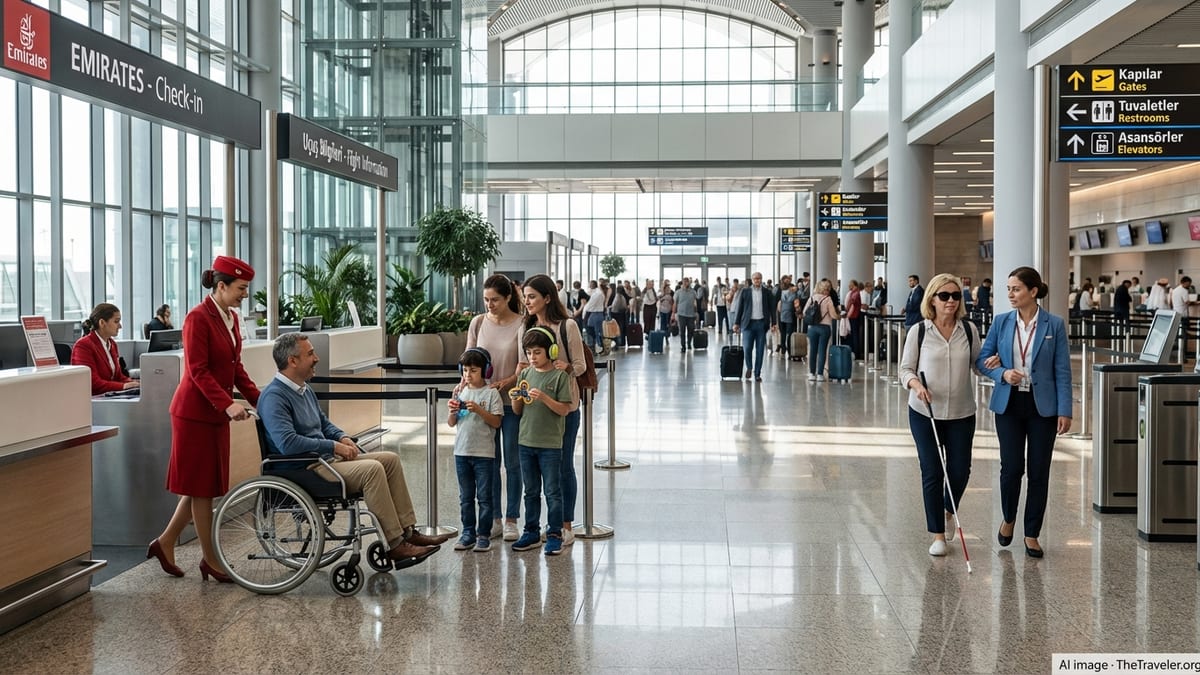
Emirates is extending its global accessibility drive to Istanbul Airport, piloting a new inclusive travel experience that tailors airport services and passenger support to travelers with disabilities, hidden conditions and sensory sensitivities on one of the carrier’s busiest regional routes.
Istanbul Chosen as a Key Testbed for Inclusive Travel
Istanbul Airport, one of the world’s fastest-growing hubs, has emerged as a strategic proving ground for Emirates as it refines its approach to inclusive travel beyond its home base in Dubai. The carrier’s Istanbul operations link Türkiye with Emirates’ extensive Middle East, Asia and Africa network, attracting a high proportion of family groups, medical travelers and long-haul transit passengers who often have more complex accessibility needs.
By piloting a more structured, end-to-end support model in Istanbul, Emirates is aiming to translate its headline accessibility commitments into practical, repeatable service standards in a large, third-party hub. Airline and airport teams are working more closely on advance notifications, special-assistance workflows and wayfinding support, using passenger feedback to adjust processes in real time.
Industry observers say the move is significant because it signals a shift from one-off initiatives at flagship hubs to a network-wide philosophy of inclusive design. In Istanbul, where multiple carriers and handling companies share infrastructure, Emirates is positioning itself as a coordinator of best practice, encouraging common standards for passengers who may transfer between airlines or continue on overland journeys.
The airline’s Istanbul station managers have been tasked with regularly reporting back on bottlenecks affecting wheelchair users, visually impaired travelers, autistic passengers and older customers with reduced mobility. Those field reports are feeding into Emirates’ wider accessibility blueprint, which has already reshaped services at Dubai International Airport and on board its aircraft.
Adapting Global Accessibility Innovations to a Busy Hub
Emirates has spent the past two years building out a portfolio of accessibility measures, from digital tools and specialized training to airport infrastructure enhancements in Dubai. In Istanbul, the challenge is to adapt that toolkit to a different terminal layout, national regulations and shared ground-handling arrangements while keeping the experience recognizably “Emirates” for passengers.
Key elements include clearer guidance at check-in for travelers who have pre-registered special assistance, closer coordination with airport-managed assistance teams, and early identification of passengers who may not have disclosed disabilities when booking. Staff have been trained to watch for visible and non-visible signs that a traveler may benefit from extra time, quieter spaces or simplified instructions.
Behind the scenes, Emirates is fine-tuning baggage and mobility-aid handling for flights to and from Istanbul, building on concepts such as dedicated wheelchair loading solutions that have been trialed at its Dubai hub. Ensuring that wheelchairs and medical equipment arrive in the same condition as checked in is a particular focus, given the long multi-leg itineraries that often route through Istanbul.
The airline is also working with local partners to bring elements of its accessible ground transport philosophy to Türkiye. While its fully branded wheelchair-accessible chauffeur vehicles are currently concentrated in Dubai, Emirates has signaled that learnings from those operations are informing criteria for third-party transport providers in major outstations such as Istanbul.
Supporting Neurodivergent and Hidden-Disability Travelers
One of the most visible aspects of Emirates’ inclusive strategy worldwide is its emphasis on better support for neurodivergent passengers, particularly those on the autism spectrum or living with sensory processing differences. The airline’s recent designation as the world’s first Autism Certified Airline, in partnership with specialist bodies, is now shaping procedures on routes linking Istanbul with Dubai and beyond.
In practice, that means cabin crew and ground teams on Istanbul flights are increasingly familiar with the needs of travelers who may be overwhelmed by bright lighting, loud announcements, dense queues or unpredictable changes in routine. Staff are being encouraged to offer low-key assistance such as quieter boarding options, clear step-by-step explanations and more flexible expectations around eye contact or verbal responses.
Emirates is also extending the use of sensory guides originally developed for Dubai to help neurodivergent passengers plan for the airport environment. While the Istanbul terminal has its own configuration and stimulus patterns, the concept of mapping likely noise, light and crowd levels at different points in the journey is now being adapted to this hub, giving families more tools to decide when to arrive, which paths to take and how to pace transitions.
On board flights serving Istanbul, the airline’s growing range of sensory aids and fidget tools, designed for both children and adults, is being introduced to support passengers who may experience anxiety or sensory overload in flight. These items, together with a more autism-aware approach to in-flight announcements and safety briefings, are intended to make long sectors to and from Istanbul more manageable for neurodivergent travelers.
Technology, Digital Guidance and Pre-Travel Preparation
Digital tools are emerging as a critical bridge between Emirates’ centralized accessibility expertise and the local realities at airports such as Istanbul. The airline’s Accessible and Inclusive Travel Hub, developed to gather all disability-related information in one place, now includes guidance tailored to journeys that involve Istanbul Airport, with structured advice broken down by disability type, journey stage and individual need.
Passengers can explore options for mobility assistance, visual or hearing impairments and hidden disabilities, and then drill down into what those services look like when travelling between Istanbul and Dubai or onwards to other destinations. The hub is designed to work smoothly with screen readers and voice control software, reflecting the needs of blind or low-vision passengers planning complex itineraries that may involve multiple connections.
Emirates is also investing in its use of accessibility-focused apps for travelers who need real-time visual or verbal assistance navigating airports. The airline has been a pioneer in partnering with platforms that connect blind or low-vision users to trained support agents via live video call, and is working to ensure that this service is equally robust for those departing from or transiting through Istanbul.
The broader aim is to shift as much anxiety as possible out of the travel day itself. By combining detailed online information, virtual “rehearsals” of the journey and straightforward channels for requesting special assistance in advance, Emirates wants Istanbul-based passengers to arrive at the terminal with a clear mental model of what to expect, which routes to follow and how to contact staff if plans change.
Training Frontline Teams for Inclusive Service
Central to Emirates’ efforts in Istanbul is an expanded training program for cabin crew, customer-service agents and airport ground staff who interact directly with passengers. Building on coursework initially developed in Dubai on autism awareness and hidden disabilities, the airline has rolled out modules tailored to Istanbul’s operational context and passenger demographics.
The training covers recognition of non-visible disabilities, practical communication techniques, respectful language and how to offer assistance without being intrusive. Staff are encouraged to see accessibility not as an exceptional request but as a routine part of customer service, whether that means providing extra time to board, offering written instead of spoken instructions, or checking that mobility aids have been returned promptly at the aircraft door.
In Istanbul, where many workers are employed by partner companies, Emirates has had to align its standards with those of airport authorities and handling agents. Workshops and joint briefings aim to ensure that everyone involved in serving an Emirates flight shares a common understanding of what “inclusive travel” entails, from check-in counters and boarding gates to baggage claim and transfer desks.
The airline is monitoring the impact of this training through passenger feedback channels, on-the-job observations and incident reviews. Reports from Istanbul are feeding into updated guidelines and refresher modules, with successful practices shared across the network. The goal is to create a virtuous cycle in which lessons learned at one station help raise the baseline for accessibility everywhere Emirates flies.
Aligning With Istanbul Airport’s Accessibility Vision
Istanbul Airport itself has made notable strides in accessibility, including dedicated assistance points, adapted restrooms, tactile guidance surfaces and structured support for passengers with reduced mobility and hidden disabilities. Emirates’ initiative is designed to plug into, rather than duplicate, these airport-wide efforts, creating a more seamless experience for its own customers.
For example, the airline is working with airport partners to streamline handovers between Emirates counters and airport-run assistance teams, reducing dwell times and confusion for passengers who require wheelchairs or guided escorts. Where the airport offers quiet rooms or calm waiting areas, Emirates staff are being encouraged to proactively suggest these spaces to neurodivergent travelers during longer layovers or delays.
The collaboration extends to signage and information desks. Emirates has advocated for clearer multi-language messaging around accessibility services, recognizing that many of its Istanbul passengers may not be fluent in Turkish or English. It has also pushed for consistent recognition of discreet identifiers used by some travelers with hidden disabilities, helping ensure that staff at different points in the airport respond in a coordinated way.
As Istanbul Airport continues to expand its role as a regional super-hub, Emirates sees inclusive travel as a competitive differentiator. By demonstrating that a large, high-traffic terminal can still deliver personalized support to passengers with complex needs, the airline and airport hope to influence broader regional standards for accessibility in aviation.
Setting a Benchmark for Regional and Global Carriers
Emirates’ work in Istanbul is being closely watched by airlines and advocacy groups looking for practical models of inclusive travel that can be replicated at scale. The combination of a busy international hub, a high-volume premium carrier and rapidly evolving accessibility expectations creates both pressure and opportunity for innovation.
For other airlines operating at Istanbul Airport, Emirates’ approach may serve as an informal benchmark. Its emphasis on clear digital information, early identification of passenger needs, specialist training and close airport collaboration offers a template that can be adapted regardless of fleet size or route network. This in turn raises expectations among passengers, who increasingly assume that accessibility features pioneered by one major carrier will soon be available across the industry.
Globally, regulators and disability advocates have been calling for more concrete progress on accessible travel, moving beyond basic legal compliance toward genuinely inclusive design. By positioning Istanbul as a frontline laboratory for its accessibility commitments, Emirates is signalling that such change is not confined to home hubs or flagship routes but is intended to permeate its broader operations.
The ultimate test will be the lived experiences of passengers themselves. If travelers with disabilities and hidden conditions report smoother journeys, reduced stress and greater independence when flying Emirates through Istanbul, it will strengthen the case for extending and deepening these measures across the network.
What Inclusive Travel Means for Passengers
For individual passengers, the emerging inclusive travel model at Istanbul Airport is intended to make journeys feel less daunting and more predictable. A wheelchair user booking an Emirates flight, for instance, should find it easier to specify equipment dimensions, confirm stowage options and receive reassurance about how their chair will be handled at each stage of the trip.
A family travelling with an autistic child might use the airline’s online sensory and journey-planning tools in advance, choose a quieter time to arrive at Istanbul Airport, and notify Emirates of particular triggers or calming strategies that work for their child. At the airport, trained staff could guide them through shorter lines or less crowded pathways, while on board, crew could discreetly offer sensory aids or adjust lighting and noise levels where possible.
Passengers who are blind or have low vision could benefit from both the accessibility features embedded in Emirates’ digital platforms and the availability of live visual-assistance support when navigating the terminal. Meanwhile, older travelers with mild cognitive or mobility challenges may find that simple accommodations such as clearer signage, patient communication and coordinated escorts significantly ease the strain of long travel days.
By embedding such practical considerations into the way it operates at Istanbul Airport, Emirates is moving beyond aspirational language to tangible change. For many travelers, that can mean the difference between avoiding international flights altogether and feeling confident enough to reconnect with family, pursue education or medical treatment abroad, or simply enjoy a long-awaited holiday.