

More news on this day
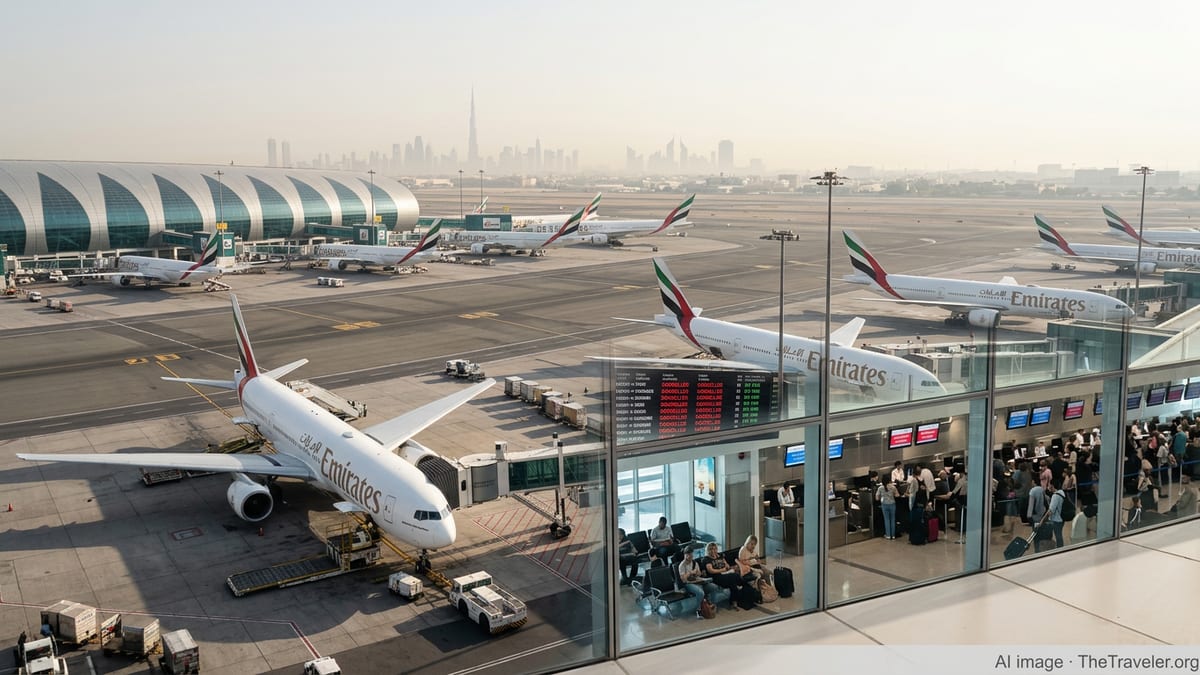
Dubai-based Emirates has begun restoring a limited number of flights from its hub after an unprecedented regional airspace shutdown severed key routes across the Middle East, triggering days of worldwide travel chaos.
Gradual Comeback After Near-Total Shutdown
The restart follows a 48-hour full halt to commercial traffic over the United Arab Emirates and neighboring states, imposed after missile and drone strikes linked to the widening conflict involving Iran, the United States and Israel. The closure effectively froze Dubai International Airport, one of the world’s busiest long-haul hubs, and forced Emirates to suspend the vast majority of its global network.
On Friday, March 6, the carrier confirmed that it is now operating a reduced schedule out of Dubai, describing the move as a phased return as regional airspace partially reopens. The airline said it is prioritizing passengers already holding disrupted bookings and cautioned that capacity will remain tight for several days as crews, aircraft and routes are repositioned.
According to Emirates, around 30,000 passengers were able to depart Dubai on Thursday as operations tentatively resumed, with the airline planning more than 100 departures to over 80 destinations between March 5 and 7. Even so, that remains a fraction of its usual daily operation, and many regular services across the Middle East remain suspended or heavily rerouted.
Dubai Airports has maintained crowd-control measures introduced during the shutdown, limiting terminal access largely to passengers with confirmed, operating flights. Officials say the aim is to prevent a repeat of the chaotic scenes seen earlier in the week, when thousands of travelers converged on the terminal seeking information or last-minute seats.
Regional Airspace Restrictions Still Crippling Connectivity
The resumption of some Emirates flights does not mean the regional aviation picture has normalized. Large sections of airspace across the Gulf and wider Middle East remain restricted or effectively closed to civilian traffic following repeated missile and drone exchanges. Authorities and aviation safety regulators continue to warn of elevated risk for aircraft passing over Iran, Iraq and parts of the Arabian Peninsula.
For carriers such as Emirates and Abu Dhabi-based Etihad Airways, which built their business models around connecting Europe, Africa, Asia and Australasia via Gulf hubs, these restrictions have forced an urgent rethink of routings. Many long-haul services that are still operating are diverting around closed corridors, lengthening journey times, increasing fuel burn and squeezing already tight schedules.
Shorter regional routes have been hit hardest. Flights between Gulf capitals and nearby destinations such as Iraq, Jordan and Lebanon remain widely suspended, while services to Doha, Bahrain and Kuwait are severely curtailed. Airlines and airports have stressed that safety and overflight insurance remain key constraints, with schedules subject to rapid change as the security situation evolves.
Industry analysts say the cascading effect is being felt far beyond the Middle East. European, Asian and African carriers that normally rely on Gulf overflight rights have been forced to cancel, consolidate or reroute services, adding hours to some journeys and pushing up costs for airlines and passengers alike.
Thousands of Stranded Travelers Face Uncertain Timelines
For the hundreds of thousands of travelers whose journeys passed through Dubai and other Gulf hubs, the staggered reopening has brought relief for some but continued anxiety for many more. In the departure halls of Dubai International, long queues have formed at ticket desks as passengers attempt to rebook cancelled itineraries or secure seats on the limited flights now departing.
Emirates has urged customers not to head to the airport unless they have received a confirmation that their flight is operating. Call centers and online channels have been overwhelmed, with many passengers reporting difficulties obtaining timely updates. Travel agents across Europe and Asia say they have spent days rebooking clients on alternate routings, often via secondary hubs that still have open airspace.
Repatriation flights organized by governments have helped ease pressure in some cases, but these have tended to focus on citizens of specific countries, leaving other travelers dependent on commercial options. Some tourists stranded in Dubai report multiple false starts as tentative departure plans were scrapped amid renewed security alerts or shifts in airspace guidance.
Consumer advocates warn that traditional compensation rules are unlikely to offer much relief. Because the disruption stems from armed conflict and state-imposed airspace closures, airlines are generally classifying the shutdown as an extraordinary circumstance, limiting obligations to care, refunds and rebooking rather than cash payouts.
Tourism and Trade Feel the Strain
The timing of the disruption is particularly painful for Dubai and the wider United Arab Emirates, which have seen robust tourism and business travel growth in recent years. The city’s hotels, attractions and conference venues rely heavily on fast, predictable air links, and the sudden break in connectivity has led to a wave of cancellations and no-shows.
Hoteliers in Dubai’s beach districts and downtown core report a sharp drop in new arrivals since the airspace closures began, even as many existing guests have been forced to extend their stays while waiting for outbound flights. While some properties are benefiting from unexpectedly longer bookings, others tied to major events and exhibitions are facing costly last-minute disruptions.
Cargo flows have also been jolted. Freight operators say reduced belly capacity on passenger jets and airspace detours are delaying shipments of everything from electronics to perishables, undercutting the just-in-time logistics that run through Gulf hubs. Logistics firms expect backlogs to persist even after passenger schedules normalize, as aircraft are repositioned and freight is cleared.
Economists caution that the ultimate impact on Dubai’s tourism and transport-driven economy will depend on how long airspace restrictions remain in place. A rapid stabilization could see a rebound similar to previous disruption events, but a prolonged conflict risks eroding traveler confidence and pushing airlines and passengers toward alternative routings and hubs.
What Travelers Need to Know Right Now
With schedules changing by the hour, travel experts say the most important step for anyone due to transit through Dubai or the Gulf in the coming days is to verify their flight status directly with their airline before leaving home. Even routes that appear to be operating remain vulnerable to short-notice cancellations if security conditions or overflight permissions shift.
Passengers whose flights have already been cancelled are being encouraged to accept rebooking options where available, even if they involve longer or less direct routings. Given the limited capacity on the first wave of resumed Emirates services, seats on alternative carriers via open air corridors are in high demand and can disappear quickly.
Travelers with flexible plans are being advised to consider postponing nonessential trips to or through the region until schedules stabilize and airspace guidance becomes clearer. Those who must travel are urged to allow additional time for connections, to expect possible delays and diversions, and to ensure they have travel insurance that covers war-related disruption, which many standard policies exclude.
For now, Emirates’ limited comeback from Dubai offers a tentative pathway out for thousands of stranded visitors and residents, but the broader picture remains one of heightened uncertainty. Until the conflict abates and regulators ease restrictions, the Gulf’s role as one of the world’s most reliable aviation crossroads will remain under unprecedented strain.