

More news on this day
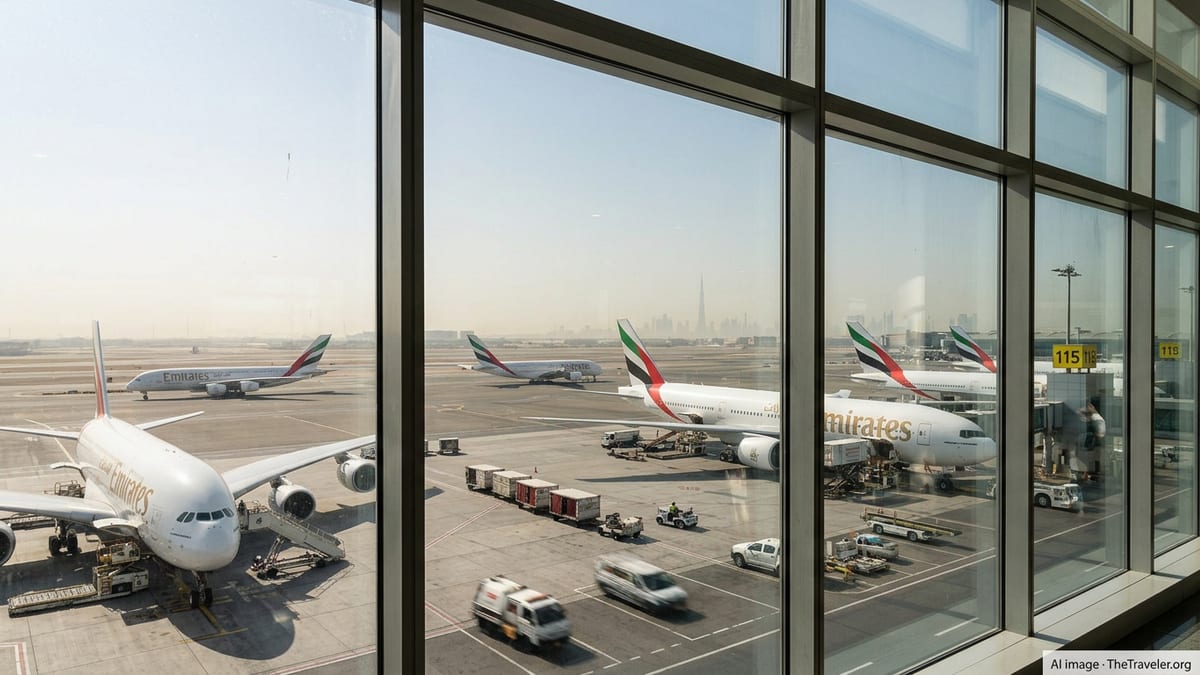
Emirates will operate more than 100 flights to and from Dubai on March 5 and 6, in the clearest sign yet that Gulf air corridors are cautiously reopening after nearly a week of severe disruption triggered by regional conflict.
From Near-Standstill to Limited Recovery
The decision by Emirates to schedule over 100 flights across March 5 and 6 marks a sharp pivot from the near-total shutdown that paralysed Dubai International Airport in recent days, after Iranian missile and drone attacks prompted sweeping airspace closures across the Gulf. For much of the past week, one of the world’s busiest hubs was reduced to a trickle of emergency and evacuation services as governments raced to extract citizens from conflict zones.
A spokesperson for Emirates confirmed that the airline is now operating a reduced but structured schedule, enabled by the partial reopening of safe air corridors over and around the United Arab Emirates. The flights will carry both stranded passengers and essential cargo, including pharmaceuticals and other time-sensitive goods, as the carrier begins to rebuild its network in carefully controlled stages.
While the volume remains a fraction of normal traffic at Dubai International, where thousands of weekly movements are typical in peacetime, aviation analysts say the move is symbolically powerful. It signals that regional authorities judge the immediate security threat to civil aviation to be easing, even as the broader conflict remains unresolved.
A Carefully Managed Airlift for Stranded Travellers
Emirates executives have framed the March 5–6 schedule as a targeted airlift designed first and foremost to move passengers who have been stranded mid-journey since the first wave of cancellations. The airline is prioritising travellers who already hold reservations and whose original flights were scrubbed as the conflict escalated, with many being rebooked automatically onto the new services.
According to statements from the carrier and airport officials, only passengers with confirmed bookings on operating flights are being accepted at check-in. Those transiting via Dubai are being cleared to travel only if their onward connections are also confirmed, a precaution meant to avoid compounding the number of people sleeping on airport floors or in overflow hotel accommodation.
In parallel, Emirates is using the restored routes to move vital cargo that has backed up in warehouses and on tarmacs across the region. The emphasis on perishables, medical supplies and other high-priority shipments underscores how the shutdown of Dubai’s hub rippled through global supply chains as well as leisure and business travel.
Geopolitical Tensions Show Signs of Stabilising
The incremental restart of Emirates flights follows a series of military and diplomatic moves that have cooled, though not ended, the sharp spike in tensions between Iran, Israel, the United States and Gulf states. Regional air defence systems, including those in the UAE, have intercepted waves of missiles and drones in recent days, and security officials say the immediate barrage that forced the closure of airspace has abated.
Though no comprehensive political settlement has been announced, senior diplomats describe a shift from escalation to containment, with back-channel talks focused on preventing further strikes on civilian infrastructure such as airports and ports. For aviation regulators, that has translated into a willingness to reopen defined safe corridors at specific altitudes and routings, allowing tightly controlled commercial operations to resume.
Industry experts caution, however, that the situation remains fluid. Airlines must still file complex new flight plans to skirt sensitive zones, factor in additional fuel for longer routings, and stay ready to divert or suspend operations if the security picture deteriorates. The limited schedule on March 5–6 is being widely interpreted as a test of these new protocols as much as a service restoration for passengers.
What the Restart Means for Global Travel
Even in its reduced form, the Emirates airlift is a potential turning point for global travel networks thrown into chaos by the crisis. Dubai’s rise as a megahub means that disruptions there cascade quickly across Asia, Europe, Africa and the Americas, stranding travellers far from the Middle East when through-connections vanish from timetables overnight.
By restoring over 100 flights in a two-day window, Emirates is attempting to reconnect some of those broken links and clear the backlog of passengers stuck on multi-leg itineraries. Routes to major South Asian, European and Australasian gateways are expected to feature prominently among the services, helping funnel tourists, migrant workers and business travellers back to their home bases or onward destinations.
Travel planners say the move could also stabilise confidence in future bookings, which had been hit by a wave of cancellations and refund requests as the conflict unfolded. If the initial operations proceed without incident, other carriers and regional hubs are likely to accelerate their own limited restarts, gradually restoring the intricate web of connections that underpin long-haul tourism and trade.
Cautious Optimism and Ongoing Uncertainty for Passengers
For individual travellers, the Emirates announcement is both a relief and a reminder that disruption is far from over. Most flights into and out of the UAE remain cancelled or heavily restricted, and those without confirmed bookings on the new services are being urged to wait for direct communication from their airline rather than heading to the airport in hope of a standby seat.
Airports and carriers continue to advise passengers to monitor official flight status tools closely, as last-minute adjustments to schedules and routings remain likely. Flexible rebooking and refund policies introduced at the height of the crisis are still in place at many airlines, reflecting the lingering uncertainty around airspace access and demand patterns.
Inside Dubai International, scenes are slowly shifting from emergency triage to managed congestion as more departure boards flick from cancelled to scheduled. Yet with security forces on high alert and contingency plans ready to ground aircraft again if required, the coming 48 hours will be watched closely across the aviation world. For now, the sight of Emirates aircraft lifting off once more in significant numbers offers a rare note of cautious optimism in a week dominated by closures, cancellations and anxiety.