

More news on this day
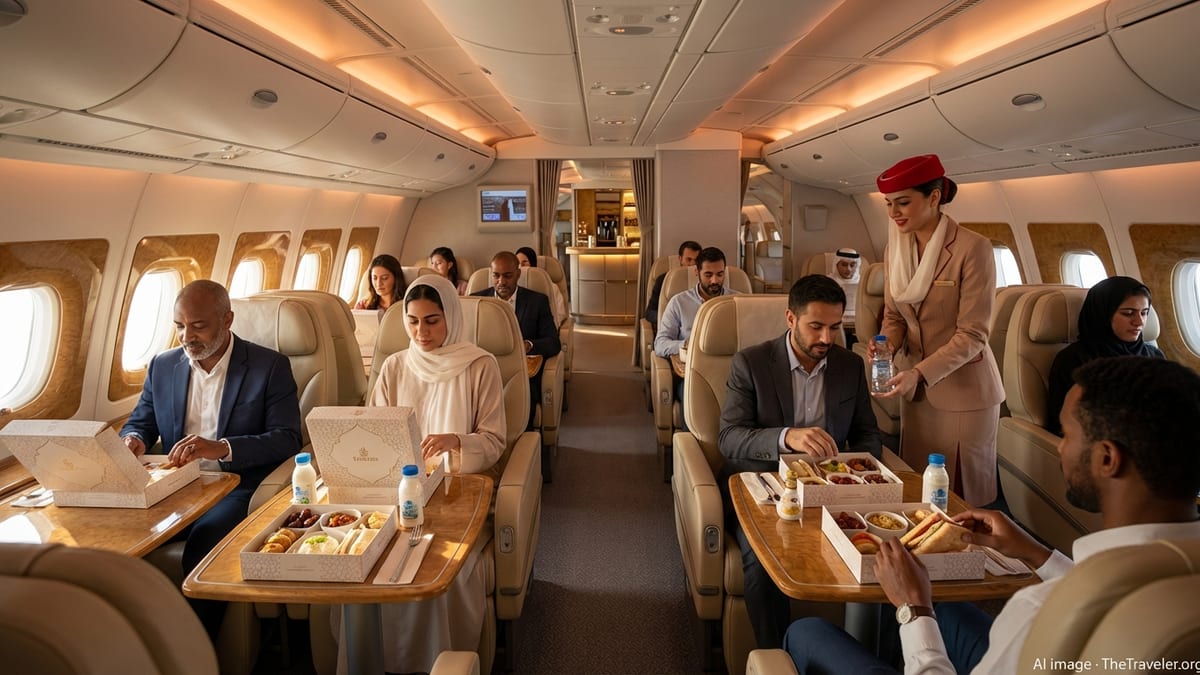
Emirates is transforming the in-flight experience for Ramadan 2026 with a suite of tailored services, from complimentary iftar boxes and upgraded lounge dining to prayer-friendly amenities designed to support fasting passengers throughout their journeys.
Ramadan 2026 in the Skies: A New Benchmark for Muslim Travelers
As Ramadan 2026 unfolds from February 18 to an expected end around March 20, Emirates is positioning itself at the center of faith-focused travel by expanding and refining its seasonal offerings. The Dubai-based carrier is rolling out complimentary iftar boxes both on the ground and in the air, enriching its lounge menus with traditional dishes and ensuring worship-friendly facilities are woven into the travel experience. It is a calibrated response to the surge in demand for travel to and through the Gulf during the holy month, when millions of passengers seek to balance religious observance with complex itineraries.
The initiative builds on years of incremental Ramadan enhancements, but the 2026 program marks one of Emirates’ most comprehensive efforts yet. The airline is combining operational precision, culinary curation and cultural sensitivity in a package that aims to ease the challenges of fasting at altitude. From tailored meal timings to expanded prayer amenities, the carrier is seeking to turn its network of cabins and lounges into an extension of the Ramadan environment many travelers leave at home.
Industry observers note that the scale of Emirates’ operations through Dubai International Airport gives its Ramadan policies outsized influence on regional travel norms. With hundreds of flights intersecting key Muslim-majority markets daily, the airline’s approach in 2026 effectively sets a benchmark for what fasting passengers can expect from a full-service global carrier.
Complimentary Iftar Boxes on the Ground and Inflight
At the heart of the 2026 offering is a renewed focus on complimentary iftar boxes designed specifically for passengers who are fasting. At select boarding gates in Dubai, Emirates staff will distribute compact boxes timed to coincide with sunset, each containing water, laban, dates and a banana. For travelers racing between connections or boarding close to iftar, the gate-side distribution provides a critical opportunity to break the fast before the aircraft doors close.
Onboard, the program extends to specially designed Ramadan meal boxes served across all cabin classes on selected routes, in addition to the standard hot meal service. The in-flight boxes feature light but filling components built around traditional Ramadan flavors. Passengers can expect mezze such as hummus, moutabel or muhammara with Arabic bread, alongside a main sandwich option like chicken mossakan or a herbed chicken roll, balanced with sweet elements including chocolate-coated almonds, baklawa or pistachio mamoul.
The airline has emphasized that these boxes are intended to be both nutritionally considered and culturally resonant, favoring ingredients that are gentle on the stomach after a long day of fasting. The presence of laban, a tangy fermented milk drink beloved across the region, underscores the intent to reflect familiar Ramadan tables in a compact, travel-friendly format. Crucially, the iftar boxes are complimentary, reinforcing Emirates’ positioning of the service as a gesture of seasonal hospitality rather than a paid add-on.
Luxurious Lounge Dining Reimagined for the Holy Month
Beyond the cabin, Emirates is using its lounge network to deliver a more expansive Ramadan experience for travelers with longer layovers. In the seven Emirates lounges at Dubai International Airport, passengers will find extensive Ramadan-inspired menus spanning iftar and suhoor, as well as lighter options for those preferring a modest meal before or after fasting hours. The airline has highlighted dishes such as lentil soup, Arabic mixed grill, lamb kabsa, chicken machboos with cooling cucumber yoghurt, and lamb shanks served with fragrant rice, mirroring the kind of family-style spreads seen across the region during the holy month.
In the dessert sections, lounges are showcasing an array of classic Arabic sweets, from pistachio kunafa and basbousa to baklawa ice cream, alongside date-forward treats that are synonymous with Ramadan. Seasonal drinks like jallab and laban feature prominently, catering to both tradition and hydration needs after a day of abstention. The approach turns the lounges into de facto Ramadan dining rooms, offering an environment where travelers can break their fast in comfort before heading to their onward flights.
These enhancements are not limited to Dubai. Emirates has also introduced Ramadan-centric offerings in its lounges in Cairo and Jeddah, reflecting the routes’ importance for Umrah and regional traffic during the month. The airline’s decision to harmonize the experience across multiple hubs suggests a strategic push to create continuity for fasting passengers, whether they are beginning their journey in North Africa, the Gulf or transiting through Dubai on long-haul itineraries.
Prayer-Friendly Cabins, Accurate Fasting Timings and Onboard Comforts
One of the persistent challenges of fasting while flying lies in timing. To address this, Emirates is once again deploying a proprietary system that calculates precise imsak and iftar times based on the aircraft’s real-time latitude, longitude and altitude. Captains receive dynamic updates on these timings and make announcements when the sun has set, giving fasting passengers a clear, authoritative signal for when they may break their fast. It is a level of detail that reflects the airline’s long-running investment in Ramadan-specific operations.
The focus on spiritual needs extends beyond the clock. Prayer mats are available onboard, and crew have been briefed on how to support passengers seeking to pray during quieter moments of the flight. While space limitations vary by aircraft type and load factor, crew are trained to help travelers find appropriate spots where safety procedures can still be maintained. On the ground, dedicated prayer rooms and ablution facilities in Emirates lounges provide a calmer environment for worship, aligning the airport experience more closely with passengers’ routines at home.
Collectively, these measures underline a widening recognition within the aviation sector that religious observance is not an ancillary concern for many passengers but central to their decision-making, especially during Ramadan. By foregrounding both the practical and spiritual dimensions of fasting at altitude, Emirates is seeking to make the in-flight environment feel less like a disruption and more like a continuation of the holy month’s rhythm.
Curated Inflight Entertainment and Cultural Touchpoints
In tandem with its culinary and service upgrades, Emirates is curating its inflight entertainment platform to echo the themes of Ramadan. The airline’s ice system is featuring a dedicated Ramadan section with religious programming, cultural documentaries and family dramas popular across the Middle East and South Asia. Titles in Arabic and Urdu range from religious reflections and sermon series to contemporary Ramadan dramas that typically draw large regional audiences during the holy month.
The availability of Quran recitation and religious lectures provides another layer of engagement for passengers who wish to spend their flight time in contemplation or learning. For many, the cabin becomes an unexpected space for quiet reflection between busy ground schedules and family commitments. The airline’s decision to highlight Ramadan content within its menus also signals an understanding that for fasting travelers, a flight is not merely a physical journey but part of their spiritual itinerary for the month.
This focus on content is complemented by smaller cultural touches across the wider Emirates brand during Ramadan 2026, including seasonal fragrances and curated retail items outside the aircraft. Together, they form a broader narrative in which the airline presents itself as a custodian of regional traditions, extending the atmosphere of the holy month from homes and mosques into airports and cabins.
Special Considerations for Umrah Pilgrims and Religious Travelers
Ramadan continues to be one of the busiest periods for religious travel to Saudi Arabia, particularly for those undertaking Umrah. Emirates is tailoring parts of its 2026 program to address the specific needs of these passengers. On flights to Jeddah and Medina, Ramadan meal boxes are prioritized, ensuring that pilgrims have guaranteed access to suitable iftar options even on high-demand departures. The airline is also maintaining its policy of allowing passengers to check in up to five litres of Zamzam water on eligible routes between Saudi Arabia and Dubai, a crucial consideration for pilgrims who wish to bring the holy water home.
Operational planning has been aligned with peak Umrah flows, with staff in key stations trained to handle larger groups and support them through transit formalities in Dubai. The presence of multilingual staff familiar with the rituals and sensitivities surrounding pilgrimage travel is intended to reduce stress for first-time pilgrims and older travelers, groups that often find airport environments overwhelming.
For Emirates, these measures reinforce its position as a preferred connector between Asia, Africa, Europe and the holy cities of Saudi Arabia during Ramadan. By integrating religious considerations into both policy and day-to-day operations, the carrier aims to deepen its relationship with Muslim travelers who view the holy month as a particularly meaningful time to visit Makkah and Madinah.
Competitive Context: Raising the Bar for Ramadan Travel
The scale of Emirates’ Ramadan 2026 program unfolds against a backdrop of intensifying competition among Gulf and regional carriers, many of which now offer some version of iftar services or Ramadan menus. Peer airlines are highlighting their own initiatives, from takeaway suhoor bags to expanded lounge buffets and tailored entertainment lineups. In this landscape, Emirates’ strategy appears to focus on breadth and integration, connecting meal services, prayer facilities, timing tools and content into a single, coherent Ramadan experience.
Analysts say that for carriers whose hubs sit at the crossroads of global Muslim-majority markets, Ramadan has become a proving ground for customer-centric innovation. The holy month compresses a range of operational challenges into a few intense weeks, from rapidly shifting passenger flows around iftar times to complex dietary and timing requirements on multi-sector journeys. Airlines that can manage these pressures while delivering a sense of calm and hospitality stand to win long-term loyalty from a customer base that often travels frequently for family, business and pilgrimage.
In this context, Emirates’ 2026 offerings are as much about brand identity as they are about immediate passenger comfort. The airline is effectively using Ramadan to showcase its ability to choreograph high-touch services at scale, sending a signal that it can adapt quickly to diverse cultural needs while maintaining its premium positioning. For travelers planning journeys during the holy month, the result is a more predictable, structured environment in which the practicalities of fasting and prayer are accounted for from booking to boarding and beyond.