

More news on this day
Emirates has cancelled and rescheduled multiple flights between Dubai and New York, Washington and Boston as a fast-intensifying nor’easter threatens to bring blizzard conditions, whiteouts and severe operational disruption across the US East Coast on February 22 and 23, leaving thousands of travelers scrambling to adjust plans.
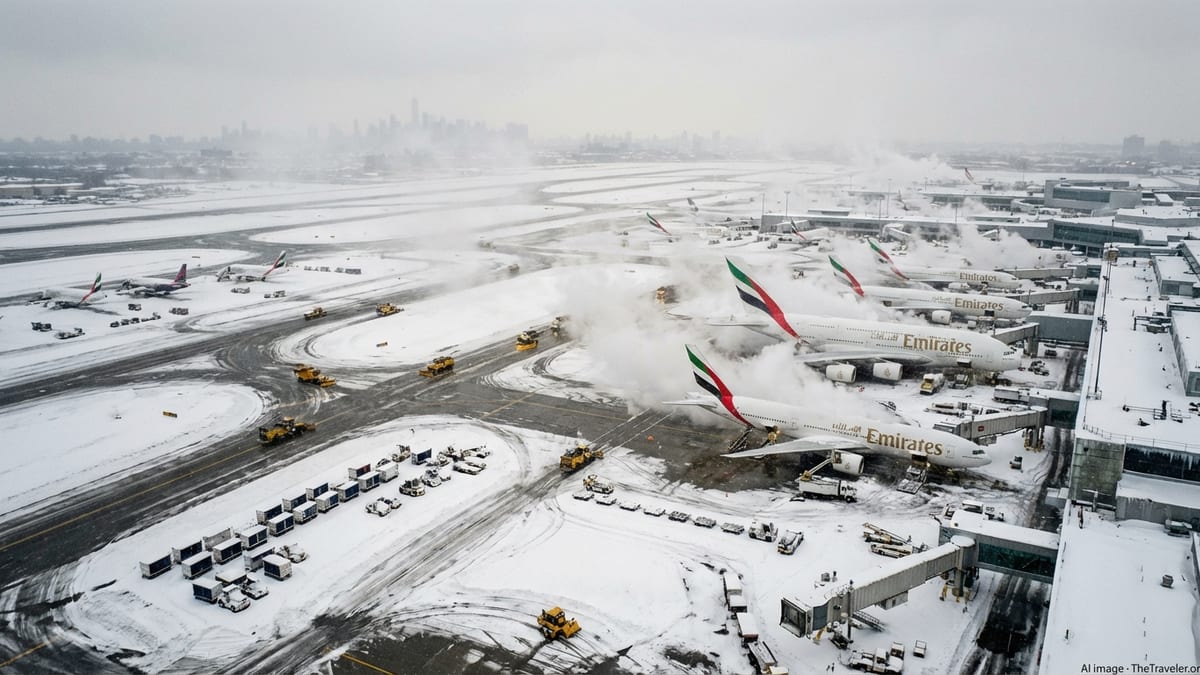
Storm Hernando Brings Blizzard Threat to Northeast Corridor
The powerful nor’easter, informally dubbed Winter Storm Hernando by forecasters, is forecast to dump up to two feet of snow across parts of the Northeast megalopolis from late February 22 into February 23. Meteorologists warn of heavy, wet snow, wind gusts above 60 miles an hour in coastal areas and near-zero visibility at times, particularly from Washington through New York to Boston.
Blizzard warnings and winter storm warnings were in place across major metropolitan areas including New York City, northern New Jersey, coastal Connecticut and much of eastern Massachusetts as of Sunday, February 22. The National Weather Service has cautioned that road and runway conditions could deteriorate rapidly, with snowfall rates exceeding an inch per hour and significant drifting due to strong winds.
Airports along the Interstate 95 corridor are bracing for extensive disruption as the storm’s heaviest band moves over the region during peak transatlantic arrival and departure windows. New York John F. Kennedy, Newark Liberty, Boston Logan and Washington Dulles, all critical long-haul gateways for Gulf carriers, are expected to experience extended de-icing delays, runway closures and temporary suspensions of operations as visibility collapses.
Although the center of the storm is expected to move offshore by late Monday, forecasters note that lingering snow showers, high winds and cleanup operations could continue to affect air travel for at least 24 to 36 hours after the worst of the blizzard conditions ease.
Emirates Adjusts Transatlantic Schedule to New York, Washington and Boston
In response to the rapidly deteriorating forecast, Emirates has implemented a series of cancellations and schedule changes on its US East Coast routes for February 22 and 23. Flights between Dubai and New York, Washington and Boston are among those affected, as the carrier acts to protect crew and passenger safety and avoid aircraft and staff being stranded in storm-hit airports.
Services into New York John F. Kennedy are bearing the brunt, with at least one round-trip rotation grounded and others retimed outside the forecast peak of the storm. Some flights scheduled to arrive during the most intense snowfall window have been moved earlier in the day or pushed into Monday evening, when runway and taxiway conditions are expected to improve.
Washington Dulles, which is under winter storm and blizzard-related warnings, has also seen Emirates adjust its timetable. At least one service has been cancelled, with passengers reprotected on alternative flights via New York or rebooked to travel on later dates once conditions stabilize. The carrier is monitoring conditions at Washington’s airports hour by hour, leaving open the possibility of further rolling delays as visibility and crosswinds fluctuate.
Boston Logan, on the leading edge of some of the heaviest projected snowfall totals, is experiencing similar disruptions. Emirates has cancelled at least one Boston rotation and consolidated others, swapping in higher-capacity aircraft on remaining flights where possible in order to carry rebooked travelers and minimize the number of stranded passengers.
Growing Wave of Flight Cancellations Across the East Coast
Emirates is far from alone in paring back its operations as the nor’easter intensifies. By Sunday afternoon, flight tracking data showed more than 1,500 flights cancelled across the United States, with a heavy concentration at New York-area airports and major Northeast hubs including Boston and Philadelphia.
Domestic carriers such as American Airlines and Delta Air Lines have issued broad travel waivers for customers flying to, from or through key Northeast airports on February 22 and 23. These waivers allow travelers to change flights once without incurring change fees, provided itinerary changes remain within a defined travel window and to the same city pair. The aim is to encourage passengers with flexible plans to move their journeys away from the storm’s peak, easing pressure on already stretched operations.
Other international airlines have followed suit. Gulf and South Asian carriers have begun cancelling or consolidating transatlantic services to New York, Newark, Boston and Washington as ground conditions worsen and slot restrictions tighten. Some have proactively cancelled flights scheduled for Monday, February 23, even before the full impact of the storm is known, in order to give travelers as much notice as possible.
Airport authorities warn that operational recovery after a major blizzard is typically slow, as snow clearance, equipment repositioning and crew scheduling all take time to normalize. Even if the skies clear on Monday, February 23, the effects on the departure boards at East Coast hubs could persist well into Tuesday as airlines work through a backlog of displaced passengers and out-of-position aircraft.
What Emirates Passengers Should Do Right Now
For Emirates customers due to travel between Dubai and the United States over the next 48 hours, the immediate priority is to verify the status of their booking and ensure contact details are up to date. The airline is sending notifications via email and mobile to travelers on affected services, but high call volumes and heavy website traffic are likely as the situation evolves.
Travelers whose flights have been cancelled are being offered rebooking onto alternative Emirates services at no additional fare, subject to seat availability within the same cabin. Where there is no same-day option, the carrier is providing the choice of travel on the next available flight or a change of travel date within a limited validity window, typically without change fees for tickets issued before the storm developed.
Passengers traveling through to onward destinations in the United States or Canada on partner airlines should pay particular attention to their connections. Even if their Emirates long-haul sector operates, onward domestic or regional flights may be cancelled or delayed due to conditions at intermediate hubs. In many cases, Emirates and its partners will rebook passengers on the next available connection, but overnight stays or extended layovers may be unavoidable.
Those already en route to Dubai for East Coast departures are being advised to check their flight status before leaving home or their hotel. Given the scale and speed of the disruption, further last-minute changes are possible, especially if East Coast airports pause ground operations for snow clearance or if local authorities temporarily suspend inbound international flights due to safety concerns.
What to Expect at Airports and in the Air
Travelers who do make it to the airport should brace for longer-than-normal queues at check-in, security and boarding gates as airlines consolidate multiple passenger loads onto fewer flights. Ground handling crews will be working in harsh conditions, and many airport processes may be slowed by snow, ice and the need for additional safety checks.
De-icing will be a particular bottleneck at East Coast hubs. Aircraft may need multiple rounds of de-icing fluid application before departure, especially during periods of heavy snowfall and strong winds. This adds significant time to the pre-flight process, often resulting in long queues of aircraft waiting for their turn and further knock-on delays across the network.
Once airborne, passengers should anticipate bumpy climbs and descents as aircraft transit through turbulent layers on the fringes of the storm system. Cabin crews are likely to keep the seat belt sign on for longer than usual, limiting movement around the cabin and reducing in-flight service at times. While such measures are standard in severe winter weather events, they can contribute to a more fatiguing journey for travelers already dealing with disrupted plans.
On arrival, the experience may be equally challenging. Snow-covered taxiways, reduced runway availability and limited gate space can lead to extended ground holds even after landing. Baggage delivery systems, often located in drafty terminal basements, may struggle to cope with surges in passenger volume and wind-driven snow infiltrating loading areas, adding further delay before travelers are able to leave the airport.
Rebooking, Refunds and Travel Waivers: Key Details
Emirates has rolled out a flexible rebooking policy for passengers whose flights to New York, Washington and Boston are cancelled or heavily delayed because of the nor’easter. In most cases, travelers can move their trip to another date within a specified time frame without paying a change fee, although fare differences may apply if they choose a period of higher demand.
For those who no longer wish to travel, partial or full refunds may be available depending on the fare rules and whether the flight was formally cancelled by the airline. Passengers holding nonrefundable tickets but whose flights have not yet been cancelled are often encouraged to wait until closer to departure, when it becomes clearer whether their service will operate, in order to retain maximum flexibility.
Travelers who booked via third-party travel agencies or online platforms may find that changes must be processed through the original point of purchase. This can introduce another layer of complexity, as agency call centers may experience heavy demand. Where possible, using digital self-service tools such as airline apps and online manage-booking portals can save time and reduce time spent on hold.
Frequent flyers and premium-cabin passengers may enjoy priority access to rebooking assistance and call centers, but they are not immune to the broader network constraints created by the storm. With airport hotel inventory tightening rapidly around East Coast hubs, travelers facing overnight delays should move quickly to secure accommodation, either through their airline or independently, if it becomes clear that they will be stuck for an additional night.
Practical Advice for Travelers Caught in the Nor’easter
Seasoned winter travelers emphasize preparation as the best defense against a storm-disrupted journey. For those heading into the teeth of Hernando, that starts with packing as if an unplanned overnight stay is a real possibility. Essential medications, a change of clothes, chargers, toiletries and key documents should be kept in hand luggage rather than checked bags, in case luggage is separated from its owner during irregular operations.
Passengers should monitor multiple information channels throughout their trip, including airline apps, airport departure boards and official weather alerts for their destination region. Social media can offer real-time updates from fellow travelers, but official airline communications remain the definitive source on whether a specific flight is operating, delayed or cancelled.
At the airport, flexibility and patience will go a long way. Gate agents and customer service staff are often dealing with complex rerouting decisions and cabin reconfigurations as they try to accommodate as many disrupted travelers as possible. Calmly asking about alternative routings, such as connections via unaffected hubs or nearby airports, can sometimes produce options that are not immediately obvious on booking engines.
Finally, travelers who have the option to postpone nonessential trips to the affected East Coast cities may wish to do so, particularly if their itinerary involves tight connections, onward train journeys or time-sensitive events. While airlines and airports are increasingly adept at handling winter storms, a high-impact nor’easter like Hernando still has the power to derail even the best-laid travel plans.
How Long Will the Disruption Last?
Forecast models suggest that the core of the storm will move away from the Mid-Atlantic and New England coasts by late on Monday, February 23, with snow tapering to flurries and winds gradually easing. However, the legacy of heavy snowfall, wind damage and possible coastal flooding means that the broader transport system will take longer to recover.
Runway and taxiway clearing at major hubs can continue well into the day after a storm, particularly if snow totals approach or exceed two feet in critical areas around approach paths and apron zones. Airport authorities must also contend with staff shortages when local road conditions make commuting unsafe, further slowing the pace of recovery.
For Emirates and other long-haul carriers, the challenge is compounded by the need to re-synchronize global aircraft and crew rotations that stretch across multiple continents and time zones. A single day of severe disruption on the US East Coast can ripple through schedules in Europe, the Middle East and Asia for several days, as airlines work to reposition widebody jets and bring exhausted crews back into legal flying hours.
Travelers booked to fly to or from New York, Washington or Boston through the middle of the week are therefore being urged to keep monitoring their flights even after the snow has stopped falling. While operations should steadily normalize, pockets of disruption and isolated cancellations are likely to persist until airlines fully absorb the shock of this latest winter blow to the transatlantic network.