

More news on this day
Dubai-based Emirates is working to restore its full global flight network within days, shifting from emergency operations to a structured recovery as regional airspace over the Gulf cautiously reopens following the latest escalation in the Iran–Israel conflict.
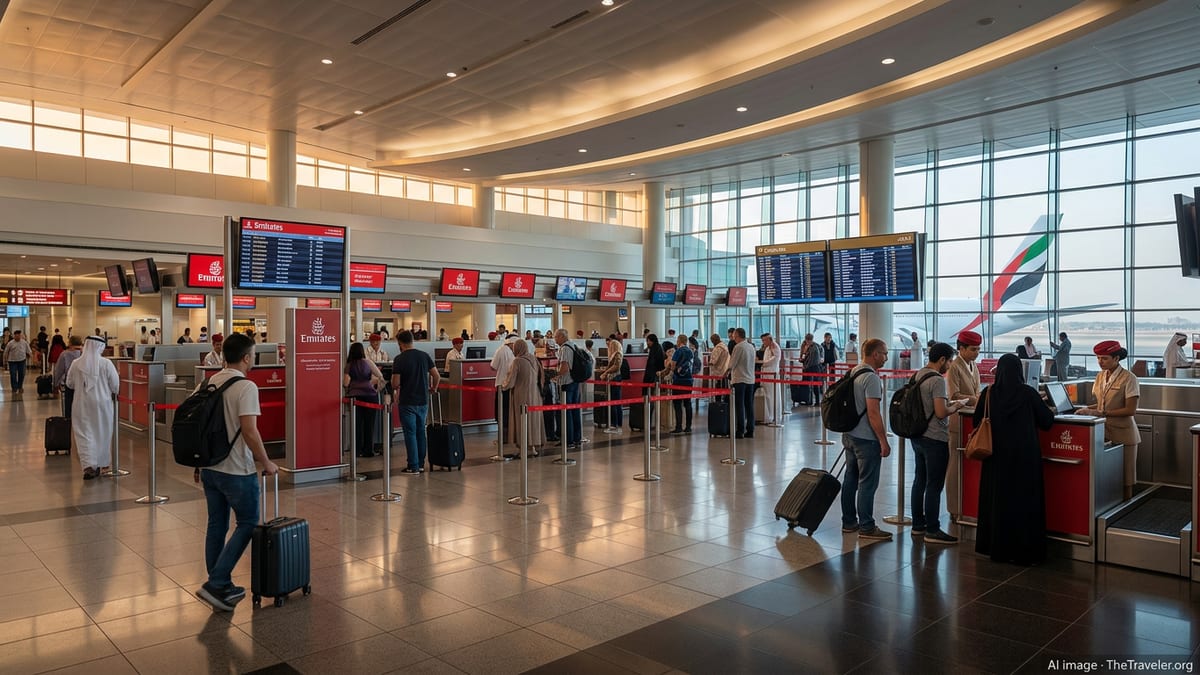
Emirates Moves From Crisis Mode to Recovery
The airline confirmed on Friday that it is currently operating a reduced schedule but expects to return to 100 percent of its network in the coming days, subject to airspace availability and operational clearances. The move comes after nearly a week of sweeping airspace closures across the Middle East triggered mass cancellations, diversions and airport shutdowns.
Authorities in Iran, Iraq, Israel, Qatar, Kuwait, Bahrain, Syria and the United Arab Emirates had sharply restricted or fully closed their skies to civil traffic after a joint United States and Israeli strike on Iranian territory on 28 February, and subsequent retaliatory attacks. For Dubai, one of the world’s busiest long-haul hubs, the sudden halt in flight activity cut off a key bridge between Europe, Asia and Africa at the height of the winter travel season.
Emirates said it has been progressively reinstating flights as corridors reopen, while maintaining close coordination with civil aviation regulators and air traffic control authorities across the region. Safety and security, the airline stressed, remain the primary drivers of routing decisions and timetable changes even as it pushes to rebuild capacity at speed.
The carrier has urged passengers not to travel to Dubai International Airport unless they have a confirmed booking and have received updated flight information, reflecting continued congestion and limited terminal access as airlines work through several days of disrupted operations.
Passengers Face Lingering Disruptions and Rolling Changes
Despite the shift toward normalisation, travellers are being warned that schedules will remain fluid for several days as aircraft and crews are repositioned and backlogs are cleared. Emirates has cancelled more than 2,000 flights since the crisis began and continues to consolidate some services while restoring others, particularly on high-demand routes to India, Europe and North America.
Stranded passengers across multiple continents have reported extended layovers, last-minute rebookings and extended stays in Dubai as the airline manages capacity within constrained airspace. Travel agents in South Asia and Europe say clients have been offered re-routing through alternative hubs where feasible, although many traditional paths over the Gulf and Levant remain limited or require longer diversions.
Emirates is prioritising customers with existing bookings whose flights were cancelled or severely delayed, before opening up more inventory for new sales. The airline and partner agencies are offering date changes and, in some cases, refund or credit options for travellers who decide to postpone their trips until schedules stabilise.
Travel industry analysts note that while the carrier’s swift move toward full network restoration underscores its operational resilience, passengers should still expect short-notice changes to departure times, routings and connection windows as regional authorities adjust restrictions on a rolling basis.
Regional Airspace Reopens Gradually After Conflict Escalation
The unfolding recovery at Emirates mirrors a broader but uneven reopening of airspace across the Middle East. After near-total closures in parts of the Gulf and over Iran and Iraq in the days following the February strikes, several countries have begun to allow limited civil traffic through defined corridors, often with altitude and routing restrictions designed to keep commercial aircraft clear of potential conflict zones.
Regulators and international safety bodies have continued to urge airlines to avoid specific conflict-affected areas and to exercise extreme caution in adjacent skies. As a result, many carriers are operating lengthened routes that skirt sensitive airspace, adding flight time and fuel burn but reducing exposure to risk.
Other major Gulf airlines, including Etihad Airways and flydubai, have also resumed curtailed services as the United Arab Emirates relaxes its temporary and partial closure of national airspace. However, long-haul connectivity remains constrained, with some services to cities in the Levant and Iran still suspended or placed under review pending clearer security assessments.
Aviation experts say the episode underscores the vulnerability of global air travel to sudden geopolitical shocks in the Gulf region, where airways and hubs function as critical junctions for east–west traffic. Any prolonged disruption in this corridor can quickly ripple across airline networks from London and Frankfurt to Mumbai, Bangkok and Sydney.
Dubai Hub Works to Regain Its Role as Global Connector
Dubai International Airport, which typically ranks among the world’s busiest by international passenger traffic, has been operating well below normal capacity since the closures began. Flight-tracking data over recent days showed a fraction of the usual movements in and out of the emirate as airlines cancelled services and repositioned aircraft away from the Gulf.
Airport authorities have been working alongside Emirates and other carriers to scale operations back up as permissions increase, including reopening additional runways and stands, reactivating terminal facilities and ramping up ground handling. Priority has been given to long-haul and high-connectivity flights that feed the airport’s role as a global transit hub.
Local tourism operators and hoteliers, many of whom rely heavily on connecting traffic from Europe and Asia, are watching the recovery closely. While Dubai’s strong local demand and resident population have cushioned some of the immediate impact, a sustained downturn in transit flows would weigh on occupancy rates and tourism receipts if airspace restrictions were to tighten again.
For now, the expectation in Dubai’s aviation and tourism circles is that a rapid return to near-normal operations is achievable if the security situation does not deteriorate further. With Emirates preparing to bring its full network back online, attention is turning to how quickly confidence will return among international travellers weighing bookings through the region.
What Travellers Should Expect in the Coming Days
With Emirates on track to restore its route map, passengers planning to fly through Dubai have been advised to monitor their bookings closely and keep contact details updated with the airline. Same-day schedule changes remain possible as airspace availability evolves, particularly for flights crossing contested or adjacent regions.
Travel advisers recommend allowing generous connection times for itineraries involving multiple segments, and remaining flexible on specific departure times or even dates. For travellers with urgent journeys, checking for alternative routings via other hubs in Europe or Asia may be worthwhile, although capacity there is also under pressure from diverted demand.
Corporate travel managers are closely tracking the situation, with some multinational companies temporarily restricting non-essential trips through the Gulf until flight patterns settle. Others are relying on Emirates’ extensive network and rapid restoration plan to maintain essential business links between Europe, Asia and Africa.
Ultimately, the speed with which Emirates can translate the partial reopening of airspace into a fully restored network will serve as an early barometer of how resilient global aviation remains in the face of a volatile security environment across the wider Middle East.