

More news on this day
Emirates is sharpening its competitive focus on Europe with a fresh wave of routes and capacity upgrades from the United Arab Emirates, a move that analysts view as a direct challenge to Lufthansa’s long-established dominance on some of the continent’s most valuable long-haul corridors.
Get the latest news straight to your inbox!
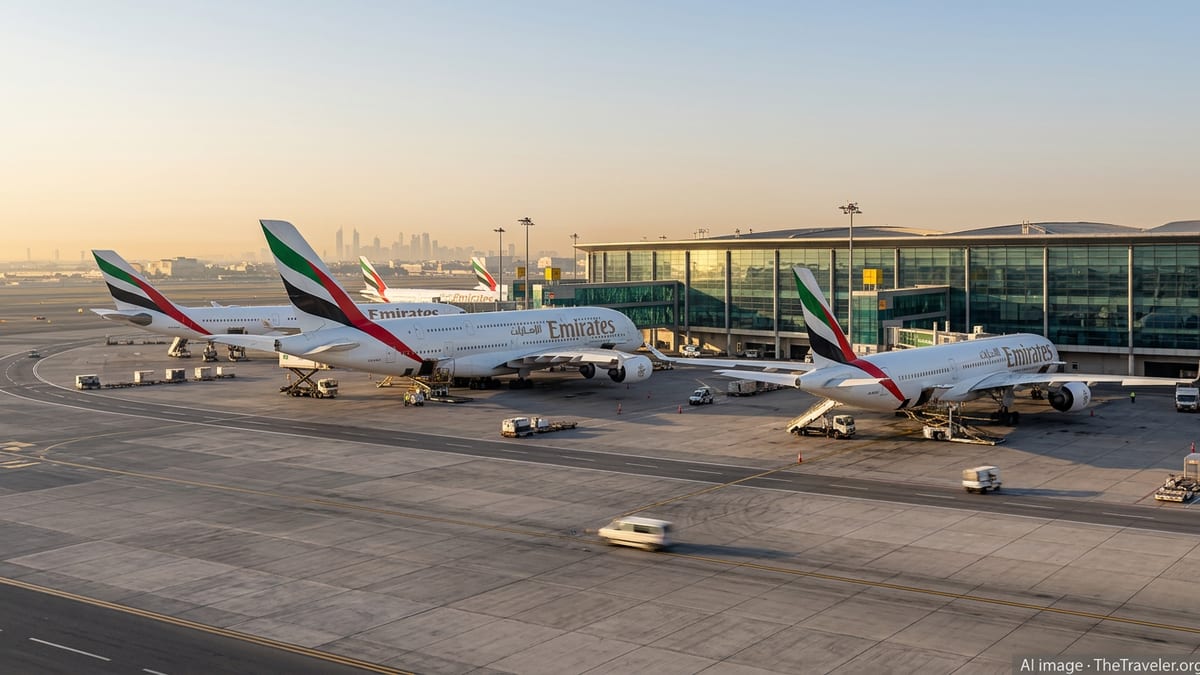
New European Gateways From the Gulf Superhub
Recent schedules and industry reports show Emirates pushing deeper into Europe’s secondary hubs, widening its footprint beyond traditional strongholds such as London, Paris and Frankfurt. New and announced services from Dubai to cities including Helsinki and Luxembourg, alongside added frequencies to existing destinations, are designed to capture more transfer traffic between Europe, Asia, Africa and Australia.
Helsinki, slated to become Emirates’ fourth Nordic destination after Copenhagen, Oslo and Stockholm, highlights the carrier’s strategy of stitching together northern Europe with long-haul flows through Dubai. Aviation route trackers indicate that the Finnish capital will also feature prominently in Emirates’ deployment of new Airbus A350 aircraft, signaling an emphasis on fuel efficiency and premium cabins on routes where it seeks to lure higher-yield passengers away from European incumbents.
Emirates is also reported to be preparing a direct Dubai–Luxembourg service from 2026, giving the airline access to one of Europe’s key finance and logistics hubs. Industry coverage notes that the route is expected to be operated by Boeing 787-9 aircraft in a three-class configuration, positioning Dubai as an alternative eastbound gateway for corporate and connecting travelers who traditionally rely on Lufthansa’s network via Frankfurt and Munich.
Across Italy, Ireland, Switzerland and the Nordic markets, Emirates is pairing new city pairs with aircraft upgrades, particularly its expanding A350 and Premium Economy offering. Travel trade reporting points to Rome as one of the beneficiaries, with Dubai–Rome services due to see next-generation aircraft that offer both increased capacity and a refreshed onboard product.
Capacity Upgrades That Undercut Legacy Hubs
Beyond simply adding dots on the map, Emirates is reshaping its European presence through capacity and product upgrades on existing routes. Publicly available fleet plans show a ramp-up in A350 deployments into Europe, alongside the continued use of high-capacity Airbus A380s on trunk routes to Germany, the United Kingdom and other major markets.
Travel industry analysis indicates that the airline is introducing A350s on routes such as Dublin and select Italian and Nordic cities, with configurations that feature a sizable Premium Economy cabin. This intermediate product has become a key battleground between Gulf and European carriers, giving Emirates an opportunity to attract cost-conscious corporate travelers and affluent leisure passengers who might otherwise connect through Lufthansa’s hubs.
Additional frequencies to larger European cities from mid-decade, including planned summer increases to airports such as Manchester and other major gateways, further intensify competition on long-haul flows. By offering more departure times from Dubai, Emirates can capture passengers from across its global network and funnel them onto European flights that directly rival Lufthansa Group capacity into the same catchment areas.
The combined effect is a denser web of one-stop options that link secondary European cities with destinations in Asia and Oceania that many Lufthansa Group carriers do not serve nonstop. This network structure has long been a comparative advantage for Gulf airlines; the latest wave of Emirates service increases suggests a renewed push to leverage that model at a time when European carriers are still recalibrating post-pandemic capacity.
Pressure on Lufthansa’s Multi-Hub Strategy
Lufthansa has traditionally dominated long-haul traffic from Germany, Austria, Switzerland, Belgium and now Italy through its portfolio of carriers and multiple European hubs. The group’s strategy relies heavily on feeding long-haul flights via Frankfurt, Munich, Zurich, Vienna and Brussels, an approach that is increasingly challenged by one-stop itineraries via Dubai that bypass these hubs entirely.
Emirates’ expansion into markets like Finland, Luxembourg and upgraded Italian routes intensifies that challenge by providing alternative routings for both leisure and business travelers. Rather than backtracking through traditional Lufthansa Group hubs, passengers from northern and central Europe can connect eastbound in Dubai, often with competitive fares and newer widebody cabins.
At the same time, Lufthansa is deepening its own presence in southern Europe through its planned integration of ITA Airways. According to published corporate communications, ITA is moving toward full inclusion within Lufthansa Group and entry into Star Alliance, strengthening the German group’s position in Italy. This consolidation underscores how both airlines are racing to lock in feed and market share in Europe’s most contested long-haul markets.
Analysts note that this dynamic sets up a more direct confrontation between a consolidated European champion and a cash-generating Gulf supercarrier. Emirates’ continued growth in Europe, particularly where it introduces widebody aircraft into smaller capitals, erodes some of the natural advantages of Lufthansa’s multi-hub setup by giving travelers more choices on overlapping city pairs.
Regulatory and Competitive Headwinds in Europe
Gulf carriers have long faced political and regulatory resistance in parts of Europe, especially in core Lufthansa markets such as Germany. Historical debates over market access, subsidy allegations and bilateral traffic rights have shaped how many flights airlines like Emirates can operate into key German cities, limiting the direct expansion of Gulf competition into those hubs.
Policy discussions around fair competition and environmental impact continue to influence how quickly additional Gulf capacity can be added into continental Europe. However, recent route announcements and aircraft deployment plans suggest that Emirates is finding growth opportunities by focusing on underserved or secondary markets where regulatory pressures are less acute and airport authorities are actively courting new long-haul services.
Industry commentary also highlights that competition is not limited to Lufthansa and Emirates. Other Gulf carriers, including Qatar Airways and Etihad Airways, along with rapidly expanding Turkish and low-cost long-haul operators, are all bidding for the same Europe–Asia and Europe–Africa transfer traffic. In this crowded field, Emirates’ scale, brand recognition and aggressive fleet renewal program give it significant leverage as it negotiates for slots and market access.
For Lufthansa, this means defending its core hubs while also navigating European Union competition oversight related to consolidation moves such as the ITA Airways acquisition. Any constraints on capacity growth or alliance partnerships could open further space for Emirates and its regional peers to lure passengers through their Gulf hubs instead.
Implications for Travelers and European Airports
For travelers, the competitive tension between Emirates and Lufthansa is translating into more choice on both price and product. Additional Emirates routes from Dubai into cities across northern and central Europe expand the menu of one-stop options to destinations in Asia, the Pacific and Africa, often with the promise of newer cabins and expanded Premium Economy seating.
European airports, especially mid-sized hubs and national gateways outside the largest capitals, stand to benefit from the influx of Gulf carrier capacity. Reports focusing on Finland, Ireland and Italy note that new or upgraded Emirates services are expected to stimulate inbound tourism from Asia and the Middle East while giving local residents more direct access to long-haul destinations that previously required two or more connections.
For Lufthansa and its partner airports, the trend is more complex. While increased connectivity can boost overall passenger numbers, it also risks siphoning high-yield traffic away from traditional hubs. As Emirates and other Gulf carriers secure more slots and deploy new-generation aircraft across Europe, the competitive landscape for long-haul connections from the continent is likely to become even more fragmented.
With both airlines investing heavily in fleet renewal and network optimization through the late 2020s, Europe’s role in global aviation is entering a more contested phase. Emirates’ latest route announcements from the UAE to key European markets signal that Lufthansa’s long-standing dominance over many of the region’s eastbound flows will face sustained and targeted pressure in the years ahead.