

More news on this day
Emirates has brought its pioneering Travel Rehearsal programme to Denpasar, staging a full mock airport journey at Bali’s I Gusti Ngurah Rai International Airport to help neurodiverse passengers and their families experience air travel in a calm, controlled setting while strengthening the island’s position as an inclusive long-haul destination.
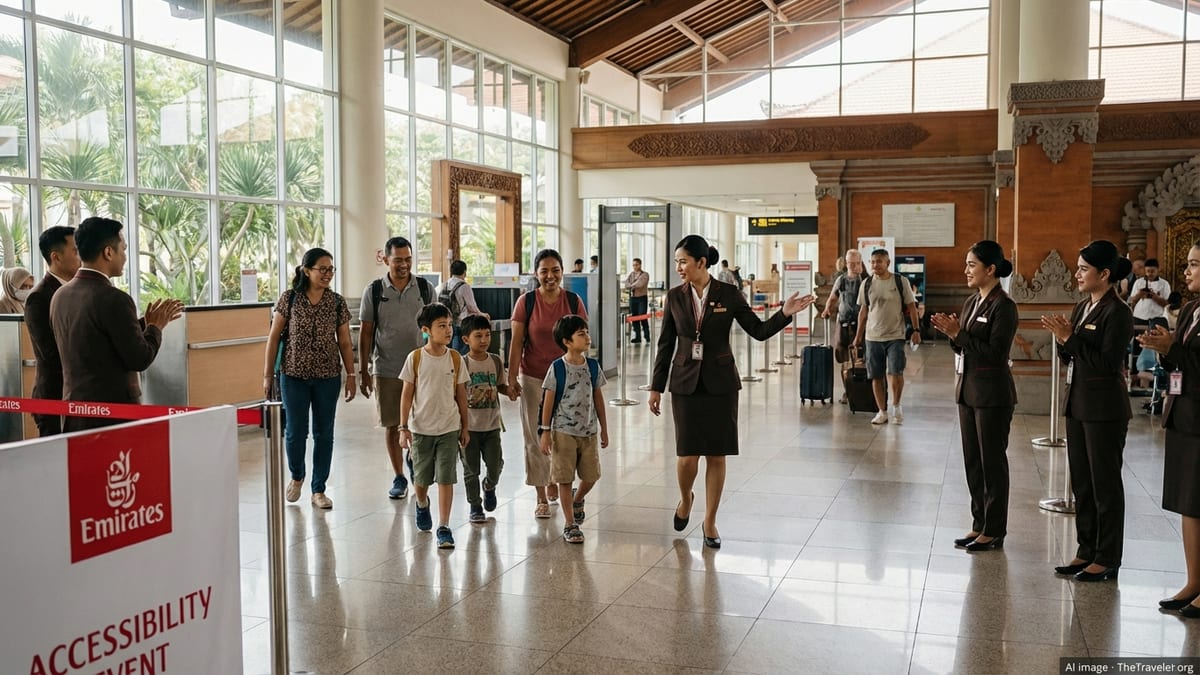
First Travel Rehearsal Programme Lands in Denpasar
On 18 February 2026, Emirates hosted its first Travel Rehearsal session in Denpasar, extending the airline’s accessible travel initiative to one of Asia’s busiest resort gateways. The event, held at I Gusti Ngurah Rai International Airport, marked the debut of the programme in Indonesia and highlighted Bali’s growing role in shaping more inclusive tourism models for families and travellers with hidden disabilities.
The inaugural rehearsal brought together 17 participants, including eight children with autism and their guardians, who were invited to walk through a realistic simulation of an entire flight journey. From the moment they arrived at the airport’s international drop-off area to the final baggage collection point, participants were guided step by step through each phase that typically causes stress for neurodiverse travellers.
Emirates, which has positioned accessible travel as a core part of its service strategy, described the Denpasar launch as a milestone in its plans to embed support for neurodiverse passengers across its global network. The move also aligns with broader efforts by Indonesian authorities and local tourism stakeholders to ensure that Bali remains a welcoming destination for visitors of all abilities.
How the Travel Rehearsal Supports Neurodiverse Passengers
The Travel Rehearsal programme is designed around a simple idea: familiarity reduces anxiety. For many neurodiverse passengers, airports can be overwhelming environments filled with bright lights, loud announcements, crowds, queues and unfamiliar procedures. By simulating the full journey ahead of an actual trip, Emirates aims to help children and adults with autism or sensory sensitivities build confidence, anticipate key steps and identify coping strategies.
In Denpasar, participants followed a carefully planned route that mirrored a real departure and arrival experience. The guided session covered arrival at the terminal, check-in at the counters, baggage drop, security screening and immigration, followed by the boarding process and settling into assigned seats in a parked aircraft. Families were exposed to the look and feel of the cabin, safety instructions, seat belts, overhead bins and the hum of onboard systems.
The rehearsal did not end at boarding. To reflect both ends of a journey, the programme included a mock arrival phase that took families through disembarkation, arrival immigration, baggage claim, customs and the final landside pick-up area. At each point, Emirates staff and airport partners were on hand to explain what would normally happen, demonstrate procedures and reassure participants that they could pause, ask questions or step away if the environment felt too intense.
For caregivers and teachers, the experience provided a valuable opportunity to observe how their children responded to different stimuli, from security scanners to boarding gates, and to discuss techniques that can make future flights smoother. The programme also generated feedback that Emirates and airport authorities can use to refine signage, staffing and on-the-ground support for real travel days.
From Dubai Pilot to a Growing Global Network
Emirates first trialled the Travel Rehearsal concept in Dubai in 2024, when the airline invited 30 families with neurodiverse children to experience a full check-in and familiarisation flight from Dubai International Airport. That early experiment showed that a structured, low-pressure introduction to air travel could significantly ease anxiety for both children and parents, and gave the airline a template to scale the model internationally.
Following the success of the Dubai pilot, the programme has gradually been expanded to a roster of cities across the carrier’s network. Locations such as Barcelona, Brisbane, Madrid, Manila and Toronto have hosted sessions in partnership with local schools, autism centres and airport operators. Each city adapts the format to its own terminal layout and operational environment, but the core goal remains the same: to demystify the airport and onboard experience for travellers who might otherwise avoid flying.
With Denpasar now part of the network, Bali joins a select group of destinations actively supported by Emirates’ accessible travel strategy. The expansion also reflects the airline’s broader commitment to inclusive service, which has been reinforced by an accessibility policy, a dedicated office for accessibility and inclusion, and ongoing collaborations with government and industry partners in its home hub and beyond.
Industry observers say the Travel Rehearsal model is emerging as a practical blueprint other airlines and airports can emulate. Rather than focusing only on policies and written guidance, the concept builds real-world familiarity, allowing families to experience travel in a no-pressure setting before committing to a ticket.
Training, Tools and a New Accessibility Standard
Behind the scenes of the Denpasar rehearsal is a significant investment in staff training and specialised tools. Emirates has trained more than 30,000 cabin crew and ground personnel in recognising autism and other hidden disabilities, understanding sensory sensitivities and offering appropriate, empathetic support. That training, introduced in recent years and continually updated, underpins the airline’s recognition as the world’s first Autism Certified Airline.
The curriculum covers practical guidance on how to communicate clearly, when to offer extra time or space, and how to adjust routines for passengers who may find standard procedures challenging. Staff are also taught to work closely with caregivers, respect individual coping mechanisms and remain alert to signs of distress that may not be immediately obvious to the untrained eye.
Emirates has complemented this human element with new products and digital features intended to make travel more predictable. The airline has developed an accessible information hub that allows customers with disabilities to research services and plan their journey by specific need or stage of travel. For neurodiverse passengers, sensory guides, airport maps and virtual travel previews help set expectations before they ever reach the terminal.
Onboard, the carrier is rolling out sensory kits and fidget tools for passengers of all ages, recognising that tactile objects and focused activities can be useful in managing overstimulation or nervousness. Together with seat map previews, tailored seating assistance and options for priority or last boarding, these measures are designed to fit into a seamless, end-to-end approach to accessibility rather than isolated gestures.
Bali’s Push for Inclusive and Family-Friendly Tourism
Bali’s selection as a Travel Rehearsal destination is significant in the context of the island’s long-term tourism strategy. The Indonesian resort province has built its global reputation on natural beauty, culture and hospitality, and in recent years has been working to position itself as a destination that welcomes families, multigenerational groups and travellers with diverse needs.
By partnering with Emirates to host the rehearsal, Bali gains a practical platform to show that inclusivity is not only a slogan but a lived experience at the airport gateway used by millions of visitors. The simulation at Denpasar brought together airline staff, airport authorities and local educators, creating an ecosystem of stakeholders who can implement changes that benefit travellers year-round, not only on rehearsal days.
For Bali’s hotels, tour operators and attractions, the initiative sends a strong signal. As more families with neurodiverse children gain confidence to fly, demand for accessible accommodation, sensory-aware experiences and trained guides is expected to rise. Industry professionals on the island are watching closely, seeing the programme as an early indicator of how inclusive services can translate into new market segments and longer family stays.
Officials and tourism boards have also framed inclusivity as part of Bali’s resilience strategy. By ensuring the destination works for a wider range of visitors, from wellness travellers to families navigating autism, Bali can diversify its appeal and move beyond traditional sun-and-sand marketing narratives.
Voices From the Programme and Community Impact
Emirates executives describe the Denpasar session as part of a long-term commitment rather than a one-off event. Company representatives in Indonesia have emphasised that bringing the Travel Rehearsal to Bali is intended to “enhance the experience for passengers with accessible travel requirements,” underlining the airline’s intent to listen to feedback from families, educators and local advocacy groups.
Parents and guardians who took part in previous rehearsals in other cities have highlighted the value of seeing their children move from apprehension to curiosity as they repeat the journey steps. Many report that the opportunity to ask detailed questions about security, boarding times, seat assignments or inflight routines, in a quiet and unhurried environment, can be transformative compared with learning all of this only on the day of travel.
Teachers and therapists working with autistic children also view the rehearsals as a bridge between classroom-based preparation and real-world practice. Social stories, visual schedules and role-play exercises can only go so far without exposure to actual queues, scanners and aircraft cabins. For them, access to the airport and airline partners outside peak hours opens new possibilities for structured learning.
At a community level, the programme contributes to a broader shift in how airports and airlines perceive neurodiversity. By proactively inviting neurodiverse passengers into the space and designing services around their feedback, Emirates and its partners in Denpasar reinforce the message that these travellers are not an exception to be accommodated reluctantly, but valued customers whose needs help define better systems for everyone.
What This Means for the Future of Accessible Air Travel
The Denpasar launch comes at a time when disability advocates are pressing airlines and regulators to move from compliance-based approaches to proactive, user-centred design. Travel Rehearsal sessions in Bali and other cities offer a practical example of how that shift can look on the ground: not only meeting minimum standards, but rethinking the entire journey from the perspective of passengers who often feel excluded.
For the aviation sector, programmes like this may increasingly become a competitive differentiator. As more travellers weigh factors such as sensory-friendly environments, trained staff and clear accessibility information when choosing airlines and destinations, carriers that invest early in these areas stand to build loyalty among families who have historically flown less often or avoided certain routes altogether.
In the Asia Pacific region, where tourism growth remains a key economic priority, the ripple effects could be significant. Bali’s role as an early adopter of Emirates’ Travel Rehearsal concept may inspire other gateways to explore similar partnerships, linking major airports into a loose network of cities where neurodiverse travellers can expect consistent support from booking to arrival.
For neurodiverse passengers themselves, the hope is that travel will gradually shift from an ordeal to an attainable, even enjoyable experience. With Emirates extending its accessible travel strategy to Denpasar and beyond, families planning their next holiday to Bali may find that the most daunting parts of the journey have already been rehearsed.