

More news on this day
Emirates Airlines diverted six long haul flights from major US cities to European airports on Saturday after US and Israeli strikes on Iran prompted sudden airspace closures across the Gulf and wider Middle East, disrupting one of the world’s busiest long haul corridors.
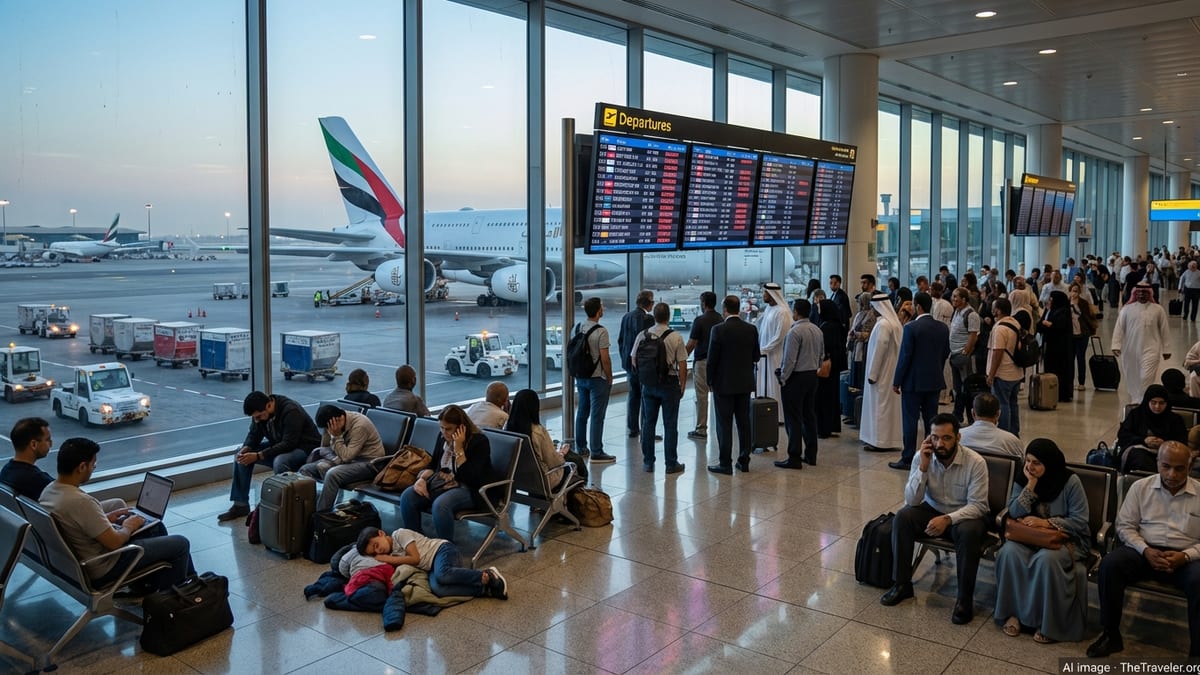
Emirates’ US Network Hit by Rapid Airspace Shutdowns
The Dubai based carrier confirmed that services from Los Angeles, San Francisco, Seattle, New York, Chicago and Houston bound for Dubai were rerouted mid flight to Rome, Munich, Hamburg, Vienna, Budapest and Prague. The diversions unfolded as Gulf states, including the United Arab Emirates, temporarily closed their airspace in response to the joint strikes on Iran and heightened regional security risks.
Flight tracking data and airport operations reports showed the long haul jets breaking off their usual polar and transatlantic routings toward the Gulf and instead descending into major European hubs where they could safely park, refuel and await further instructions. Aviation analysts said the decisions reflected both operational safety concerns and the practical inability to reach Dubai once key airspace choke points were shut.
The six affected flights link some of the most important US gateways for transcontinental and transpacific traffic with Emirates’ global hub in Dubai, a critical transfer point for passengers heading to South Asia, Africa and Australasia. Their diversion underlined how quickly the conflict related airspace closures rippled into the global long haul network.
Emirates said it was working with authorities and airport partners to support passengers and crews on the diverted services, while advising all travelers to check updated flight status before heading to the airport.
Passengers Face Overnight Delays and Complex Rebookings
At the European diversion points, arriving passengers from the six US cities were met with a mix of confusion, relief and growing frustration as it became clear that onward journeys to Dubai and beyond would be significantly delayed. Ground staff in Rome, Munich, Hamburg, Vienna, Budapest and Prague scrambled to arrange hotels, meal vouchers and rebooking options as operations teams assessed when Middle East routings might reopen.
For many travelers, Dubai was only a transfer point on multi leg itineraries to destinations across India, Pakistan, Southeast Asia and East Africa. With the Gulf hub effectively offline, airline staff shifted toward rebooking passengers onto alternative flights via European or Asian hubs where possible, although the simultaneous regional closures left limited options on some corridors.
Families on holiday, business travelers heading to key financial centers and migrant workers returning to their home countries all found themselves unexpectedly stranded in unfamiliar European cities. Some passengers expressed concern over missed connections, expiring visas and disrupted hotel and tour bookings further down the line.
Travel agents and corporate travel managers in the United States reported a sharp spike in calls as clients sought clarity on whether upcoming Emirates departures would operate as scheduled or face similar diversions and delays in the days ahead.
Middle East Airspace Closures Reverberate Worldwide
The Emirates diversions came amid a broader wave of cancellations and reroutings across the aviation sector following the US and Israeli strikes on Iran. Authorities in the UAE, Qatar, Bahrain, Iran, Jordan and several other states moved to close or heavily restrict their airspace, effectively shutting down key east west corridors that normally handle thousands of overflights each day.
Dubai International Airport, the world’s busiest airport for international traffic, temporarily suspended all operations, forcing home carriers Emirates and flydubai to halt departures and divert inbound flights. Airlines in Europe, North America and Asia began redrawing flight plans to avoid conflict zones, in many cases adding hours of extra flying time and significantly higher fuel burn.
Industry experts warned that if the closures persist, carriers will face structurally higher operating costs, tighter aircraft availability and complex knock on effects across their schedules. With Russian airspace already restricted for many Western airlines due to the war in Ukraine, the loss or severe limitation of Middle East routes further reduces flexibility on Europe to Asia and US to Asia traffic flows.
Regulators also issued conflict zone advisories highlighting an elevated risk to civil aviation in parts of the Middle East and Gulf region, prompting carriers to adopt more conservative routings and contingency plans until the security picture stabilizes.
Impact on US Travelers and Transatlantic Demand
For US based travelers, the sudden disruption underscores the degree to which long haul connectivity to Africa, South Asia and Australasia now relies on Gulf super hubs such as Dubai. Emirates’ nonstop flights from Los Angeles, San Francisco, Seattle, New York, Chicago and Houston have become mainstays for both leisure and business traffic seeking one stop itineraries to fast growing markets.
Travel analysts noted that in the short term, US passengers may increasingly look to European or Asian carriers to bridge itineraries that previously flowed through Dubai, Doha or Abu Dhabi. However, capacity constraints and longer routings could push up fares on already busy transatlantic and transpacific corridors, especially if airspace restrictions extend beyond the immediate crisis window.
Corporate travel managers are reassessing risk exposure for employees transiting conflict adjacent regions, with some multinational firms temporarily shifting preferred routings away from the Gulf. At the same time, US airlines and alliance partners could see a temporary uptick in demand on connecting services through European hubs as travelers seek to avoid the uncertainty around Middle East operations.
Still, analysts emphasized that if airspace reopens quickly and no further escalation occurs, underlying demand for travel to and through Dubai is likely to remain resilient, given the emirate’s role as a global business and tourism hub.
Travel Advice as Situation Remains Fluid
Travel authorities and aviation experts advised passengers booked on upcoming flights to or via Dubai, Doha and other Gulf hubs to monitor airline communications closely and keep itineraries as flexible as possible. Same day schedule changes, extended delays and last minute reroutings are expected to remain a feature of operations while airspace restrictions and military activity continue.
Passengers are being urged to allow extra time at airports, ensure that contact details in airline bookings are up to date and maintain access to airline apps or customer service channels for real time updates. Those with nonessential travel have been encouraged, where possible, to consider postponing trips or opting for routings that do not rely on affected hubs.
For travelers already in transit on diverted flights, industry practice suggests that airlines will continue to provide accommodation, meals and assistance until passengers can be rebooked, though the scale of the disruption means wait times may be longer than usual. Travel insurance policies that include disruption due to conflict and airspace closures may offer additional support, depending on individual coverage terms.
With the situation evolving by the hour, airlines, regulators and airports are expected to update guidance frequently. For now, the diversion of Emirates’ six US to Dubai flights to Rome, Munich, Hamburg, Vienna, Budapest and Prague has become one of the most visible symbols of how swiftly a regional security crisis can reverberate across global skies.