

More news on this day
Emirates is advising passengers to expect delays and possible disruptions at Dubai International Airport as adverse weather combines with an already fragile regional operating environment, leading to longer journey times and reduced capacity through one of the world’s busiest hubs.
Get the latest news straight to your inbox!
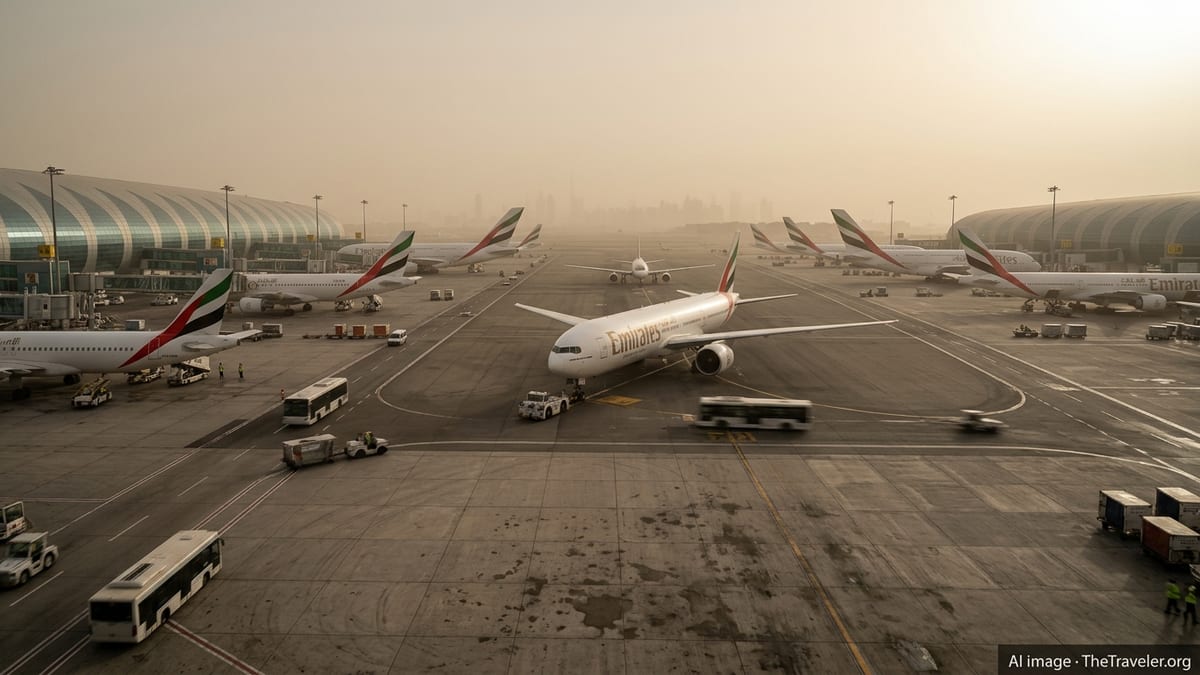
Weather Disruptions Add Pressure to a Strained Hub
Publicly available flight information and aviation tracking data indicate that operations at Dubai International Airport have been experiencing fresh delays as unsettled weather passes through the United Arab Emirates, affecting visibility and air traffic flow. Periods of reduced visibility and strong winds can require increased spacing between aircraft, slowing movements on already busy runways.
The latest disruption comes at a time when Dubai’s aviation system is still recalibrating after weeks of irregular schedules linked to regional security concerns and temporary airspace restrictions. Recent reports show that while regular commercial traffic has resumed, day-to-day operations remain more vulnerable than usual to further shocks such as sandstorms, low clouds, and gusty conditions.
Operational data suggests that these weather-related constraints are contributing to late arrivals and extended turnaround times for Emirates flights, creating a knock-on effect for departures and onward connections across the carrier’s global network.
While Dubai International remains open, the combination of weather and regional instability has reduced the margin that airlines and air traffic controllers usually have to absorb delays, making even moderate weather more disruptive than in a typical season.
What Emirates Is Telling Passengers
According to current travel advisories and updates carried on airline and airport information channels, Emirates is warning passengers that schedules are subject to change at short notice and that some flights may experience significant delays. The airline has highlighted that operations are dependent on both local weather conditions and the availability of safe routings through surrounding airspace.
Recent updates shared through public channels show that Emirates is operating a reduced and more tightly managed schedule, with a focus on maintaining core long-haul connections while adjusting frequencies and timings on selected routes. In practice, this means that even when a flight operates, its departure time, routing, or connection window in Dubai may differ from the original plan.
Advisories emphasize that customers should not travel to the airport until they have checked the latest status of their flight and received a confirmed departure time. This is intended to reduce crowding in terminals during periods when weather or airspace constraints limit the number of flights that can realistically operate.
Information available on passenger forums and airline communications also indicates that Emirates is prioritizing travelers who had earlier disrupted bookings, which can limit last-minute availability for new reservations on popular routes while the airline clears the existing backlog.
Impact on Connections, Rebookings, and Rerouting
Dubai’s role as a major connecting hub means that even a short period of poor weather can ripple across multiple continents. When arrivals are delayed due to holding patterns or rerouted approach paths, connecting passengers may miss onward flights, forcing airlines to rebook travelers onto later services or alternative routings.
According to publicly accessible travel guidance, Emirates has been using a mix of same-day and later-date rebookings to manage disrupted itineraries, depending on seat availability and the scale of delays on particular days. In some cases, passengers have reported extended layovers in Dubai, while others have been rerouted through partner or nearby airports when practicable.
Capacity constraints are further complicated by ongoing regional security dynamics, which have already led to periods of airspace closure and forced some flights to adopt longer routings that add time and fuel costs. When adverse weather is layered on top of these factors, airlines have fewer options to absorb disruption, and schedule recovery can take longer than in previous years.
Industry observers note that the current environment requires passengers connecting through Dubai to build in more flexibility than usual, particularly on itineraries that involve tight connections or travel during peak waves of long-haul departures.
Practical Advice for Travelers Heading to or Through Dubai
Travel experts and publicly available advisories recommend that anyone due to fly with Emirates into, out of, or through Dubai in the coming days monitor their booking closely. Using online manage-booking tools and real-time flight status pages can provide more up-to-date information than printed itineraries or older email confirmations.
Passengers are encouraged to ensure that their contact details, including mobile numbers and email addresses, are current so that they can receive notifications about schedule changes, rebookings, or gate updates. In recent disruptions, many travelers have first learned of delays or revised departure times through automated alerts rather than airport announcement boards.
Those with onward connections, cruises, or time-sensitive events at their destination may wish to consider longer connection buffers where possible, or travel a day earlier than strictly necessary. Given the combination of weather-related uncertainty and regional airspace volatility, itineraries that once felt comfortably timed may now be at higher risk of missed connections.
Insurance providers and consumer advocates also suggest that travelers review the terms of their travel insurance or credit card coverage, particularly regarding weather-related delays and missed connections. Understanding what assistance or reimbursement may be available can help passengers make faster decisions about rebooking or overnight stays if their journey is significantly disrupted.
Outlook for Operations at Dubai International Airport
Meteorological forecasts for the region indicate that periods of unsettled weather, including dust haze and variable winds, can be expected during the spring transition months, occasionally affecting visibility and operations at Gulf airports. While not every system will trigger widespread delays, the sensitivity of current flight schedules means that even isolated events can have an outsized effect.
Aviation analysts point out that Dubai’s airport and airlines have extensive experience operating in challenging desert conditions, including low-visibility and high-temperature environments, and have robust contingency plans in place. However, the compounding influence of ongoing regional tensions and fluctuating airspace availability has created an environment where disruptions may recur more frequently in the near term.
Passengers planning travel through Dubai in the coming weeks are therefore likely to face a more dynamic operating picture than they may remember from previous years. While many flights are operating broadly on time, the risk of short-notice changes remains elevated, particularly on days when weather and regional events converge.
For now, widely shared guidance stresses preparation: check flights before leaving for the airport, allow extra time and flexibility in itineraries, and be prepared for potential delays as Emirates and Dubai International Airport navigate the combined pressures of adverse weather and a complex regional backdrop.