

More news on this day
Emirates has issued fresh alerts to customers as forecasters warn of severe thunderstorms and unusually heavy rain over Dubai, with airline operations at Dubai International Airport expected to face renewed disruption in the coming days.
Get the latest news straight to your inbox!
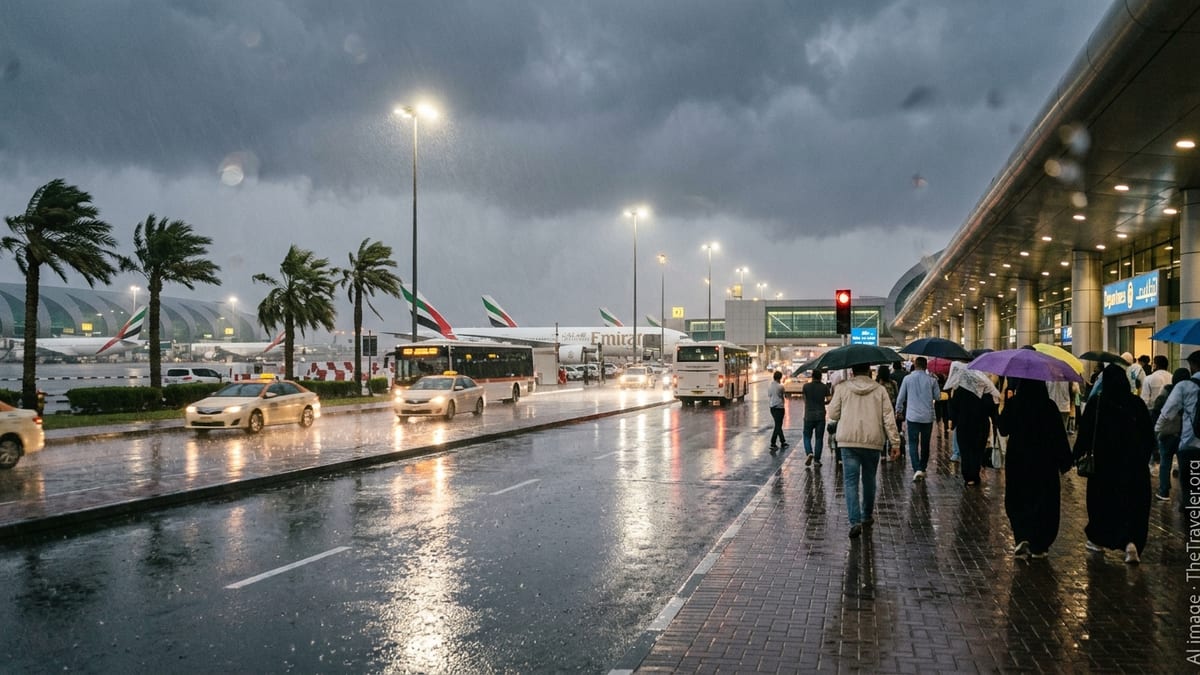
Storm System Threatens Fresh Turbulence for Dubai Travel
Publicly available weather forecasts for the United Arab Emirates indicate a strong storm system tracking toward Dubai, with periods of heavy rainfall, thunderstorms and gusty winds expected over the city. Social media posts from local weather enthusiasts and community groups have highlighted radar images showing bands of intense precipitation lining up over the emirate, with warnings that showers could rapidly turn into downpours and localized flooding.
The anticipated bad weather comes less than a year after Dubai recorded its heaviest rainfall in decades in April 2024, when intense storms flooded highways, disrupted power and severely affected airport operations. At that time, images of waterlogged taxiways and long queues of stranded passengers underscored how quickly extreme rainfall can affect one of the world’s busiest aviation hubs.
In the current situation, meteorological outlooks suggest that the upcoming storm cells may be shorter lived than the 2024 deluge but still strong enough to trigger operational constraints. Thunderstorms in the Gulf frequently bring sharp wind shifts, low cloud and reduced visibility, conditions that can quickly ripple through flight schedules even when the airport remains open.
Travel analysts note that Dubai’s aviation system is particularly sensitive to weather swings because of the high volume of connecting passengers and the tight turnaround times for the large Emirates fleet at Dubai International Airport. When severe storms coincide with peak connecting banks, even modest slowdowns can cascade into missed connections and aircraft being out of position.
Emirates Issues Customer Alerts and Adjusts Operations
In recent days, Emirates has updated its customer advisories to flag the risk of delays, diversions and schedule changes linked to the incoming stormy conditions. Public-facing information from the airline indicates that travellers are being urged to monitor their flight status closely and to allow extra time to reach the airport, particularly if heavy rain coincides with rush hour on Dubai’s main highways.
The airline has already faced a month of interruption across its network amid heightened regional tensions and temporary airspace closures, and the expected storms add another layer of complexity. Earlier in March, disruptions at Dubai International Airport prompted the temporary suspension or rerouting of flights, limited operations windows and instructions for passengers not to proceed to the terminals unless they had confirmed departure times. Many of those measures were driven by security considerations, but they also demonstrated how quickly capacity can tighten when standard patterns are disturbed.
According to recent operational updates, Emirates is now preparing for weather-related constraints by building in additional buffers to some rotations, holding spare crew and aircraft where possible, and coordinating closely with airport authorities on runway use during periods of poor visibility or wind shear. Publicly available guidance from aviation safety bodies stresses that thunderstorms near airports often require increased separation between aircraft, reducing the number of flights that can arrive and depart each hour.
Emirates’ latest travel alerts emphasize that safety takes priority over punctuality, indicating that flights may be delayed on short notice if storm cells intensify in the vicinity of Dubai International or on key approach and departure paths over the Gulf. The airline continues to advise customers that schedules remain subject to change while the unstable weather pattern persists.
What Travellers Flying Via Dubai Need to Know
For passengers booked to travel to, from or through Dubai in the coming days, travel experts recommend treating the storm forecast as a realistic source of disruption rather than a remote possibility. Even if the storms do not produce widespread flooding, a few hours of lightning and heavy rain at the wrong time can force aircraft to hold, divert to alternate airports such as Al Maktoum International, or depart later than planned, all of which can affect onward connections.
Public information from airlines and airports suggests that travellers should expect longer queues at check in, security and transfer desks if multiple flights are retimed around the same period. Travellers connecting through Dubai on tighter layovers may find that rebooking is necessary if inbound services arrive outside the original connection window. Some passengers transiting earlier in March reported spending extended periods in the terminal as they waited for new routings to become available during broader regional disruption.
Industry guidance generally advises passengers to keep contact details updated in their booking records so carriers can send real time notifications, and to download airline apps or use online tools for the most current status information. Those already in Dubai are encouraged to keep an eye on local news outlets and official airport feeds, which tend to post gate changes, terminal congestion updates and advisories about road access when weather conditions deteriorate.
Given the risk of heavy rain and standing water on major routes, travellers planning to reach Dubai International Airport during the storms may want to set off significantly earlier than usual. Taxi and ride hailing availability can tighten during severe weather, and traffic slowdowns on key arteries such as Sheikh Zayed Road have previously contributed to missed departures during major rainfall events.
Flexible Policies and Practical Steps to Minimize Disruption
When severe weather is forecast, Emirates typically introduces flexible options for passengers whose journeys are directly affected by delays or cancellations, according to publicly available information about its disruption policies. These measures have in the past included the option to rebook travel dates, adjust routings or convert tickets to travel vouchers, subject to specific conditions linked to the advisory period.
Travel management specialists highlight that passengers who booked via travel agencies or corporate booking tools may need to coordinate changes through those channels rather than contacting the airline directly. During the most intense disruption periods earlier this month, phone lines and online chat services experienced heavy demand, and many travellers reported faster results by working through dedicated travel managers or visiting ticketing desks at the airport, where available.
To reduce stress at the airport, travellers are urged to check in online as early as permitted, verify baggage allowances and ensure that essential items such as medication, chargers and a change of clothes are carried in hand luggage. In past disruptions at Dubai International, some passengers have been required to stay airside for extended periods while waiting for new departure times, making access to personal necessities particularly important.
Those with nonrefundable accommodation or activities at their final destination may also want to review their travel insurance policies. Many standard policies provide some cover for weather related delays and missed connections, but coverage limits and documentation requirements can vary widely. Keeping boarding passes, delay notifications and any receipts related to extra expenses can help support later claims.
Storms Test Dubai’s Role as a Global Aviation Hub
The looming stormy spell will serve as another test of Dubai’s resilience as a global hub at a time when its aviation system is already under pressure. In addition to managing the knock on effects of regional security developments on airspace, airport operators are increasingly being forced to account for more volatile weather patterns in a region traditionally associated with arid conditions.
Recent historical data on the 2024 United Arab Emirates floods shows that the country can experience sudden extremes, with intense rainfall transforming roads and apron areas within hours. In that event, hundreds of flights were delayed or cancelled and airline schedules took several days to stabilize. While the current forecast does not yet suggest a repeat of that scale, the experience has shaped expectations about how quickly conditions can change.
Dubai’s position at the crossroads of Europe, Asia and Africa means that any operational squeeze has repercussions far beyond the Gulf. Emirates relies on complex “waves” of arrivals and departures to feed its long haul network, and any reduction in runway capacity during storms can immediately affect connectivity from cities across six continents. Aviation analysts suggest that the coming days will likely bring another round of diversions, extended layovers and reworked itineraries across the carrier’s network if the forecast storms materialize.
For now, travellers are being advised by publicly available guidance to stay informed, remain flexible and prepare for the possibility that journeys involving Dubai may take longer than planned. With storm clouds building on the horizon and the region’s airspace already under strain, even seasoned flyers through the emirate may need to factor in extra time and patience as the latest round of severe weather approaches.