

More news on this day
After years operating below its original ambitions, Enfidha-Hammamet International Airport is emerging as a central gateway to Tunisia’s booming tourism industry, backed by new routes, rising passenger numbers and fresh infrastructure plans that could reshape travel along the country’s main resort coastline.
Get the latest news straight to your inbox!
A Strategic Gateway Built for Growth
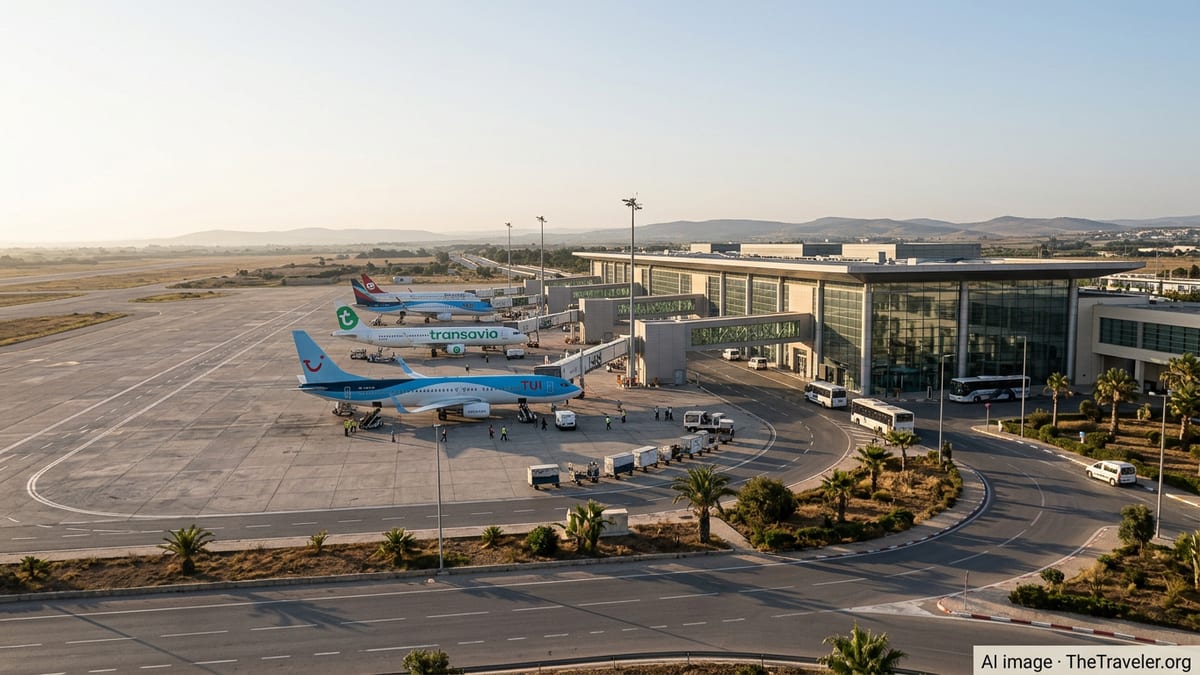
Opened in 2009 and operated under a long-term concession by TAV Tunisie, Enfidha-Hammamet International Airport was conceived as a high-capacity hub to relieve pressure on older coastal airports and serve the resorts of Sousse, Port El Kantaoui and Hammamet. The project has been cited in public documentation as one of Tunisia’s largest private investments, positioning the airport as a showpiece for public private partnership in North Africa.
Located near the A1 motorway and roughly midway between Tunis and Sfax, the airport was designed with a long runway and modern terminal capable of handling large charter aircraft and seasonal peaks. For years, however, it functioned below its intended capacity, particularly during periods of political instability and the pandemic, when charter demand and European bookings fell sharply.
Recent tourism data indicates that this context has shifted. Tunisia welcomed more than 10 million foreign visitors in 2024 and crossed the 11 million mark in 2025, reflecting a robust rebound in European and regional markets. Publicly available figures show that Enfidha is now steadily integrating into this growth curve as a primary arrival point for package tourists headed to the Sahel coast.
Airport statistics published by aviation authorities already highlighted the trend in 2024, when Enfidha-Hammamet recorded passenger growth of nearly 58 percent year on year. This performance, coupled with renewed interest from tour operators and airlines, set the stage for the airport’s current reawakening.
Record Route Expansion and Passenger Revival
According to information released by the airport operator, Enfidha-Hammamet has entered 2024 and 2025 with one of the fastest-growing route networks in Tunisia. For the 2024 touristic season alone, the airport developed more than 15 new destinations and added over 15 new routes to existing cities, with projections of around 1.5 million passengers in 2024, effectively doubling 2023 traffic levels.
The new services largely target core European source markets, including the United Kingdom, France, Germany, Central and Eastern Europe, as well as the Maghreb region. Industry coverage notes that the expansion of flights between the UK and Enfidha-Hammamet, alongside Monastir, has contributed to a sharp rise in British arrivals, turning the UK into one of Tunisia’s fastest-growing markets.
Analysts point out that Enfidha’s charter-oriented model makes it particularly attractive for major tour operators seeking efficient access to resort clusters. Rather than dispersing flights across multiple smaller airports, operators can consolidate capacity at a modern facility with ample apron space and streamlined passenger processing, then connect travelers onwards to hotels by motorway coach transfers.
The airport’s recovery is also tied to broader capacity trends. Aviation data compiled for the Africa Europe market shows an increase in non-stop flights to Tunisia, with Enfidha featuring among the key leisure-oriented gateways. As airlines rebuild networks after the pandemic, the ability of airports like Enfidha to offer slots, handling and cost-effective operations has become a competitive advantage.
Anchoring Tunisia’s Tourism Boom Along the Sahel Coast
The resurgence of Enfidha-Hammamet is closely intertwined with the performance of nearby resort zones. Tourism authorities report that areas such as Sousse and Port El Kantaoui have seen rising hotel bookings and overnight stays, driven by returning European visitors and resilient demand from neighboring Algeria.
With its location serving the northern Sahel and southern Cap Bon, the airport effectively anchors air access for a broad coastal strip that includes mid and upper range seaside hotels, golf resorts and family-focused holiday complexes. Travel industry reports emphasize that reliable airlift into this corridor is critical if Tunisia is to sustain recent gains in visitor numbers and tourism revenue.
Enfidha’s growing traffic also helps diversify Tunisia’s entry points beyond the capital’s Tunis Carthage Airport, which remains heavily used by scheduled carriers and domestic travelers. By absorbing a larger share of charter and seasonal leisure flights, Enfidha can reduce congestion at Tunis, potentially improving the overall travel experience across the network of Tunisian airports.
Market observers view this redistribution of traffic as a sign that Tunisia is moving toward a more segmented, destination-led aviation strategy. In this model, Enfidha becomes the primary gateway for the Sahel and Hammamet coasts, Djerba and Monastir focus on southern and central resort areas, while Tunis consolidates its role as the main business and political hub.
Infrastructure, Sustainability and Long-Term Vision
The reawakening of Enfidha-Hammamet is not limited to flight schedules. Environmental and transport planning documents underline the airport’s role as a pilot site for greener and more integrated infrastructure. Enfidha was the first African airport to obtain Level 1 accreditation in the Airport Carbon Accreditation program in 2013, and subsequent updates indicate ongoing efforts to measure and reduce its carbon footprint.
Recent coverage of Tunisia’s transport strategy highlights renewed discussion about the long-term future of the airport’s concession, which runs until 2047, and the possibility of new connectivity investments. One proposal under study is a high speed rail link tying Enfidha-Hammamet directly to Tunis Carthage Airport, a project that would effectively knit together the country’s two principal gateways and shorten transfer times for both international and domestic travelers.
If realized, such a link would significantly strengthen multi airport coordination in Tunisia, enabling passengers to connect between charter-heavy leisure services and a broader network of scheduled flights. Urban planners note that better rail access could also reduce reliance on road transfers, easing motorway congestion during peak summer months and lowering emissions per passenger.
These plans align with wider national ambitions to modernize transport infrastructure and attract sustainable investment. Financial institutions and development partners active in the region have repeatedly emphasized the importance of efficient airports and intermodal links in sustaining tourism driven growth.
What the Reawakening Means for Travelers and the Industry
For visitors, Enfidha-Hammamet’s revival translates into more direct flight options, shorter surface transfers to beach resorts and a more contemporary airport experience. Travelers arriving from secondary European cities increasingly find themselves landing within easy reach of Sousse or Hammamet rather than connecting through Tunis or a non Tunisian hub.
Tour operators benefit from the airport’s scale and design, which were tailored to high volume holiday traffic. Larger aircraft can be turned around quickly, while dedicated charter facilities help operators coordinate group transfers and ground services. In turn, this operational efficiency can support competitive package prices and encourage longer stays, both of which are crucial for Tunisia’s coastal hotels.
For Tunisia’s tourism sector, the reawakening of Enfidha is a signal that long term investments made before the global financial crisis are starting to pay off in full. As the country consolidates its position as a leading Mediterranean destination with more than 11 million visitors annually, the airport stands out as a critical piece of enabling infrastructure.
Industry analysts suggest that the next few seasons will be decisive. If route growth holds, environmental commitments deepen and proposed rail links progress from concept to implementation, Enfidha-Hammamet International Airport could finally assume the role envisioned at its inception, acting as the giant hub that quietly powers the next chapter of Tunisian tourism.