

More news on this day
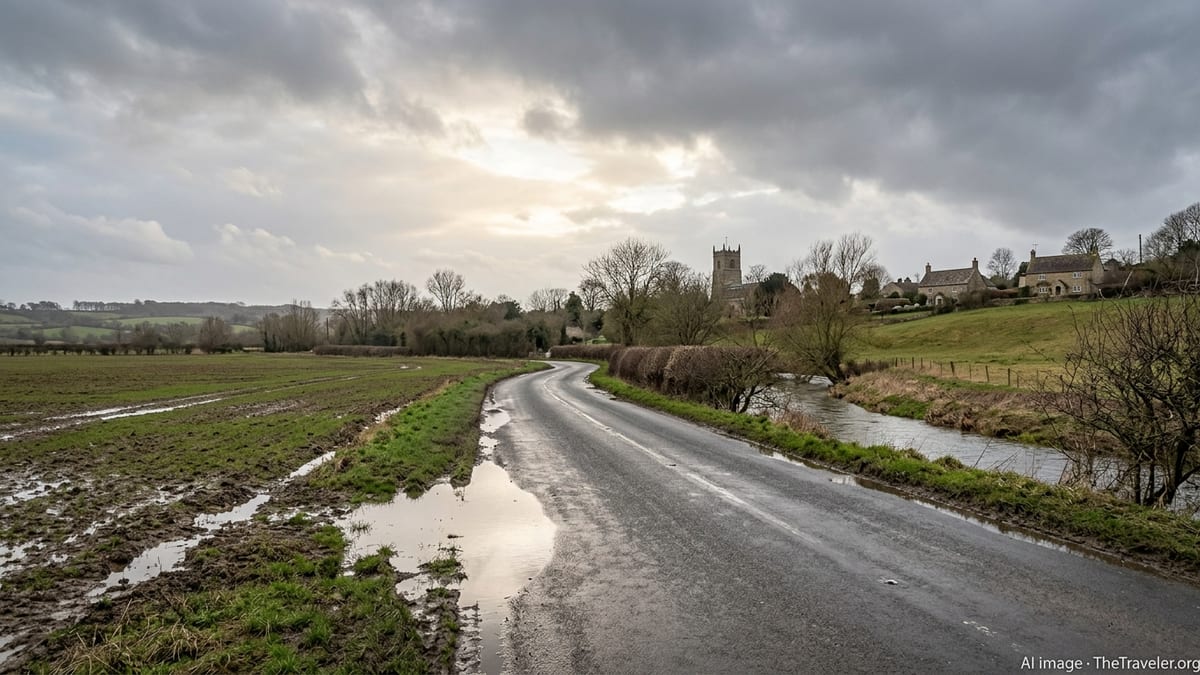
England’s weather in late 2025 and early 2026 has swung from drought warnings to saturated ground and near-record winter rainfall, creating a volatile backdrop for anyone planning to travel across the country this year.
Get the latest news straight to your inbox!
From 2025 Drought Fears to a Fragile Recovery
England entered 2026 still feeling the effects of an extended dry spell that dominated much of 2025. Government reporting on the 2025 drought describes rivers in parts of eastern England running low, groundwater levels dropping sharply and hundreds of thousands of hectares of protected land showing signs of ecological stress. Water companies were granted dozens of drought permits, underlining how close supplies came to being stretched for households, businesses and the environment.
By late 2025, publicly available information showed that the picture had shifted, but not fully recovered. Coverage in national media reported that some reservoirs and aquifers remained below preferred levels despite periods of heavy rain. Groundwater was slower to recharge than surface water, and commentary from regulators and analysts highlighted that a single wet season would not fully erase years of accumulating pressure on England’s water system.
This fragile recovery matters for travellers. A landscape that has recently been stressed by drought can respond unevenly when rain finally falls. In some regions, dry, compacted soils are less able to absorb intense downpours, increasing surface runoff and the risk of flash flooding. In others, rapid recharge can bring rivers close to their banks just as storm season intensifies, turning previously low water into a new form of hazard.
Visitor hotspots in southern and eastern England, including areas with popular walking routes and heritage sites, are therefore moving from one kind of weather concern to another. The risk is no longer only restricted access during dry spells, but sudden path closures, muddy or eroded trails and short-notice restrictions around vulnerable riverbanks as water levels respond to changing conditions.
Record-Wet Winter Adds a New Layer of Flood Risk
While drought concerns have not disappeared, the early months of 2026 have been dominated by rain. Provisional Met Office assessments indicate that winter 2025 to 2026 has been notably wet across the United Kingdom, with parts of southern and central England experiencing their wettest winter on record. Seasonal briefings describe repeated Atlantic weather systems bringing persistent rainfall, leaving soils saturated and rivers running high before spring has even begun.
The Met Office’s early look at winter statistics in late February 2026 notes that December was wetter than average and that some areas had already exceeded typical monthly rainfall totals by early February. Although no new national rainfall record is currently expected for the whole country, local and regional totals have been exceptional. For travellers, this means that the baseline conditions for the rest of 2026 start from a point of already elevated moisture.
Flood risk assessments compiled by the Environment Agency show that England is highly exposed to river, coastal and surface-water flooding. Recent national analysis estimates that millions of properties lie in at-risk areas, and that climate change is projected to increase that number significantly by mid-century. Updated reporting on climate adaptation emphasises that wetter winters are becoming more common and that the combination of saturated ground and intense rainfall is a key driver of flood events.
For visitors planning rail journeys between major English cities, or road trips through low-lying countryside, this context translates into a higher chance of encountering localised flooding when rain returns. Even relatively ordinary storms can now trigger problems where drainage networks and river systems are already near capacity after a record-wet season.
Storm Seasons Bring Disruption to Roads, Rails and Rural Escapes
The last two winters have provided a series of reminders of how quickly weather can derail travel plans across England. Coverage of the 2024 to 2025 and 2025 to 2026 storm seasons details multiple named storms that brought strong winds, heavy rain and, at times, snow and ice. Reports from early January 2025, for example, described more than 160 flood warnings in England, with travel news outlets highlighting closed rail lines, impassable roads and disruption to commuting and regional journeys.
In January 2025, live updates from broadcasters and news agencies pointed to rail closures between key East Midlands and eastern England hubs, while highways authorities warned of delays and diversions on major routes. Similar scenes returned during later winter storms, with some airlines and regional airports also affected when winds strengthened and visibility dropped. By early 2026, the European windstorm season again produced systems capable of flooding low-lying areas and slowing movement across the network.
Government documentation on climate adaptation for transport underscores how structural this risk has become. A transport climate strategy published in late 2025 reports that more than a third of England’s roads and railways are already assessed as being at some level of flood risk, a share expected to rise further over coming decades. This is not only a long-term planning problem for infrastructure managers but an immediate concern for travellers booking trips in 2026.
Popular tourism regions are not exempt. River valleys in northern and western England, coastal towns on the south coast and historic cities along major waterways have all experienced flood-related disruption in recent years. Visitors who come for walking holidays, cultural festivals or coastal breaks are increasingly likely to encounter detours, reduced services or short-notice cancellations when storm systems pass through.
What 2026’s Climate Signals Mean for Visitors
Longer-term climate assessments from the Met Office and the Environment Agency consistently point to a pattern of hotter, drier summers and milder, wetter winters for the United Kingdom. In practical terms, that means England is moving towards a climate in which the same year can contain both drought stress and damaging floods, with impacts that fall unevenly across regions and seasons.
For 2026, available seasonal outlooks released in late 2025 suggested an increased likelihood of wetter-than-average conditions over the late autumn and winter period, which has broadly aligned with the observed pattern of storms and heavy rainfall. At the same time, commentary on the country’s water resources emphasizes that without new investment and improved efficiency, recurring droughts are likely to remain a feature of coming summers, particularly in the south and east.
This dual pressure means that visitors cannot assume that a wet winter eliminates the potential for hosepipe bans, parched landscapes or limits on certain water-intensive activities later in the year. Publicly available briefings on water resources highlight that storage capacity, leakage and long-term demand trends are as important as any one season’s weather. The system may move quickly from excess water in winter to scarcity in late summer if rainfall patterns flip again.
For travellers, the key message is to think in terms of volatility rather than a single dominant risk. England in 2026 is less a country of gentle seasonal transitions and more an environment in which conditions can change sharply between booking and arrival. Planning trips around this uncertainty is becoming an essential part of responsible travel.
Practical Weather Awareness for 2026 Travel
The evolving climate picture is reshaping how visitors should prepare for trips to England this year. Regularly updated forecasts and warning systems provide detailed information on expected rainfall, wind and temperature, while flood-mapping tools show areas that are particularly exposed. Publicly available information from national meteorological and environmental agencies encourages people to check warning services before and during any journey, especially in winter and early spring.
Travellers booking rail and coach tickets are increasingly advised, through operator guidance and media reporting, to allow extra time for connections during periods of unsettled weather. Flexible tickets, travel insurance that covers weather disruption and careful attention to operator alerts can help reduce the stress of last-minute changes. For those hiring cars, monitoring local authority notices about road closures or surface water on key routes is becoming a routine part of trip planning.
Outdoor-focused trips, from national park hiking to canal boating and festivals, now require contingency plans. Visitor information channels frequently highlight that paths, campsites and river-based activities may close at short notice when heavy rain coincides with already high water levels. Packing for rapid changes in temperature and conditions, and having indoor alternatives in mind, can make the difference between a disrupted holiday and a memorable one.
Across all seasons, the headline for 2026 is that England’s weather rollercoaster is no longer an occasional novelty but an emerging norm. A year that begins with saturated fields and swollen rivers may still end with cracked ground and calls for water restraint. For travellers, treating weather as a central part of the itinerary rather than a background detail is becoming an essential strategy for enjoying the country’s landscapes, cities and coasts in a changing climate.