

More news on this day
Major cruise lines are rolling out extended transpacific voyages that stitch together Australia, the South Pacific, Hawaii and North America’s West Coast, creating what many travelers now view as the ultimate cruise adventure across the Pacific.
Get the latest news straight to your inbox!
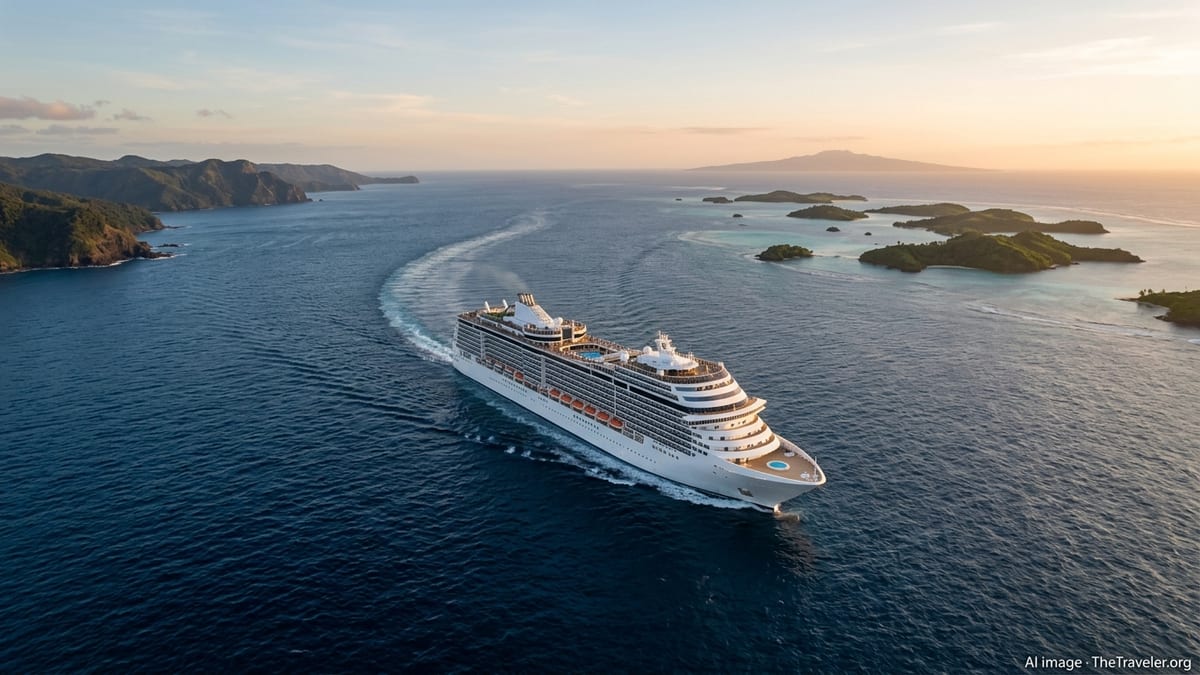
Transpacific Routes Emerge as Bucket-List Centerpieces
Recent itinerary releases for the 2025 to 2027 seasons show a clear trend toward longer repositioning voyages that link Australia with Hawaii and key West Coast ports such as Los Angeles, Vancouver and Seattle. Publicly available brochures from Princess Cruises outline multiple “Hawaii, Tahiti & South Pacific Crossing” sailings between Sydney and North America, typically spanning around 30 nights and calling at French Polynesia and Hawaii before continuing to Canada or the United States.
Similar patterns are visible across the broader market. Cruise industry blogs and agency listings highlight Royal Caribbean, Celebrity Cruises and Holland America itineraries that either cross between Sydney and Hawaii or extend onward to North American homeports. These sailings are often scheduled at the edges of regional seasons, when ships reposition between Australia, Alaska and Asia, turning a logistical move into a feature-rich holiday.
Analysts note that these extended crossings have gained momentum as travelers seek fewer, longer trips that combine multiple regions without repeated long-haul flights. The result is a growing menu of transpacific journeys that resemble mini world cruises, with sea days, remote islands and marquee cities bundled into a single voyage.
South Pacific Highlights: From Coral Atolls to Cultural Capitals
The South Pacific has become a core draw for these Australia to West Coast routes. Itinerary summaries show frequent calls at Fiji, New Caledonia and Vanuatu on shorter segments, while the longer transpacific sailings often pivot through French Polynesia, including Papeete in Tahiti and Moorea. Marketing materials emphasize lagoon-fringed atolls, volcanic peaks and coral reefs that appeal to both first-time and repeat cruisers.
Beyond beaches, many of these ports serve as entry points to local markets, village visits and cultural performances. Cruise descriptions highlight opportunities to experience Polynesian traditions, from dance and music to handicrafts and regional cuisine. For travelers starting in Australia, the South Pacific legs effectively function as a full-fledged island-hopping holiday before the itinerary even reaches Hawaii.
Because these crossings typically occur during shoulder seasons around March, April, September and October, the South Pacific segments are often promoted for relatively milder temperatures and fewer crowds compared with peak summer or festive periods. Travel advisors report that this timing appeals to retirees and remote workers who can spend multiple weeks at sea and in port.
Hawaiian Island Calls Anchor the Mid-Pacific Experience
Hawaii sits at the heart of many of the new and upcoming crossings. Schedules for Princess, Royal Caribbean and other major lines regularly feature Honolulu on Oahu as a pivotal turnaround or extended port day, with additional calls at Maui, Kona on the Island of Hawaii, or Kauai on certain sailings. These stops break up long stretches of open ocean and provide a familiar North American-style port experience for many guests.
Public itinerary details show that cruise lines increasingly frame Hawaii as both a cultural and logistical midpoint. Passengers can join or leave the ship in Honolulu on select voyages, effectively splitting a full Australia to West Coast crossing into two segments. Others treat the islands as a marquee highlight, combining visits to Pearl Harbor and Waikiki with excursions to volcanic landscapes, surf beaches and rainforested valleys.
Observers note that the inclusion of multiple Hawaiian ports can significantly shape the character of a voyage. It turns a simple repositioning into a diversified Pacific journey that traces historical routes between Australasia and the United States while still offering resort-style shore experiences and recognizable tourism infrastructure.
West Coast Gateways: Los Angeles, Vancouver and Seattle on the Rise
On the North American side, West Coast ports are increasingly marketed as both gateways and destinations for these extended itineraries. Recent cruise calendars highlight Los Angeles as a frequent terminus for crossings that begin in Sydney or Auckland and travel via Tahiti, Moorea and Hawaii before making landfall in California. From there, ships often continue north along the coast toward Vancouver or reposition for Alaska seasons.
Vancouver features prominently in several 2026 and 2027 schedules, especially on sailings branded as “Hawaii & South Pacific Crossing” or similar grand voyages. These itineraries typically treat Vancouver not only as a turn-around port but as a scenic finale, with marketing materials underscoring its coastal mountain backdrop, walkable downtown and direct connections to Alaska departures.
Seattle appears in a growing number of repositioning plans as well, particularly for lines that alternate ships between Australia, Asia and Alaska. Publicly discussed itineraries include March crossings from Sydney that ultimately link to Alaska-bound schedules. For travelers, this means that a single long-haul cruise can transition seamlessly into a separate North American itinerary, effectively extending the journey without another transoceanic flight.
Who These Ultimate Crossings Are Attracting
Travel trade commentary suggests that the emerging generation of Australia to West Coast crossings is resonating with several key segments: experienced cruisers seeking longer voyages, North American travelers looking to add Australia without multiple flights, and Australians eager to combine the South Pacific and Hawaii before exploring North America. Repositioning voyages are often priced competitively on a per-night basis compared with shorter, peak-season itineraries, which broadens their appeal.
Industry reports indicate that flexible travelers are particularly drawn to the sea-day heavy nature of these crossings. Life on board during such extended voyages typically features enrichment lectures, wellness programs and culinary events designed to reflect the regions being visited, from Polynesian-inspired menus to talks on Pacific navigation and maritime history.
As more cruise lines publish 2026 and 2027 schedules, travel agencies and cruise specialists are positioning these routes as “ultimate” adventures that combine multiple dream destinations into a single itinerary. While specific offerings vary by year and brand, the broader trend points to a future in which linking Australia, the South Pacific, Hawaii and the West Coast on one continuous voyage becomes a signature experience of the modern cruise calendar.